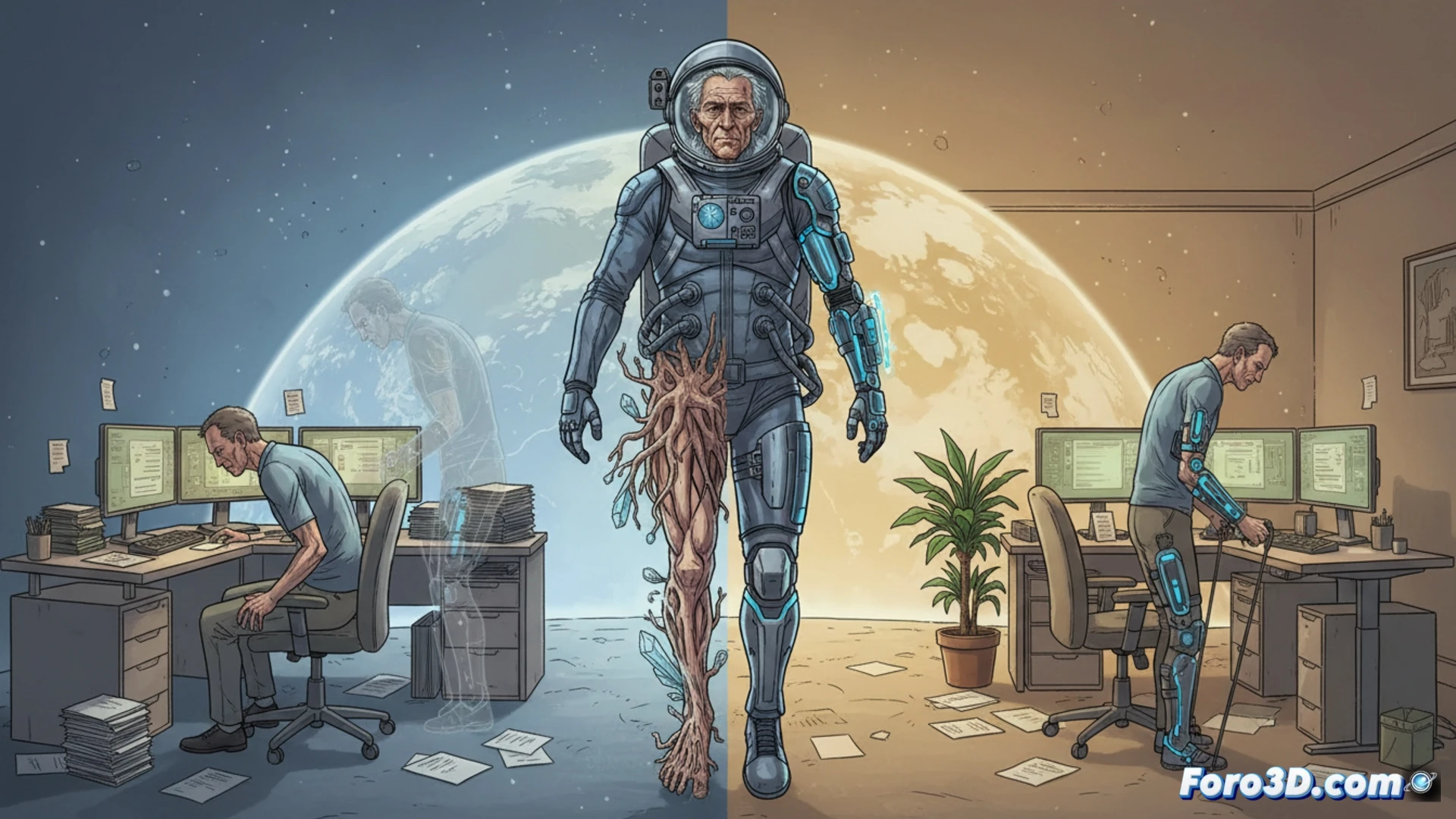
Graham Lawton has focused on a curious finding: astronauts on the ISS suffer accelerated aging similar to that caused by certain terrestrial habits. Microgravity and radiation mimic the effects of a sedentary lifestyle, circadian rhythm disruption, and isolation. Bone loss, muscle atrophy, and cognitive decline are common in both scenarios. NASA seeks to counteract these changes, and its solutions could be applied in offices and homes.
How space technology adapts to life on Earth 🚀
Elastic resistance exercise suits and negative pressure treadmills developed for the ISS are being redesigned for home use. These devices simulate the gravitational load missing in space, preventing bone mass loss. Additionally, dynamic lighting systems that regulate astronauts' circadian rhythms are being translated into smart lamps for office workers. Remote biometric monitoring protocols, designed for isolated crews, now allow tracking the health of elderly people living alone.
The couch, your new spaceship (without space views) 🛋️
If you thought the biggest risk of your sedentary life was running out of battery on your phone, astronauts warn you: your spine suffers just like theirs. The difference is that they float while losing muscle mass, and you lose it while looking for the remote control. The good news is that ISS solutions are cheaper than a ticket to Mars. The bad news is that they involve getting off the couch. Maybe you should start seeing this as a rescue mission for your own bones.