Asterigos: Curse of the Stars is a clear example of how an indie studio can leverage Unreal Engine 4 to build a visually stunning world. The game bets on a vibrant palette and dreamlike Hellenic architecture, moving away from gritty realism to offer a cleaner, more accessible experience. We analyze the technical keys behind its warm lighting and soft shaders, as well as the workflow between Blender and Photoshop to create its textures. 🎮
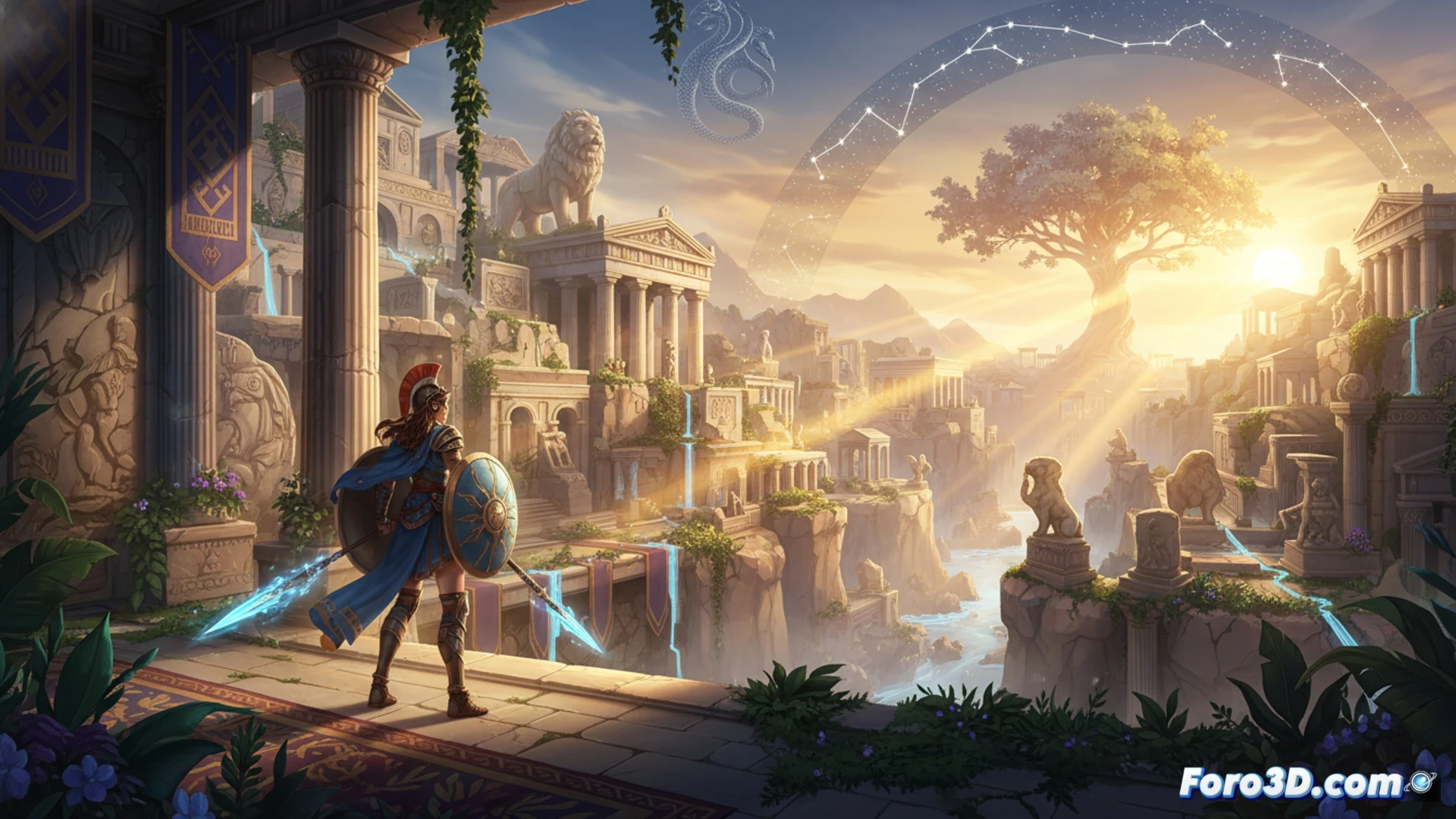
Warm lighting and soft shaders in UE4 🌅
The visual magic of Asterigos lies in the balance between directional light and indirect bounces. In Unreal Engine 4, the team has primarily used the Lightmass system to precompute global illumination, achieving those golden and orange tones that evoke the Mediterranean sunset. Shaders are fundamental: materials based on the standard Shader Model are used, but with low roughness and very controlled specular to avoid harsh reflections. This, combined with a Post-Process Volume that applies a slight bloom and moderate saturation, creates that fairy-tale feel. For indie developers, the key is not to overuse dynamic lights: using stationary lights and baked lighting reduces rendering cost without sacrificing the scene's warmth.
Workflow: Blender, Photoshop, and procedural art 🛠️
Asset creation in Asterigos follows a classic but optimized path. Models are sculpted and retopologized in Blender, leveraging its powerful modifier system to keep geometry clean. Base textures are generated in Photoshop, but fine detail is added through vertex masks and procedural materials within Unreal Engine 4 itself. This allows a single column asset, for example, to be reused with different wear and color variations without needing to paint a hundred unique textures. The technical tip for small studios is to master texture blending in the final material: combining a hand-painted dirt channel with UE4 procedural noise saves hours of work and maintains visual coherence.
How the indie studio behind Asterigos Curse of the Stars optimized the lighting and materials of its Greek aesthetic in Unreal Engine 4 to maintain stable performance on modest hardware without sacrificing visual quality
(PS: game jams are like weddings: everyone is happy, no one sleeps, and you end up crying)