For a decade, Central Asian countries have accelerated the demolition of their Soviet architectural heritage. Buildings that were symbols of power and ideology are being torn down or abandoned, as governments prioritize national monuments. Lack of funds and the desire to distance themselves from Moscow drive this urban transformation, seen as a step toward modernization and the affirmation of cultural sovereignty.
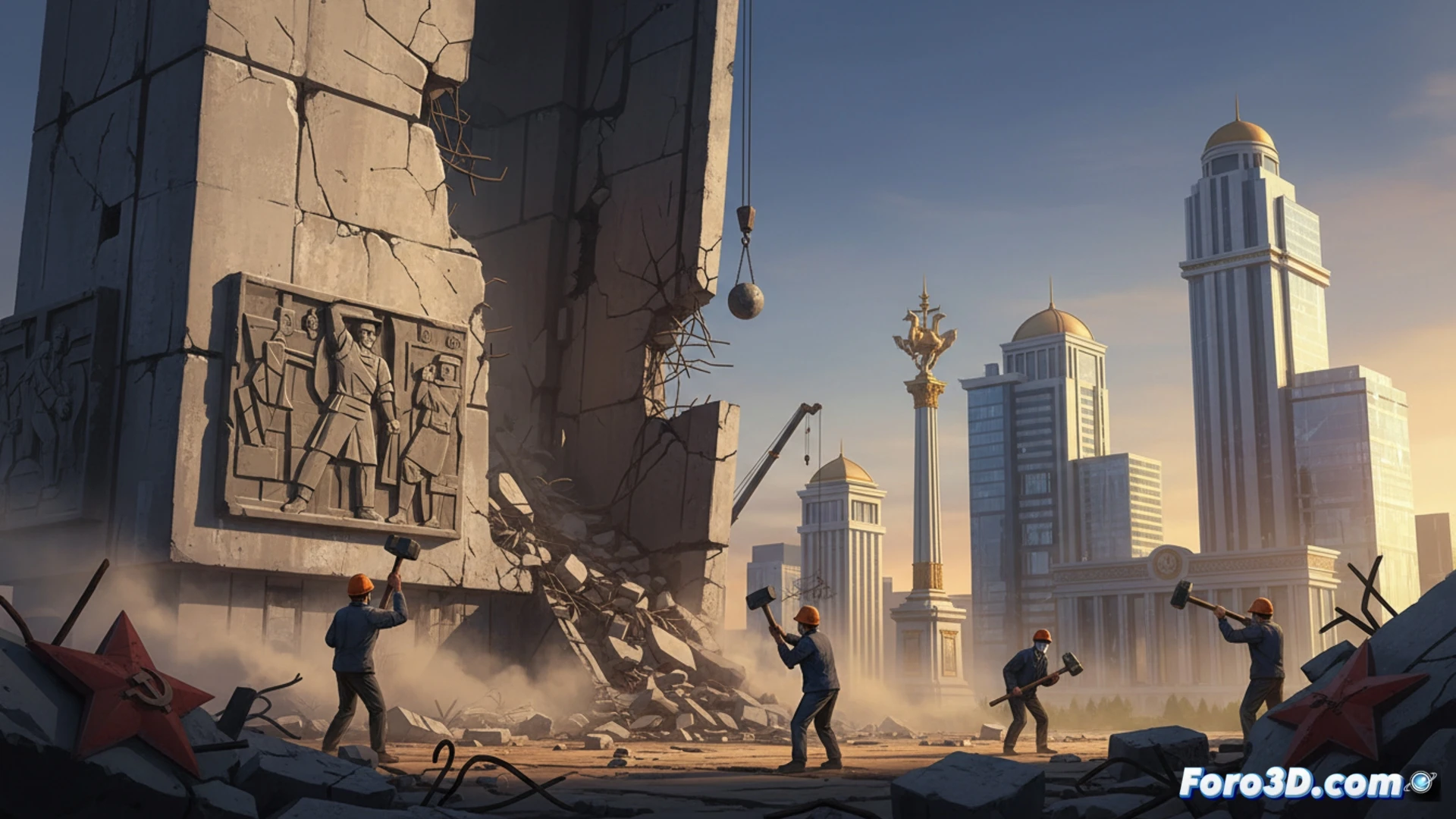
Soviet reinforced concrete surrenders to the digital pickaxe 🏗️
The demolition is not only physical but also digital. Local governments are replacing blueprints of Soviet buildings with 3D models of new national structures. Drones are used to map abandoned industrial zones, and BIM software is employed to design cultural centers that erase the communist past. Construction waste management is optimized with recycling algorithms, while historical archives of these works are moved to restricted-access repositories. The reinforced concrete of the 1950s gives way to glass and steel facades.
Conservationists weep as the crane carries away the building 😢
While conservationists wring their hands and recite poems about the beauty of brutalism, the majority of the population applauds the arrival of the crane. After all, why preserve a building that looks like a Soviet housing block when you can have one that looks like a Chinese shopping mall? Sure, let someone save the Lenin statue in the park; at least it serves for tourists to take ironic selfies.