Legendary Star Studio has revealed technical details of its upcoming title, Ashfall, an open-world action game set in a post-apocalyptic landscape. The project is built on Unreal Engine 5, leveraging Nanite technology to manage massive draw distances without sacrificing performance. The art pipeline combines Maya for animations, Substance Painter for texturing weathered surfaces, and SpeedTree for generating arid flora. This technical approach allows the engine to render vast expanses of ruins and deserts with a polygon density impossible in previous generations.
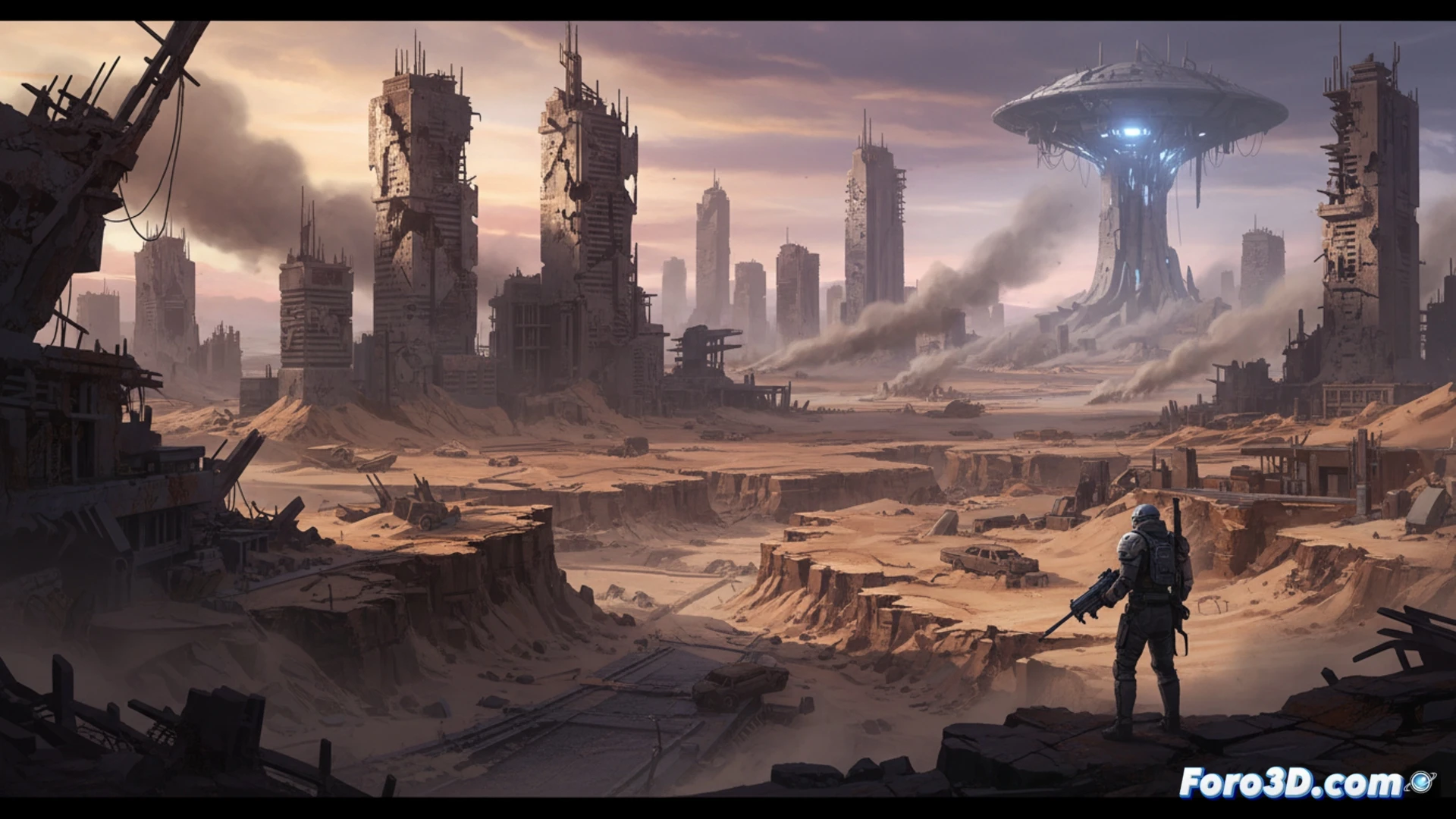
Production Pipeline: From Maya to Unreal Engine 5 with Dynamic Weather Effects 🎮
The artistic workflow for Ashfall begins in Maya, where modelers create ruined structures and rusted vehicles with high geometric fidelity. These meshes are exported directly to Unreal Engine 5, where Nanite compresses them in real-time, eliminating the need for traditional LODs. For texturing, Substance Painter allows applying realistic wear to metal and concrete surfaces, simulating years of exposure to dust storms. Dead or sparse vegetation is generated with SpeedTree, which produces twisted trees and dry shrubs that adapt to the dynamic wind of the weather system. The result is an interactive desert where the draw distance extends to the horizon without visual popping, while sandstorms and radioactive rain alter global illumination in real-time.
Optimization and Realism in Post-Apocalyptic Open Worlds 🌍
The key to Ashfall's success lies in how Legendary Star Studio balances visual realism with performance. By delegating polygon management to Nanite, the team can focus on volumetric lighting and particle effects for storms without worrying about triangle counts. SpeedTree optimizes vegetation by generating only the branches visible from the camera, while Substance Painter ensures each texture has minimal impact on video memory. This approach demonstrates that Unreal Engine 5 is not only viable for open worlds but allows developers to prioritize atmosphere and gameplay over traditional technical limitations.
Considering that Nanite handles high-density geometry and SpeedTree optimizes procedural vegetation, how does Ashfall maintain stable performance on current consoles without sacrificing visual detail in its post-apocalyptic open world?
(PS: a game developer is someone who spends 1000 hours making a game that people complete in 2)