Legendary Star Studio has revealed technical details about the development of Ashfall, its ambitious open-world RPG. The title bets on Unreal Engine 5 to recreate a post-apocalyptic landscape where draw distance and dynamic weather effects are key. The key to realism lies in the intensive use of Nanite, the virtualized geometry technology that allows rendering billions of polygons without sacrificing performance, eliminating classic LODs and pop-in across vast desert expanses.
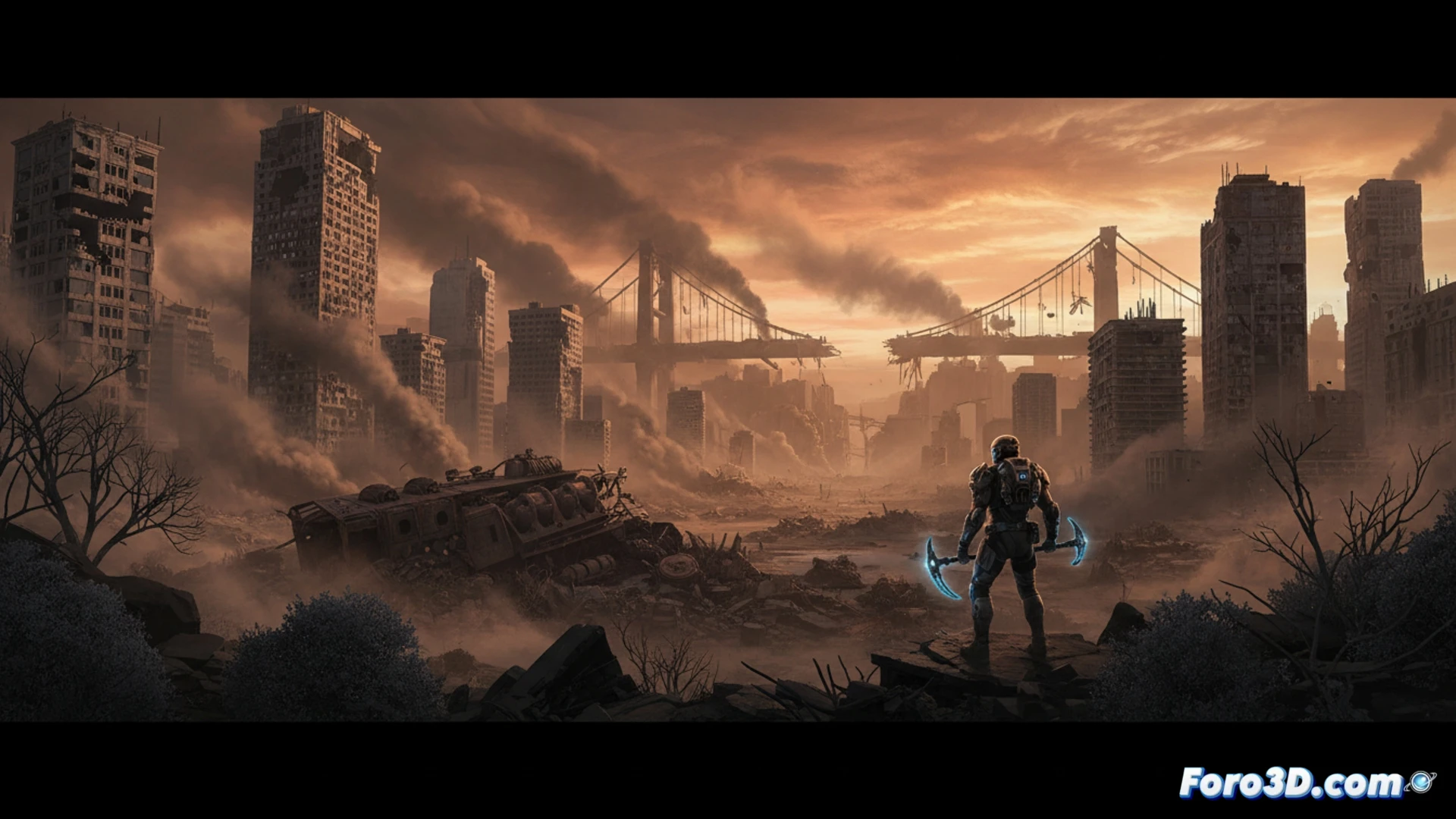
Technical Pipeline: From Maya to SpeedTree in Open Environments 🛠️
The studio's artistic workflow relies on three fundamental pillars. Maya is the central hub for character and creature animation, using complex rigs that integrate directly with UE5's control system. For textures, Substance Painter allows creating worn surfaces and rusted metals with dynamic dirt layers, ideal for the game's decadent tone. The arid vegetation, composed of dead trees and dry shrubs, is generated with SpeedTree, optimizing the number of leaves and branches so Nanite efficiently manages foliage without saturating GPU memory in high-density areas.
Optimization and Real-Time Climatic Realism 🌪️
The biggest technical challenge has been balancing the large draw distance with dynamic weather systems. Ashfall uses UE5's volumetric fog system to hide distant geometric cuts while dust storms and radioactive rain behave as physical layers. This combination allows the player to see mountains kilometers away without frame drops, demonstrating that Epic Games' engine, along with a well-tuned artistic pipeline, remains the preferred choice for next-generation open worlds.
How does Ashfall achieve stable real-time performance when rendering massive post-apocalyptic landscapes with Nanite, considering the high density of detailed geometry and dynamic lighting from Unreal Engine 5?
(PS: optimizing for mobile is like trying to fit an elephant into a Mini Cooper)