More than 300 roads in western Hungary are contaminated with asbestos, according to recent measurements. Geologist Tamás Weiszburg warns that for the past eight to ten years, stones from Austrian mines have been transported, spreading carcinogenic fibers in areas such as the Oladi plateau in Szombathely. When inhaled, these fibers evade the body's defenses and can cause cancer after decades of exposure.
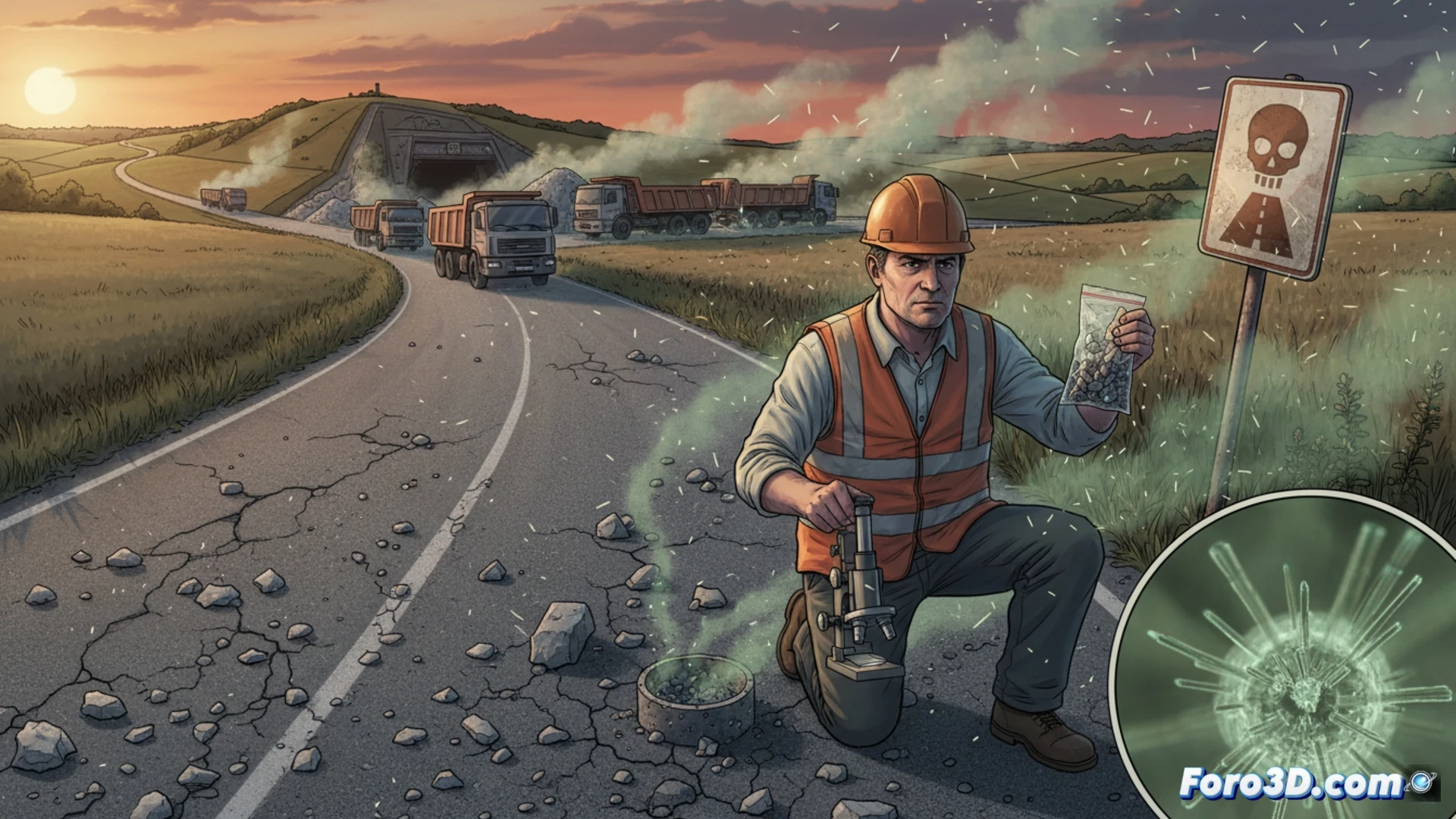
Fiber detection technology in road materials 🛠️
Identifying asbestos in roads requires scanning electron microscopy and X-ray diffraction, methods that differentiate fibers from other minerals. In the laboratory, asphalt samples are crushed and analyzed for crocidolite or amosite. However, the technical problem lies in the fact that asbestos was used as an aggregate in base layers, not surface layers, making its detection difficult without drilling into the pavement. Fiber dispersion is a challenge for remediation teams.
The asphalt you breathe: roads with side effects 😷
Hungarians can now boast of having roads that not only take you home but also accompany you in your bronchi. With asbestos as an aggregate, every pothole is a reminder that dust not only dirties the car but also keeps you company for decades. Of course, if you drive slowly, perhaps the fibers will give you time to think about your next medical check-up.