In a landscape where digital art and virtual reality compete to narrate the present, Naoki Urasawa demonstrates that analog drawing remains a first-rate political weapon. His work Asadora! is not just a suspense thriller: it is an exercise in collective memory that uses monstrous symbolism to unearth the traumas of post-war Japan. This analysis explores how the author turns comics into a platform for visual activism, where each panel functions as a device for social denunciation as effective as any immersive installation.
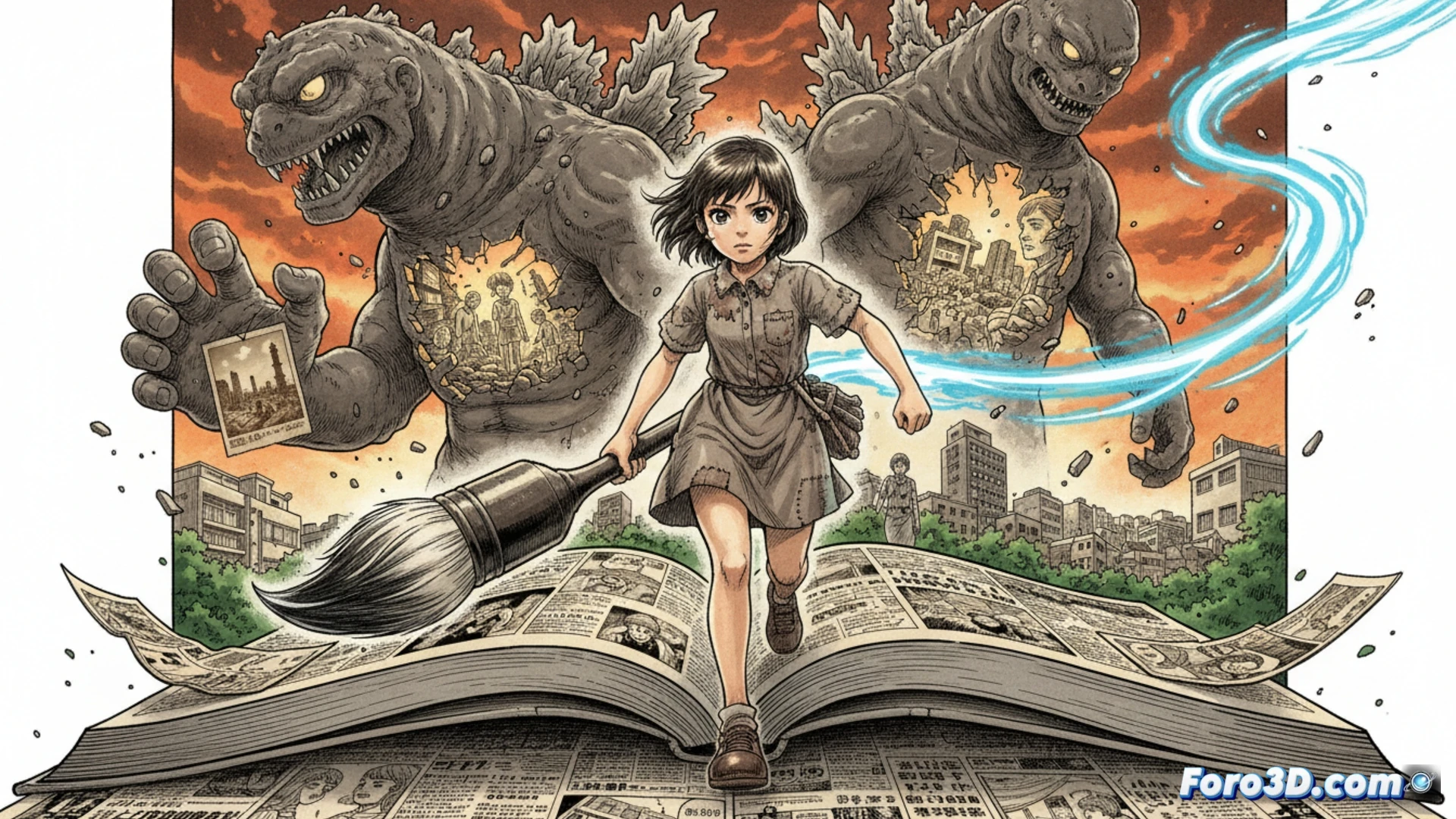
Technical breakdown of suspense as a tool for awareness 🎭
Urasawa employs a meticulous narrative rhythm, alternating wide shots showing urban devastation with close-ups of faces distorted by fear. This technique, inherited from classic suspense cinema, generates a tension that forces the reader to confront the fragility of civilization. The monstrous shadow stalking Asadora is not a simple antagonist; it represents the specter of nuclear war and historical oblivion. By drawing this threat with organic and changing features, the author breaks with the clean aesthetic of commercial manga, forcing an uncomfortable reading. Sequential art, lacking the forced movement of 3D, allows the eye to linger on details: the rubble, the scars, the everyday objects that survive the disaster. That pause is the space where political reflection germinates.
The human portrait as aesthetic and political resistance ✊
Faced with the abstract threat, Urasawa anchors his message in the humanity of his characters. Every wrinkle, every averted gaze on the faces of Asadora and her surroundings tells the story of a generation that survived to bear witness. By prioritizing expressiveness over anatomical realism, the author emphasizes that activism lies not in technical perfection, but in the ability to generate empathy. In an era dominated by digital immediacy, Asadora! reminds us that the most subversive art is that which forces us to look at the past head-on, without filters or special effects, to understand the shadows that still haunt us.
Do you think digital art can have more political impact than traditional art?