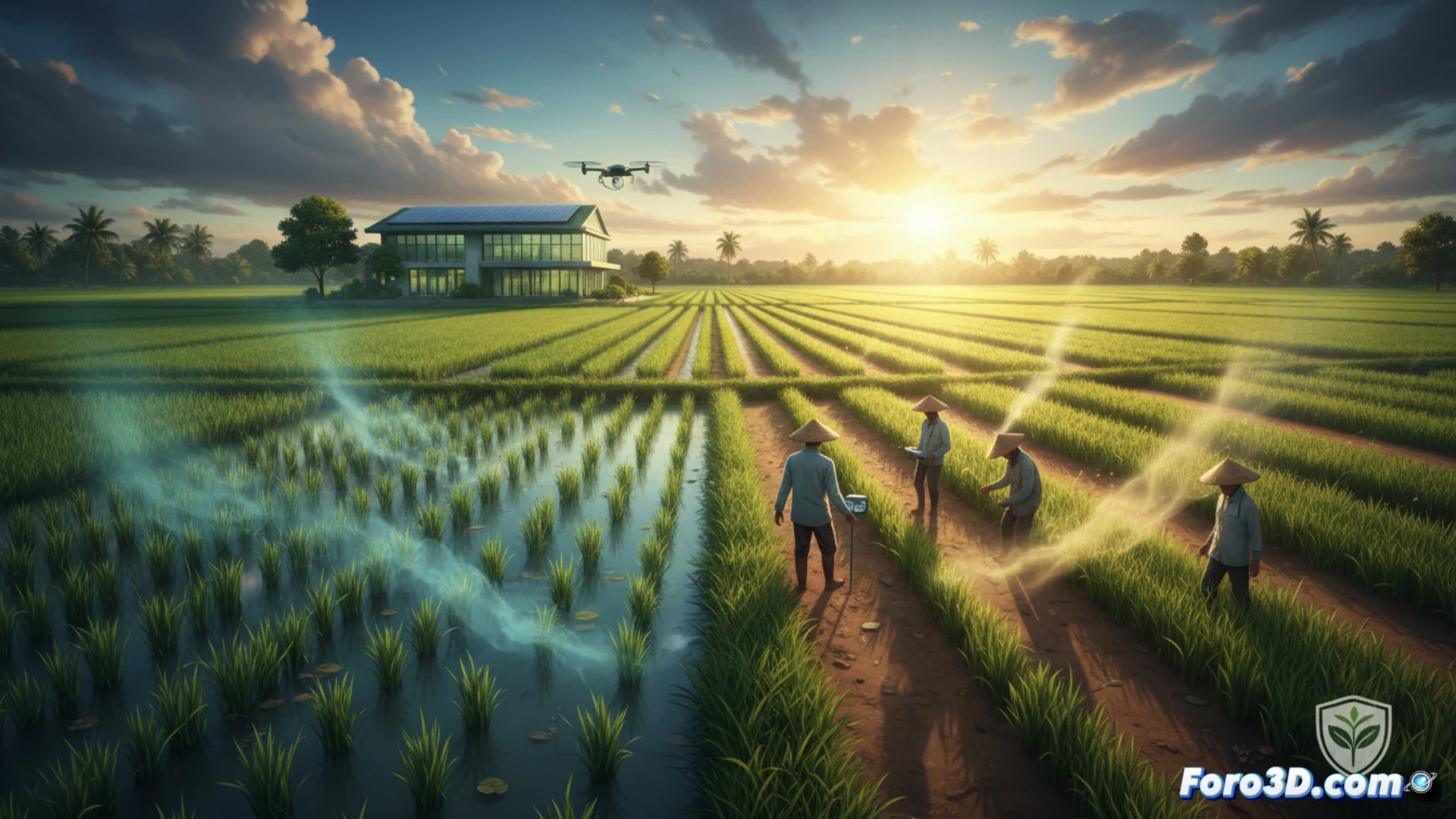
In Central Java, Indonesia, local farmers are testing an agricultural combo that promises to change rice cultivation: less methane in the atmosphere and more grain in the harvest. Led by Singapore's Temasek Life Sciences Laboratory, initial trials have managed to reduce emissions of this potent greenhouse gas by up to 50%.
Irrigation, fertilizer, and genetics: the trio that silences the cows of the rice paddy 🌾
The strategy combines three fronts. First, intermittent irrigation that prevents soil saturation, where bacteria produce methane. Second, a special fertilizer that inhibits microbial activity without harming the plant. Third, climate-resilient rice varieties that maintain yield even with less water. Similar trials in India and Laos confirm that the recipe works without relying on expensive equipment.
Rice that breathes deep while farmers laugh in the face of climate change 😄
Local farmers, accustomed to rice being a methane-belching machine, now see their fields become almost vegan in emissions. Sure, methane isn't a stylish cow burp, but reducing its footprint without losing the harvest is like having your cake and eating it too, without the gas. Who would have thought saving the planet would start by not flooding the rice paddy like an Olympic swimming pool.