Arranger: A Role-Puzzling Adventure is an indie title that combines the narrative of an RPG with the logic of a puzzle, all on a dynamic grid. Developed in Unity, the game stands out for its vibrant and surreal art, the work of the co-creator of Braid. This article analyzes how the choice of engine and graphic tools define its unique visual identity, offering technical keys for indie developers. 🎮
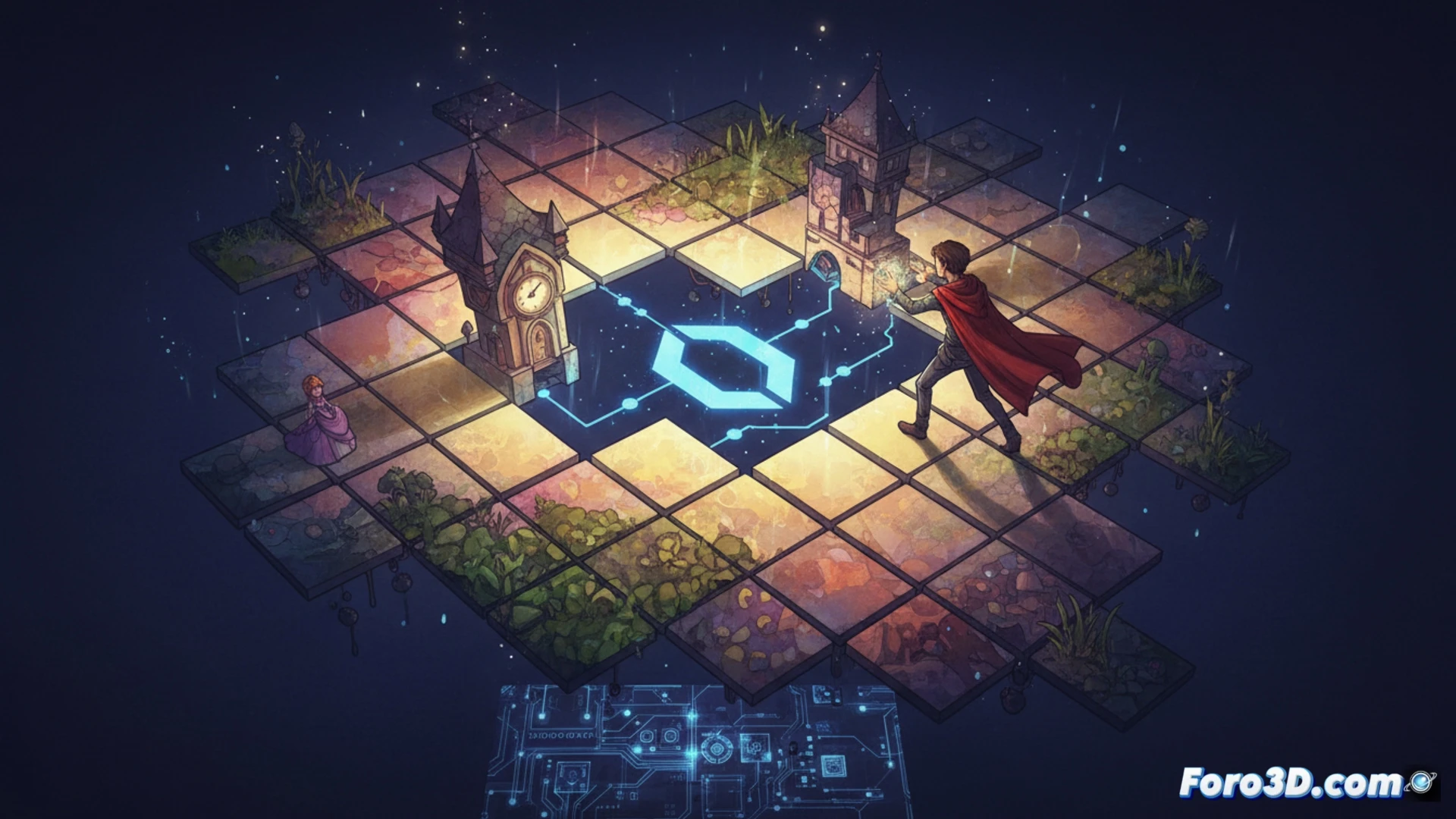
The grid as a game and performance engine in Unity 🧩
The core mechanic of Arranger is grid-based movement, where each character shift reorders the environment. In Unity, this is efficiently implemented using a discrete coordinate system that avoids complex collisions and simplifies physics. The art, created in Photoshop and Illustrator, adapts to this system with modular sprites that align perfectly to the grid. To optimize performance, it is recommended to use texture atlases and object pooling in Unity, reducing draw calls. The surreal style, with saturated colors and organic shapes, is achieved through vector illustration layers in Illustrator, then rasterized in Photoshop for pixel control. Indie developers should prioritize asset compression (ASTC format on Android, PVRTC on iOS) and the use of Shader Graph for smooth scrolling effects without sacrificing the vibrant aesthetic.
Art and code lessons for the indie developer 🛠️
The case of Arranger demonstrates that visual identity does not require powerful hardware, but coherence between mechanics and art. The grid is not just a puzzle, but a canvas that reorders with each movement. Artists can use Illustrator to sketch characters and backgrounds with clean lines, then Photoshop to texture and apply lighting effects. In Unity, the key lies in C# scripting for drag-and-reorder events, and in memory optimization to avoid pauses. For indies, replicating this style involves investing time in designing the grid as a central system, not just as a backdrop.
As a developer, what technical and level design considerations do you recommend for implementing a tile-based grid movement system that, in the style of Arranger, combines the freedom of exploration of an RPG with the logical rigidity of a puzzle in Unity?
(PS: game jams are like weddings: everyone is happy, nobody sleeps, and you end up crying)