Nexon's new project, Argent Twilight (formerly Project: SF), bets on a 3D cartoon aesthetic that simulates an episode of Japanese anime. To achieve this, the studio combines Unreal Engine 4 with 3ds Max, Photoshop, and MotionBuilder. This article breaks down the technical and artistic flow behind this ambitious production, from character creation to real-time animation.
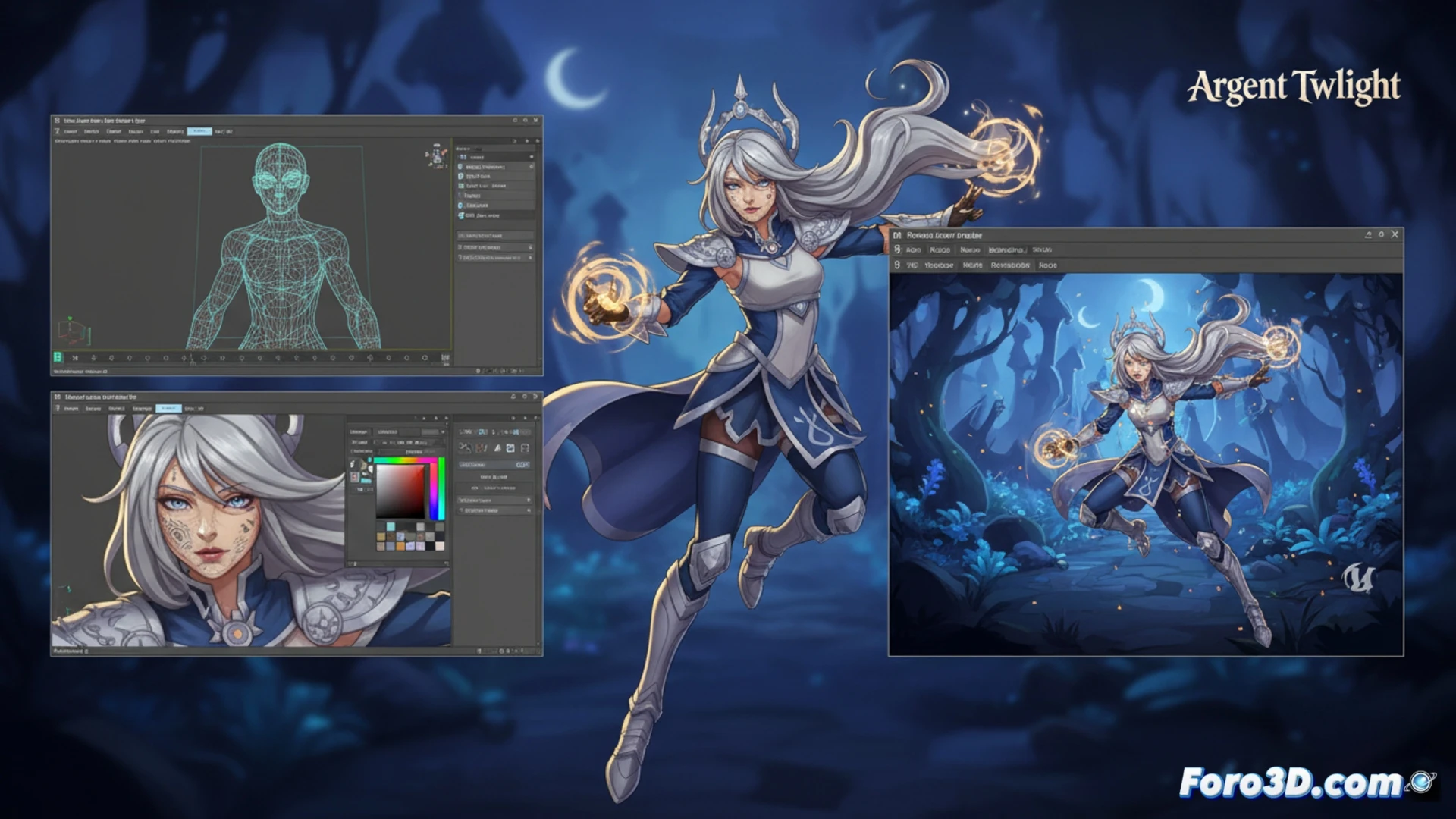
Integration of 3ds Max and MotionBuilder in the UE4 Pipeline 🎨
Character modeling and texturing are done in 3ds Max, where stylized shapes and flat colors typical of cartoons are defined. Textures are painted in Photoshop, prioritizing vibrant palettes and contour lines. Once modeled, the assets go to MotionBuilder for rigging and animation. There, skeletal animation techniques with smooth curves are applied, mimicking the exaggerated movement of anime. The main challenge is optimization: bones must be sufficient for expressiveness but limited to maintain performance in Unreal Engine 4. The engine receives the data via FBX, configuring blendshapes for facial expressions and fluid combat animations.
Lessons for the Industry: 3D Cartoon Without Sacrificing Performance 🚀
Argent Twilight demonstrates that it is possible to achieve a convincing anime aesthetic without falling into excessive production costs. The key lies in a well-defined pipeline: low-poly modeling with stylized textures in 3ds Max, expressive animation in MotionBuilder, and intelligent use of post-processed materials in UE4. For independent developers, this flow reduces iteration times and allows gameplay to feel as alive as an animated episode, maintaining stable 60 fps on consoles and PC.
How does Argent Twilight in Unreal Engine 4 balance technical performance with the 3D cartoon aesthetic to simulate the visual fluidity of a Japanese anime episode without sacrificing real-time gameplay?
(PS: shaders are like mayonnaise: if they break, you start all over again)