In the demanding world of 3D modeling and rendering, CPU thermal management is a critical factor that determines system stability during long work sessions. The Arctic Liquid Freezer III 360 presents itself as an AIO solution that not only promises exceptional thermal performance but also integrates a dedicated fan to cool the motherboard's VRMs. This detail, often overlooked in other systems, can make the difference between a successful render and an unexpected system crash.
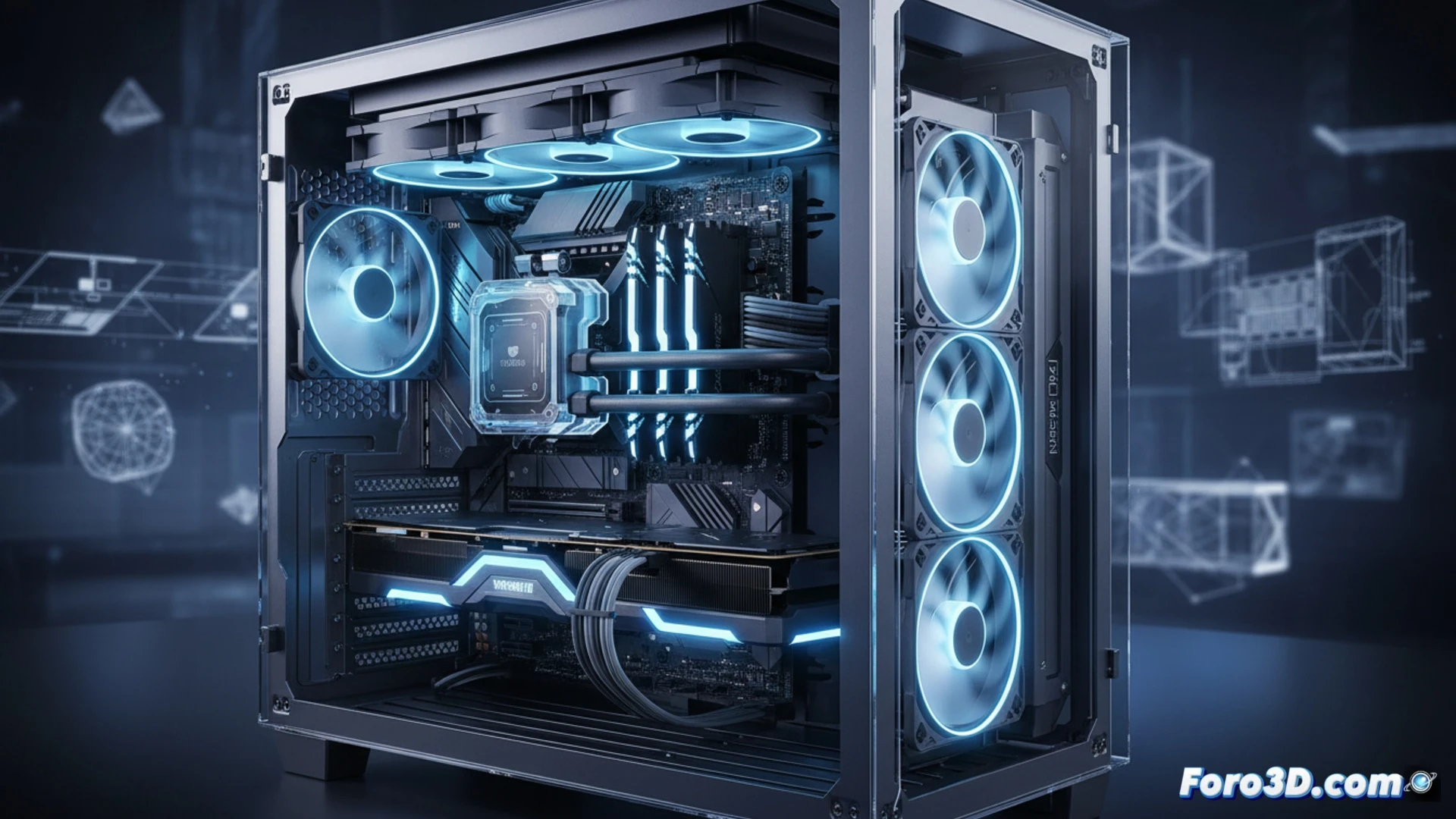
Technical analysis of the cooling system and its impact on VRM 🔥
The Arctic Liquid Freezer III 360 uses a 360 mm radiator with a thickness of 38 mm, superior to the standard 27 mm of the competition, allowing for a larger dissipation surface. Its low-profile pump block (VRM Bridge) integrates a 40 mm axial fan that directs airflow directly onto the motherboard's voltage regulator modules. In stress tests with software like Cinebench and Blender, this design was shown to reduce VRM temperatures by up to 10 degrees Celsius compared to traditional AIOs that lack this component. For the 3D user, this translates to more stable voltage delivery during prolonged load peaks, avoiding thermal throttling in high-end CPUs such as Intel Core i9 or AMD Ryzen Threadripper.
Competitive advantage for professional workflows ⚙️
Beyond the numbers, the design philosophy of the Arctic Liquid Freezer III 360 targets a common weak point in 3D workstations: the buildup of residual heat around the socket. By actively cooling the VRMs, this AIO not only protects the motherboard but also allows the CPU to maintain higher Boost frequencies during physical simulations or batch renders. For the professional seeking reliability without resorting to an expensive custom loop, this system represents a perfect balance between performance, silence, and hardware longevity.
How does the thermal behavior of the Arctic Liquid Freezer III 360 during prolonged rendering sessions affect overclocking stability in high-end CPUs for 3D workstations?
(PS: remember that a powerful GPU won't make you a better modeler, but at least you'll render your mistakes faster)