Sports officiating is one of the most exposed professions within the world of sports. Physical and verbal aggression, stress from real-time decisions, physical overexertion, and falls are just some of the daily dangers. However, 3D technology and virtual reality are emerging as key tools for prevention, allowing training in controlled environments that faithfully replicate the pressure and movement of the field.
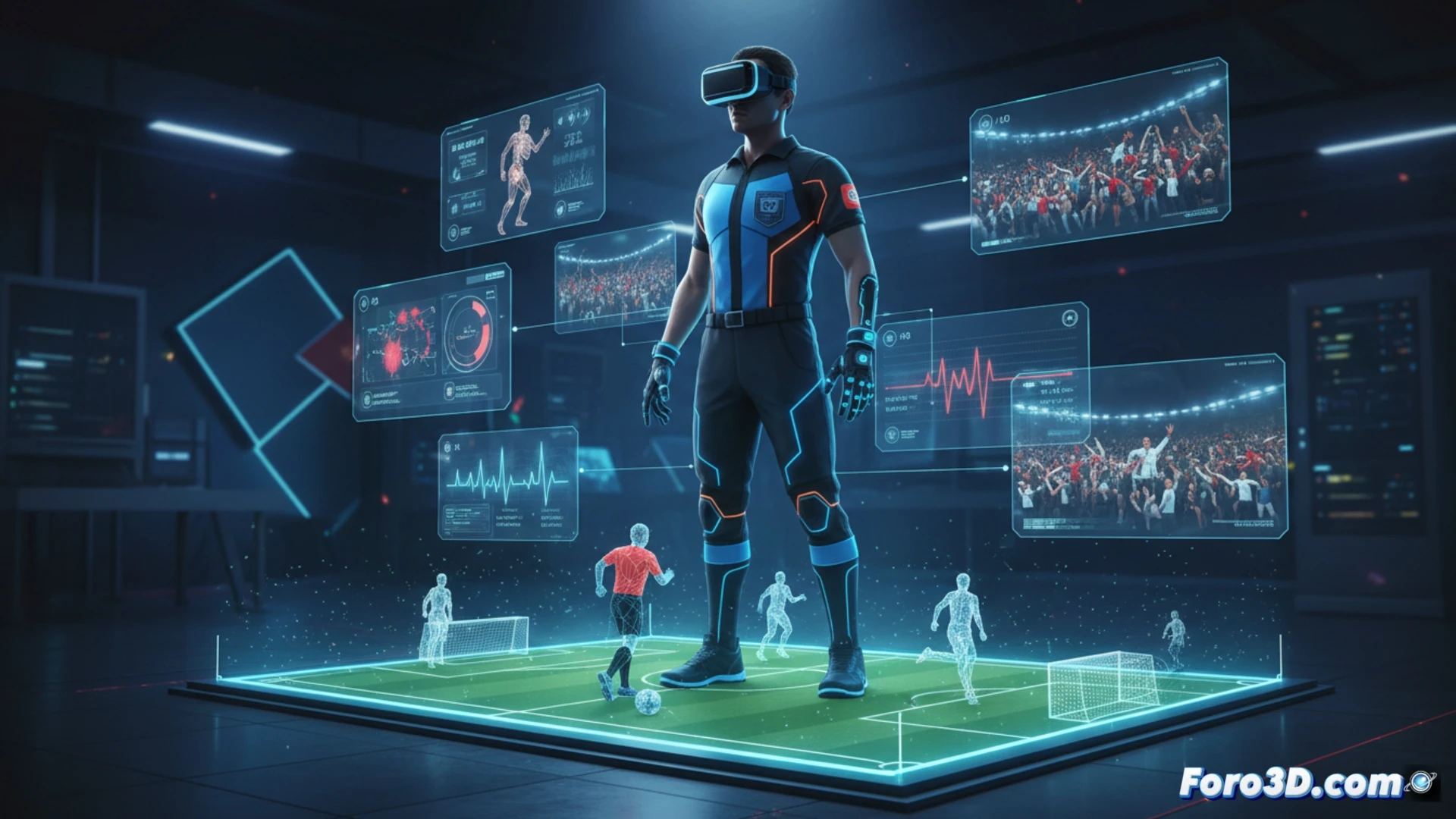
3D Biomechanics and High-Pressure Simulation 🏃♂️
The prevention of musculoskeletal injuries and fatigue is addressed through 3D biomechanical analysis. Motion capture sensors model the referee's continuous running, identifying patterns of overexertion and suggesting postural corrections. In parallel, virtual reality headsets immerse the official in hostile scenarios: from furious crowds to confrontational players. This repetitive yet safe exposure trains their emotional response and reduces stress, while simulations of falls and impacts teach cushioning and reaction techniques.
The Playing Field as a Virtual Laboratory ⚽
3D technology not only trains but also protects. Recreating the playing field with digital twins allows referees to rehearse safety protocols against aggression without real risk. By visualizing plays from impossible angles, uncertainty and decision-making pressure are reduced. In short, the officiating of the future prepares in a virtual world so that referees arrive at the real match safer, less fatigued, and psychologically stronger.
How can 3D virtual simulation train referees to manage high-pressure situations and prevent occupational risks such as physical aggression or extreme stress?
(PS: reconstructing a goal in 3D is easy; the hard part is making sure it doesn't look like it was scored with a Lego figure's leg)