Apple's spatial computing doesn't just rely on the M2, but on a luxurious secondary component: the R1 chip. Designed specifically to absorb data from 12 cameras, 5 sensors, and 6 microphones, its function is to eliminate latency so the virtual world feels real. This processor is the true sensory brain of the device, working in the background so you don't notice the technical effort behind every movement of your head.
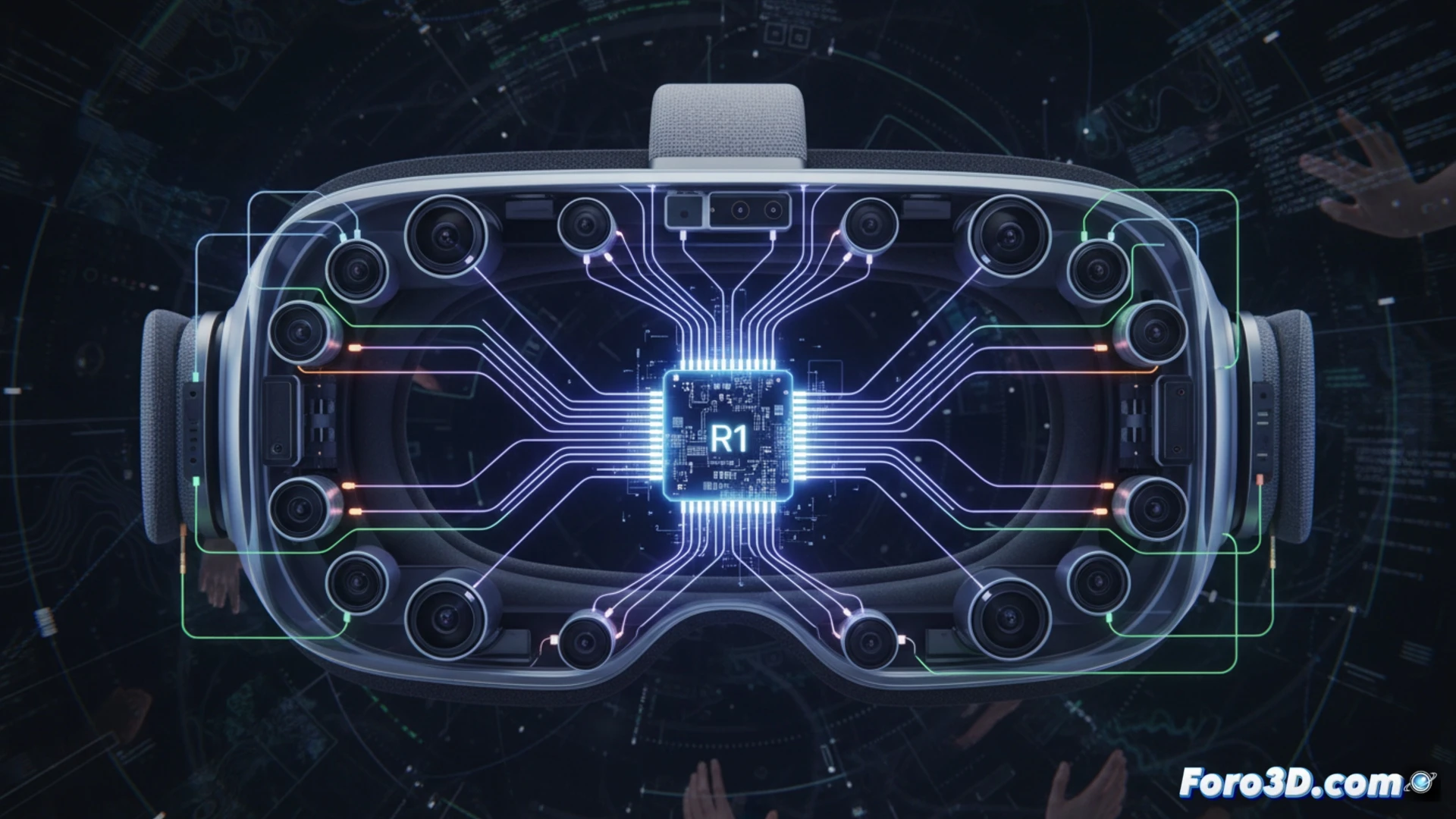
R1 Architecture: A Simultaneous Translator of Sensory Data 🧠
The R1 is not a general-purpose chip; it is a stream processing machine. Its architecture is optimized to handle the fusion of images from external cameras, LiDAR data, and microphone signals in real time. While the M2 runs applications, the R1 is responsible for updating the position of virtual objects in milliseconds. Without this chip, the headset would suffer noticeable lag, ruining the illusion that holograms are truly in front of you.
The R1: The Silent Employee Doing All the Dirty Work 💪
While the M2 takes all the credit for rendering pretty graphics, poor R1 is sweating, processing data from 23 sources at once. It's like that coworker who moves all the cables and nobody thanks them. If it failed, your spatial experience would turn into a slideshow. So, next time you see a cube floating steadily in front of you, remember that the R1 is doing more calculations than an engineering student during exam season.