The launch of Assassin’s Creed Nexus VR marks a milestone in the adaptation of AAA engines to virtual reality. Ubisoft has managed to transfer the essence of the saga to an immersive environment using the Anvil Engine, but with a completely restructured rendering architecture. The biggest challenge was not just replicating the scale of the cities, but maintaining visual fidelity on standalone hardware, where every millisecond of latency counts.
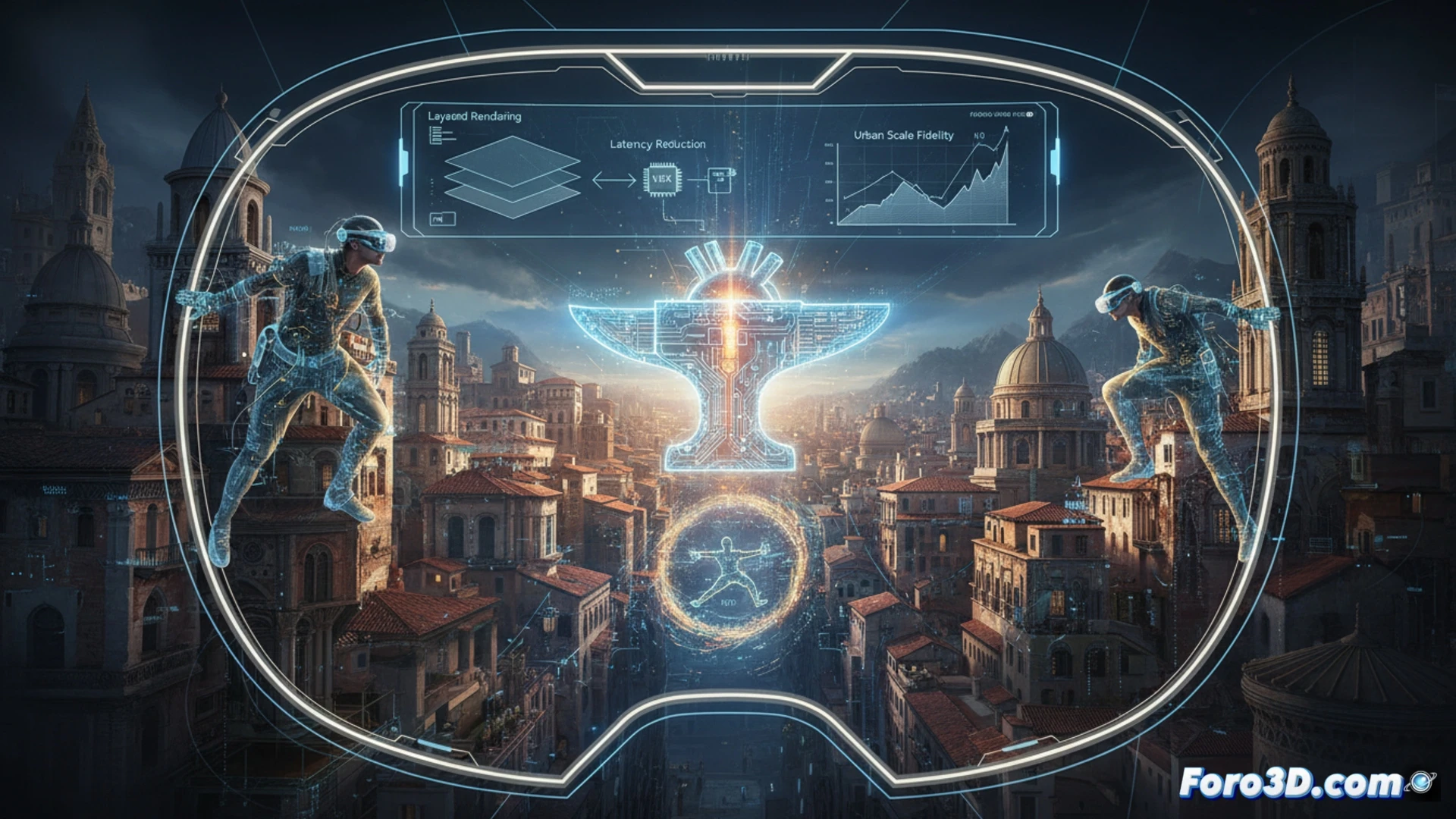
Layered rendering and the asset pipeline for VR 🎮
The technical key lies in layered rendering. Unlike flat gaming, where the engine draws the entire frame in a single pass, Nexus VR separates geometry into depth planes. This allows the left and right eyes to receive slightly offset images without duplicating shading work. The developers explained that the asset pipeline was optimized from Autodesk Maya and ZBrush: high-resolution models were drastically retopologized to reduce polygon count without losing iconic silhouettes. Textures were compressed in ASTC format, and a dynamic LOD system was implemented that responds to the user's head orientation, prioritizing sharpness in the center of the field of view.
Lessons learned for the future of AAA VR 🚀
The adaptation of the Anvil Engine to VR demonstrates that the real challenge is not graphical, but resource management. Interviewees noted that the biggest bottleneck was texture memory on standalone headsets. To solve this, they reduced the peripheral vision range (foveated rendering) and sacrificed dynamic shadows in favor of static lighting schedules. This decision, although controversial, ensures the experience feels smooth. Nexus VR is not a simple technical port: it is a complete redesign that lays the groundwork for other AAA engines to make the leap to virtual reality without sacrificing the visual identity of their franchises.
As a developer, which key optimizations of the Anvil Engine do you consider most critical for maintaining stable 90 FPS in VR without sacrificing the NPC density and architectural detail that characterizes the saga?
(PS: Virtual reality is great until you try to lean on a table that doesn't exist.)