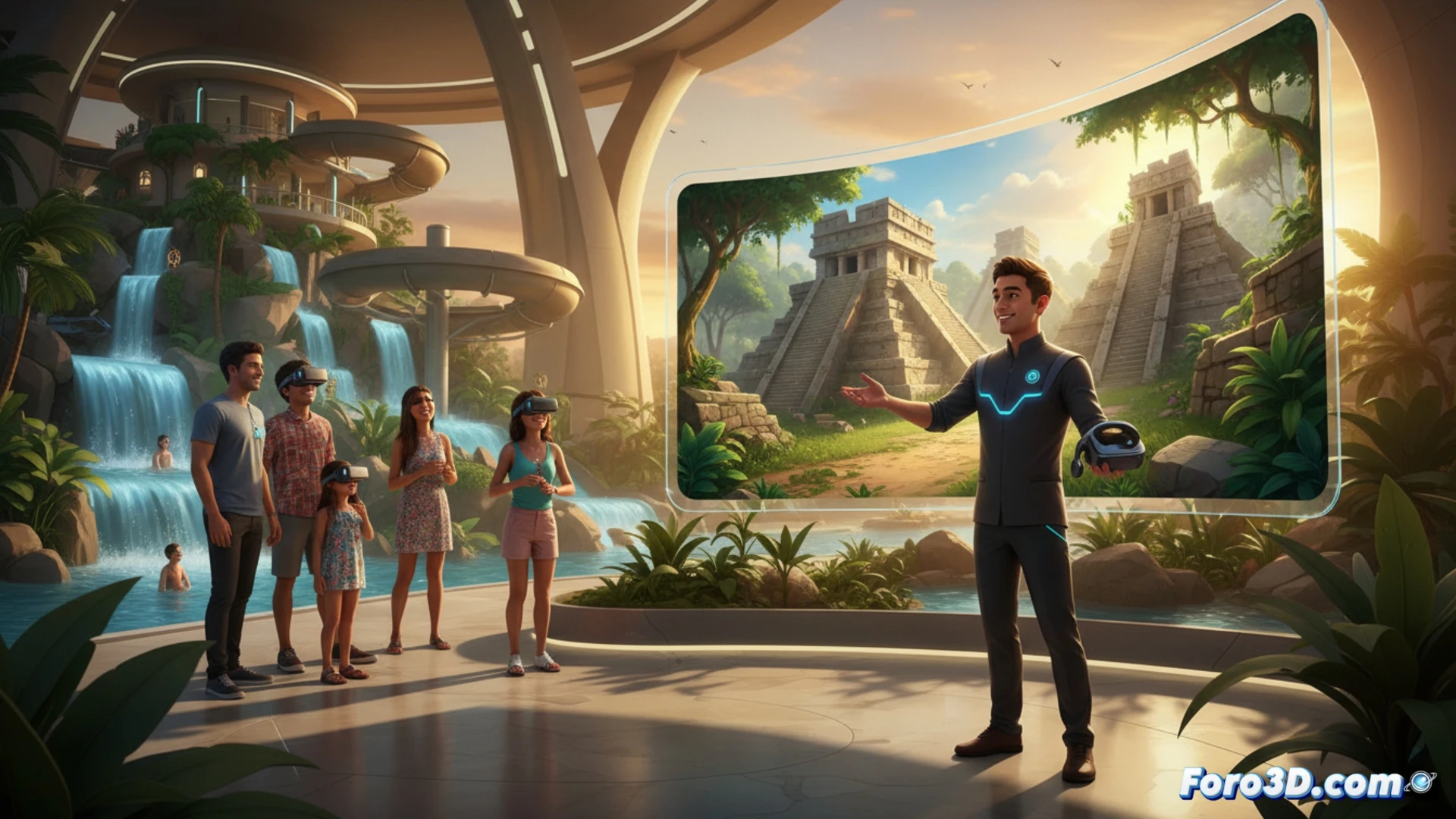
The role of the tour guide has evolved beyond poolside choreography and board games. 3D technology allows for creating immersive experiences for guests, such as virtual reality simulations that recreate local landscapes or interactive activities. A practical example: designing a virtual tour of a Mayan ruin so tourists can explore from the hotel lobby, without having to walk under the sun. Thus, the guide becomes a digital guide without losing the human touch.
Programs and workflow for the digital guide 🖥️
To start, you need Blender (basic 3D modeling and animation, free) and Unity or Unreal Engine to build the interactive experience. With Blender you create the characters or scenes; then you export them to Unity to add game logic, like a quiz about local culture or a virtual swimming minigame. If your hotel has VR headsets like Oculus Quest, you can use software like SketchUp to model the actual resort environment and offer preview tours. The process is straightforward: model, texture, program interactions, and test with guests.
And if the guest prefers not to use VR goggles... 😅
There's always a Tomás who arrives at the lobby in his flip-flops and says: Don't put that on my face, it makes me dizzy. For those cases, 3D technology can also be used to create interactive maps on touchscreens or project animations on walls during dinner. So, while the group of ladies plays virtual bingo, you can have a coffee and smile because, after all, the guide is still the one who provides the music and the face, even if they now have a laptop under their arm.