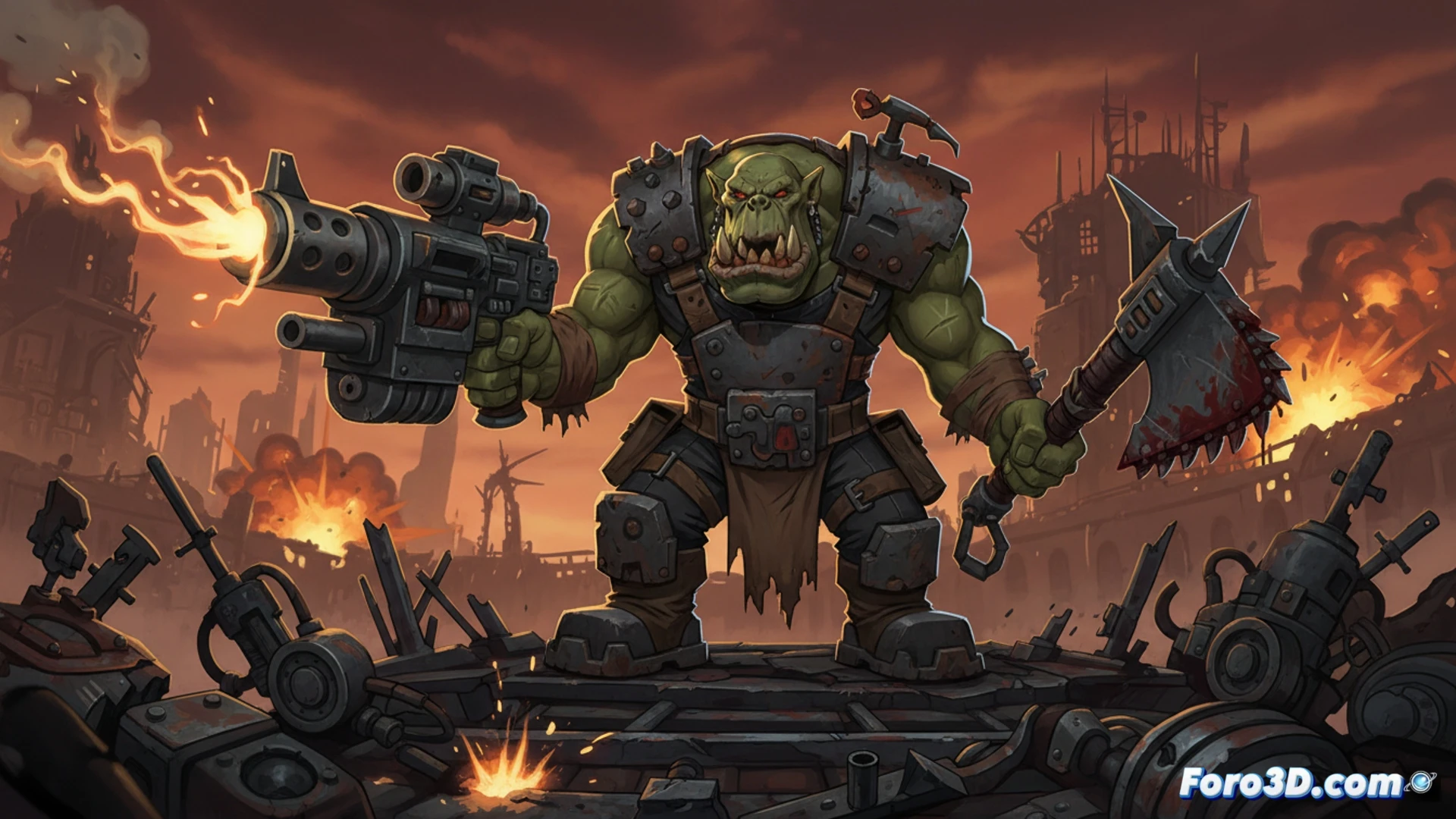
Warhammer 40,000: Shootas, Blood & Teef is not only a tribute to Ork chaos, but a masterclass in how to emulate the fluidity of classic Metal Slug with modern technology. Developed in Unity, the game achieves its distinctive hand-drawn 2D animation style through an artistic pipeline that combines Photoshop for static art, Spine for rigging and animation, and the Unity engine for lighting and particle effects. This workflow allows indie developers to achieve high-quality results without needing a massive team of animators.
Technical Pipeline: From Photoshop to Unity with Spine 🛠️
The secret behind the Metal Slug aesthetic lies in the combination of detailed hand-drawn artwork with intelligent rigging in Spine. In Photoshop, artists draw the Ork body parts (torso, arms, legs, heads) as individual sprites, ensuring thick lines and flat colors to facilitate deformation. These sprites are imported into Spine, where bones are created and weight painting is assigned. The key is not to overdo the deformation; the hand-drawn style works best when bones rotate rather than stretch, maintaining the integrity of the original strokes. Then, a data file (JSON or binary) is exported from Spine along with an atlas sprite sheet. In Unity, the official Spine plugin interprets this data, allowing control over animations, blending them (blend trees), and synchronizing them with gameplay. The result is organic animation reminiscent of frame-by-frame pixel art, but with the flexibility of a modern bone system.
Indie Tips for the Ork Style 💥
For developers wanting to emulate this workflow, the main advice is to prioritize silhouette over internal detail. Warhammer Orks are recognized by their massive shoulders and prominent jaws; drawing these clear silhouettes in Photoshop before moving to Spine ensures the animation remains readable even in motion. Additionally, it is vital to limit the number of bones per character to avoid excessive rigging that slows down performance in Unity. Finally, do not underestimate the power of particle effects and camera shake in the engine; these elements, combined with Spine animations, are what transform a static sprite into a true Ork massacre.
As a game developer, what was the biggest technical challenge in implementing the 2D animation of the Orks in Unity to achieve the characteristic fluidity of the Metroidvania genre in Warhammer 40,000: Shootas, Blood & Teef?
(PS: game jams are like weddings: everyone is happy, no one sleeps, and you end up crying)