Independent development has found in Aeterna Noctis a visual benchmark that challenges the conventions of static pixel art. This title, built on Unity, demonstrates that it is possible to achieve extremely fluid traditional animations without resorting to massive pre-rendered sprites. The secret lies in a hybrid pipeline that combines detailed illustration from Adobe Photoshop with custom 2D animation tools, optimizing each frame to maintain artistic coherence without sacrificing real-time performance.
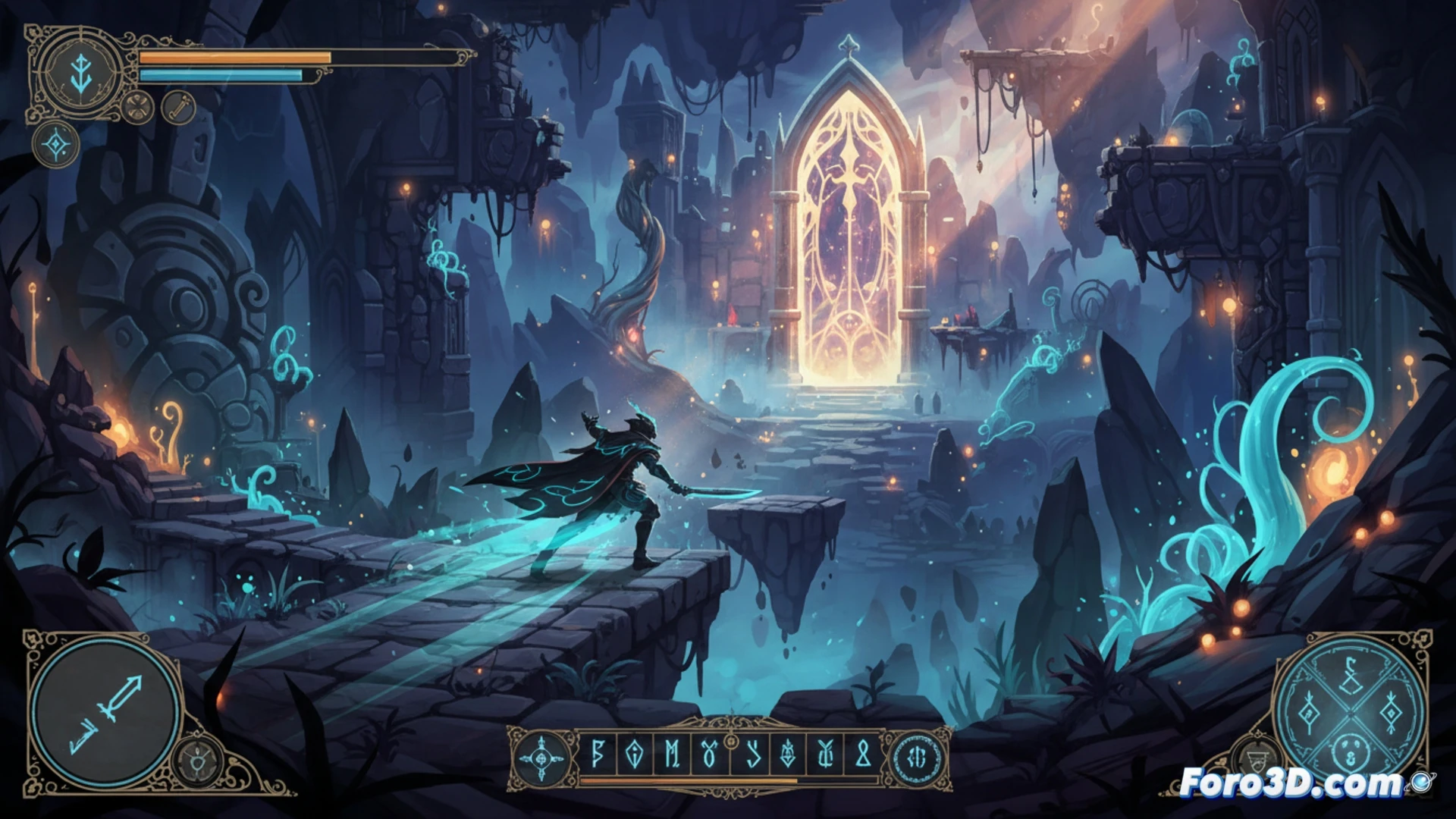
Technical Pipeline: From Photoshop to Interpolation in Unity 🎨
The workflow begins in Adobe Photoshop, where artists draw each pose and expression by hand, achieving a dark fantasy aesthetic with organic strokes. Unlike common 2D rigging methods (such as Sprite bones), the team opted for frame-by-frame animations. To avoid the high memory consumption this entails, they developed custom tools that split sprites into depth layers and apply selective interpolation. In Unity, the Sprite Renderer system is used, combined with a state controller that prioritizes fluidity through the preloading of atlas textures. Level design, with its dense artistic load, relies on the overlay of hand-painted modular tilesets, where each background element is rendered in Sorting Layers to create depth without the need for costly 3D lighting.
Optimization Without Sacrificing Visual Identity ⚙️
The biggest technical challenge was maintaining 60 frames per second while displaying extremely detailed backgrounds and character animations with over 24 drawings per second of action. The solution came through the implementation of a texture streaming system that loads only the assets visible in the camera, combined with the use of Shader Graph for particle effects that mimic ink and smoke without multiplying the draw call. Aeterna Noctis demonstrates that an engine like Unity, when pushed with artisanal tools, can visually compete with AAA productions, as long as the 2D art pipeline prioritizes hierarchy of details and the intelligent reuse of animated resources.
As an indie developer, what was the biggest technical challenge when integrating fluid 2D animations with dense art in Unity, and what pipeline solutions did you implement to avoid performance bottlenecks without sacrificing visual quality?
(PS: game jams are like weddings: everyone is happy, no one sleeps, and you end up crying)