The discovery of the Giant Relicanthus Anemone in the Central Pacific trenches has redefined the limits of biological morphology. With filiform tentacles exceeding two meters in length, this alien-looking cnidarian presents a unique challenge for scientific visualization. Its anatomy, resembling intertwined steel wires, demands advanced scanning and polygonal reconstruction techniques to be fully understood.
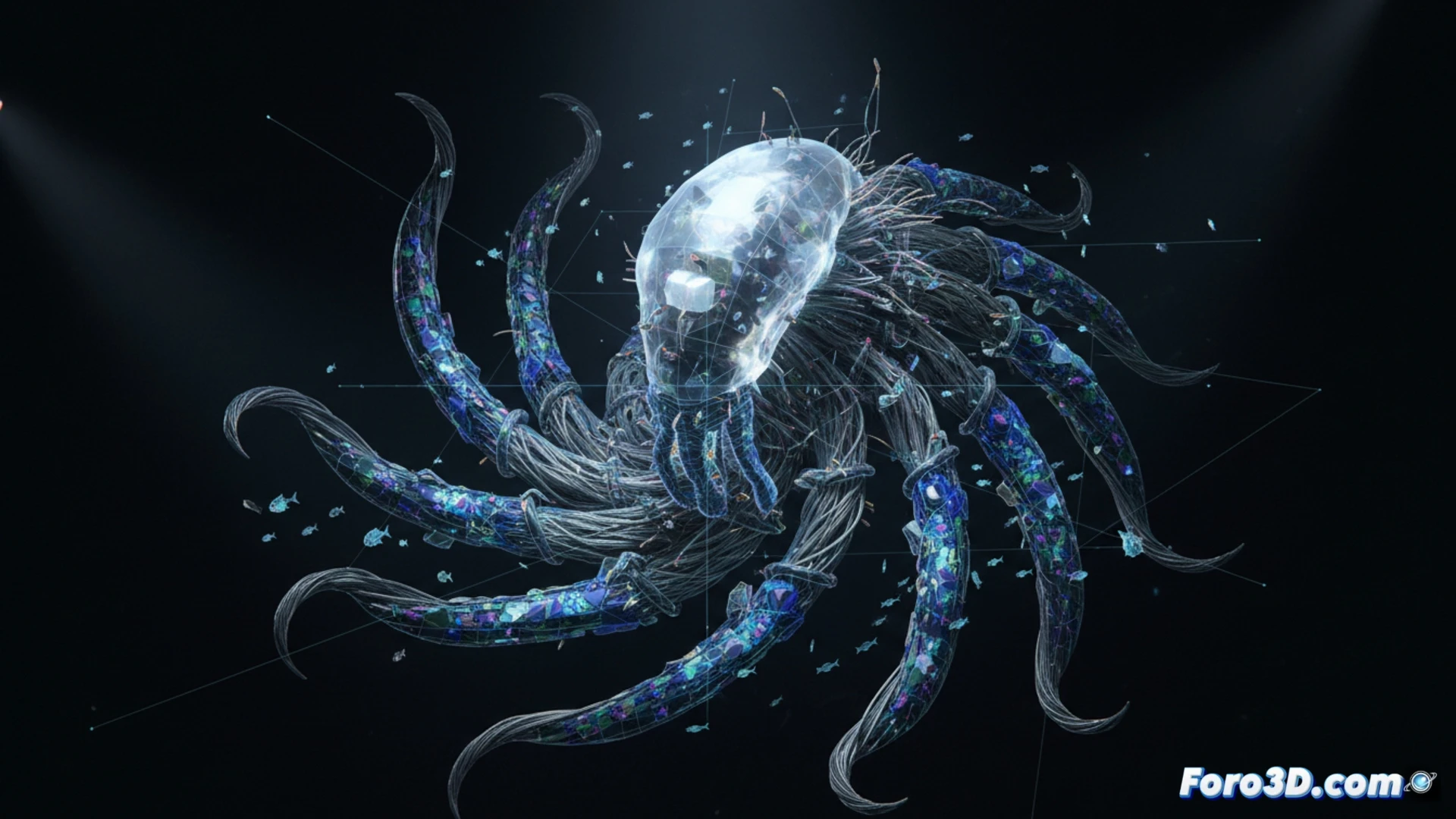
Anatomical Reconstruction and Extreme Habitat Simulation 🌊
To faithfully represent the Relicanthus, modelers must employ high-resolution bathymetry data and photogrammetry of preserved specimens. The key to the 3D model lies in simulating its tentacles using particle systems or dynamic splines, replicating buoyancy in a crushing pressure environment. Additionally, volumetric lighting must simulate the absolute darkness of the abyssal zone, where the only light is bioluminescence. This digital twin allows marine biologists to study the biomechanics of its cnidocytes and hunting strategy without subjecting the organism to the pressure changes of physical extraction.
The Value of the Digital Twin in Conservation 🐠
The 3D modeling of the Relicanthus transcends mere illustration. By creating a virtual Central Pacific habitat, scientists can simulate ecological interactions and predict how climate change or deep-sea mining would affect these fragile creatures. Scientific visualization thus becomes a conservation tool, allowing exploration of an inaccessible ecosystem without disturbing its balance. This approach demonstrates that digital art is indispensable for deciphering the secrets of life at the planet's limits.
Which volumetric lighting and fluid simulation techniques in a 3D environment are most effective for representing the bioluminescence and hypothetical behavior of the Relicanthus anemone's tentacles under the extreme pressure and darkness conditions of the abyssal trenches.
(PS: at Foro3D we know that even manta rays have better social connections than our polygons)