The collapse of shoring in a construction site is not a simple accident, but the visible manifestation of a chain of technical and structural errors. In this article, we will break down the causes of the collapse using 3D modeling tools and material fatigue simulation. We will recreate the failure sequence to identify weak points, comparing the theoretical design with the reality of the incident, demonstrating how digital visualization is key to preventing future disasters.
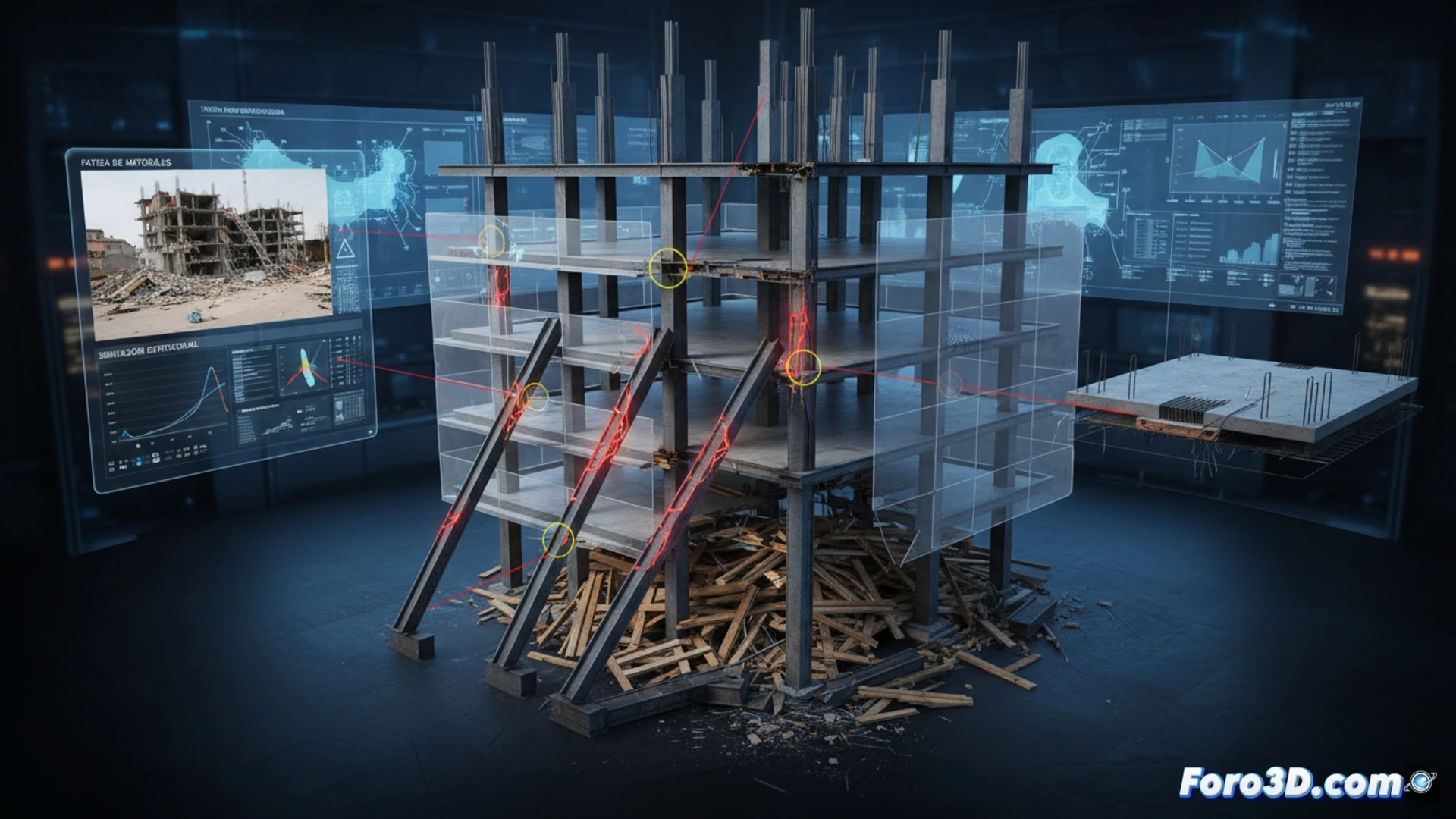
Virtual Reconstruction of the Structural Failure 🏗️
Using finite element software, we modeled the original shoring structure. The simulation revealed that the maximum stress was concentrated at the connection nodes, exceeding the yield strength of the steel used by 40%. Fatigue accumulated from vibrations and cyclic loads during concreting generated microcracks imperceptible to the naked eye. Comparing the ideal model with the actual collapse, we observed a critical discrepancy: the lack of diagonal bracing in the executed design, which caused progressive lateral buckling. The 3D animation shows how deformation begins at the third level of supports, spreading to the entire structure in less than two seconds.
Lessons from Digital Simulation 🔍
The virtual reconstruction explains not only the how, but the why of the collapse. The 3D modeling showed that the live load calculation was underestimated, ignoring the additional weight of workers and machinery on the platform. This tool allows forensic experts and structural engineers to correct designs before execution. In a sector where the margin for error is zero, fatigue simulation becomes the best insurance against collapse. The final question is not whether another collapse will occur, but whether we are using all digital tools to prevent it.
What is the exact point in the chain of technical errors where the collapse of a shoring system goes from being a controllable risk to an irreversible failure on site?
(PS: Simulating a collapse is easy. The hard part is not crashing the program.)