The Sennheiser Conversation Clear Plus is not a simple hearing aid; it is a hearing processing wearable that runs real-time beamforming algorithms. This device uses a microphone array and a dedicated DSP to isolate voices in noisy environments. For the 3D hardware niche, understanding its silicon architecture is key, as it replicates beamforming techniques used in spatial simulations and immersive audio, but with extreme latency and power consumption constraints.
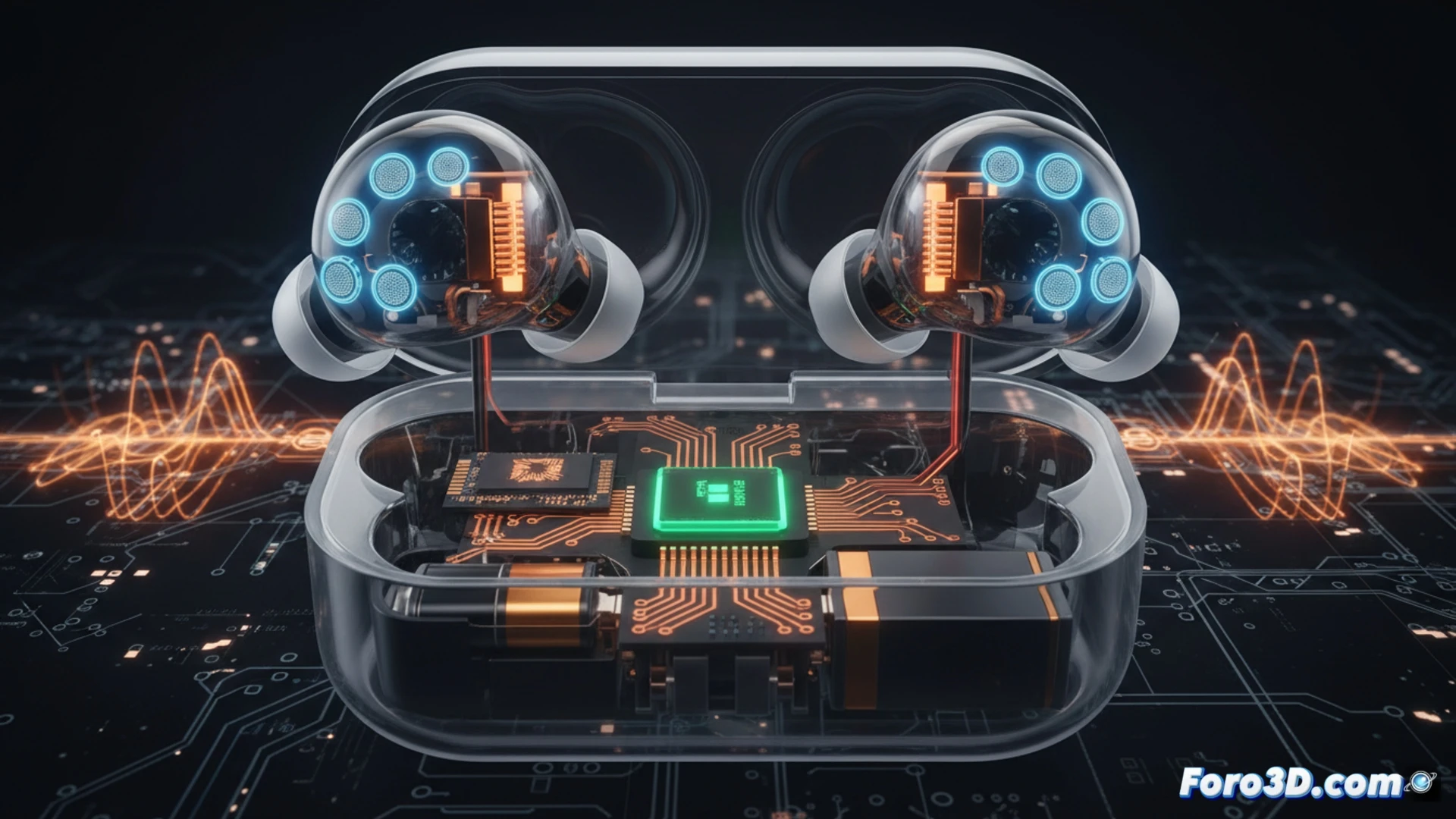
DSP architecture and latency in beam processing 🎛️
The heart of the system is an ultra-low power audio chipset that integrates a multicore DSP. The implemented beamforming algorithms operate in the frequency domain, using short-window FFTs to minimize round-trip latency, which is below 10 milliseconds. This is critical to avoid the occlusion effect and maintain synchrony with the physical world. Compared to other wearables, the Clear Plus stands out for its ability to calculate phase and gain weights for each microphone in real time, a task that in 3D simulation systems requires GPUs or FPGAs, but here it is achieved with an energy footprint of less than 50 mW, ideal for portable spatial audio workflows.
Implications for spatial audio rendering 🎧
The efficiency of beamforming in this wearable suggests that modern DSPs can handle near-field processing tasks that were once exclusive to stationary hardware. For a 3D hardware developer, the Sennheiser Conversation Clear Plus demonstrates that it is possible to run adaptive filters and directional noise cancellation with a latency that allows direct integration into mixed reality headsets. The real technical challenge is not raw power, but optimizing the cache memory and instruction pipeline to maintain temporal coherence between multiple audio channels.
What are the implications of using beamforming in the Sennheiser Conversation Clear Plus for spatial audio rendering in virtual or augmented reality environments with 3D hardware?
(PS: If your computer is smoking when opening Blender, you might need more than a fan and faith)