The figure of the sports coach faces occupational risks that go beyond emotional management. Stress from results, chronic fatigue, and verbal aggression combine with specific physical dangers: overexertion when demonstrating exercises, sustained forced postures, and musculoskeletal injuries typical of imitating movements. 3D technology today offers tools to model, simulate, and prevent these scenarios before they affect the professional's health.
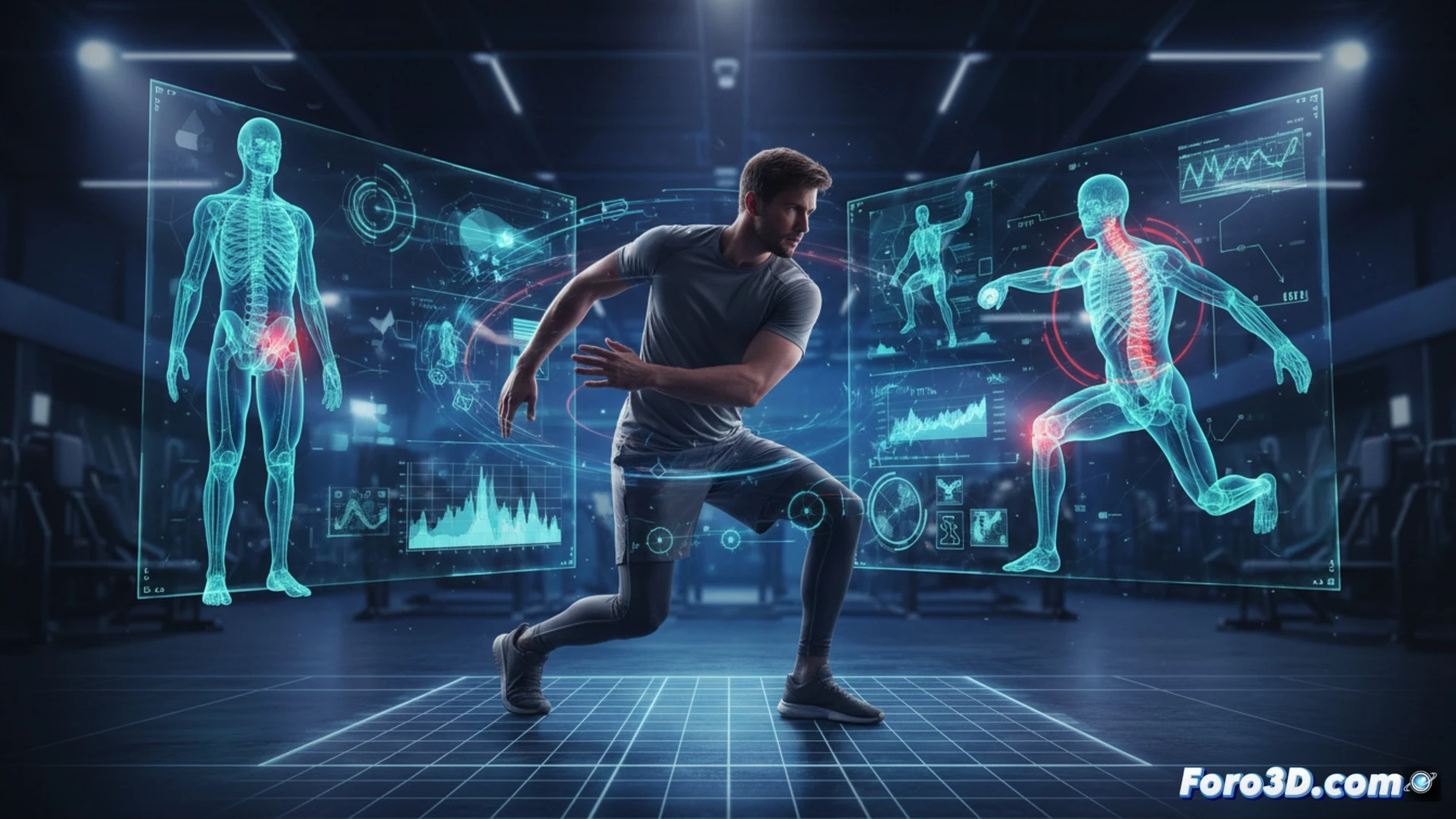
Biomechanical simulation and motion capture to assess forced postures 🏋️
Using motion capture systems (MoCap) and biomechanical simulation software, it is possible to digitally recreate the coach's repetitive actions. Variables such as joint angles, loads on the lumbar spine, and muscle tension during demonstrations of exercises like squats or lifts are analyzed. 3D modeling allows real-time visualization of the forced postures that lead to shoulder, knee, or lower back injuries. With this data, alternative training protocols are designed to reduce risk, such as using virtual assistants or demonstrating via animated avatars, eliminating the need for the coach to physically execute each repetition.
The coach's digital twin as a comprehensive prevention tool 🧑💻
Beyond postural analysis, 3D simulation allows anticipating complex scenarios: accumulated fatigue after long workdays, travel to competitions with road risk, or even the physiological response to chronic stress. Creating a digital twin of the coach, fed with physical load and schedule data, makes it possible to design rotation plans, active breaks, and emotional management techniques. 3D technology not only protects the athlete but also the one who guides them, integrating occupational health at the center of sports performance.
How can a 3D biomechanical analysis system identify and correct the coach's repetitive movement patterns during exercise demonstrations to prevent musculoskeletal injuries associated with work stress and pressure for results
(PS: reconstructing a goal in 3D is easy; the hard part is making it not look like it was scored with a Lego figurine's leg)