The collapse of a hydraulic platform during a musical with actors on board exposes a critical flaw in large-format stage design. The fall, attributed to a loss of synchronization between actuators, forces us to review simulation protocols. This accident is not a simple mechanical failure; it is a warning about how a lack of predictive maintenance on rails and hydraulic systems can turn a show into a tragedy.
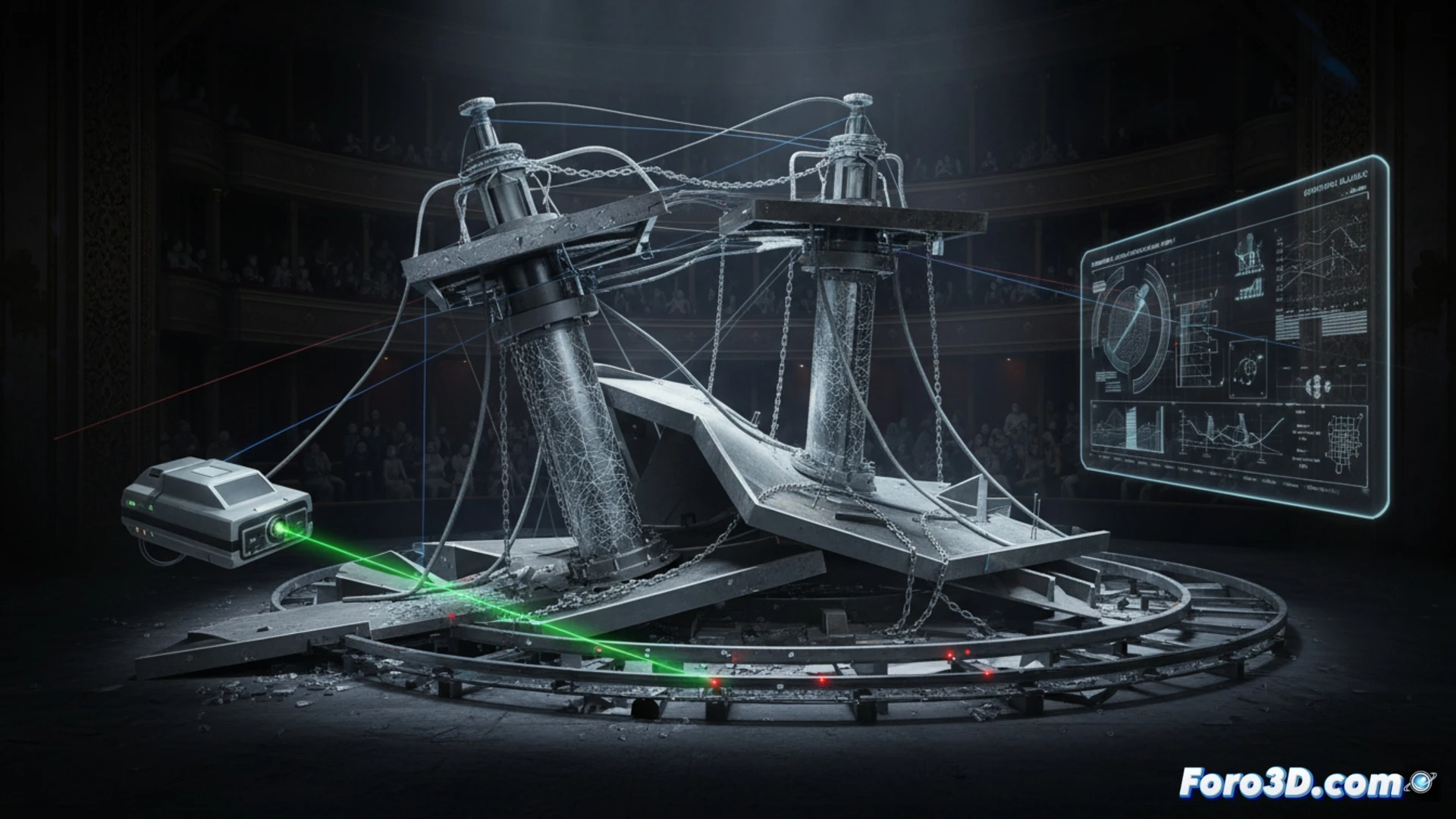
Load simulation and laser metrology: the technical autopsy 🔧
The 3D forensic analysis relies on tools like Autodesk Inventor to model the exact geometry of the platform and its guides. The main hypothesis points to differential wear on the rails, detected through laser metrology with FARO equipment. This point cloud scan reveals micro-deformations that, when imported into Ansys Discovery, show how material fatigue generates points of asymmetric friction. Finite element simulation confirms that a lack of lubrication and accumulated mechanical play cause a delay in one of the cylinders, breaking the synchronization necessary for a safe ascent. The failure was not sudden; it was a progressive deterioration that 3D modeling could have anticipated.
Towards a predictive maintenance protocol for stage systems 🎭
The entertainment industry cannot wait for an accident to audit its systems. I propose integrating periodic scans with FARO Zone 3D into the maintenance plan for every large-format production. By combining this data with dynamic simulations in Maya, we can predict rail wear and adjust actuator response times before synchronization degrades. The true luxury in theater is not pyrotechnics, but the invisible safety that ensures the curtain never falls on a preventable tragedy.
As a failure analyst in stage systems, which 3D simulation methodology do you consider most effective for predicting asymmetric wear in hydraulic elevator cylinders before a catastrophic failure similar to that of the musical occurs.
(PS: modeling audiences in 3D is easier than the real thing: they don't complain, they don't record with their phones, and they always applaud)