Elite football is, above all, a high-risk profession. Acute musculoskeletal injuries, such as sprains, fractures, and ligament tears, are a constant, along with trauma from collisions and falls. However, 3D technology is revolutionizing prevention, making it possible to visualize the internal forces acting on the body before damage occurs.
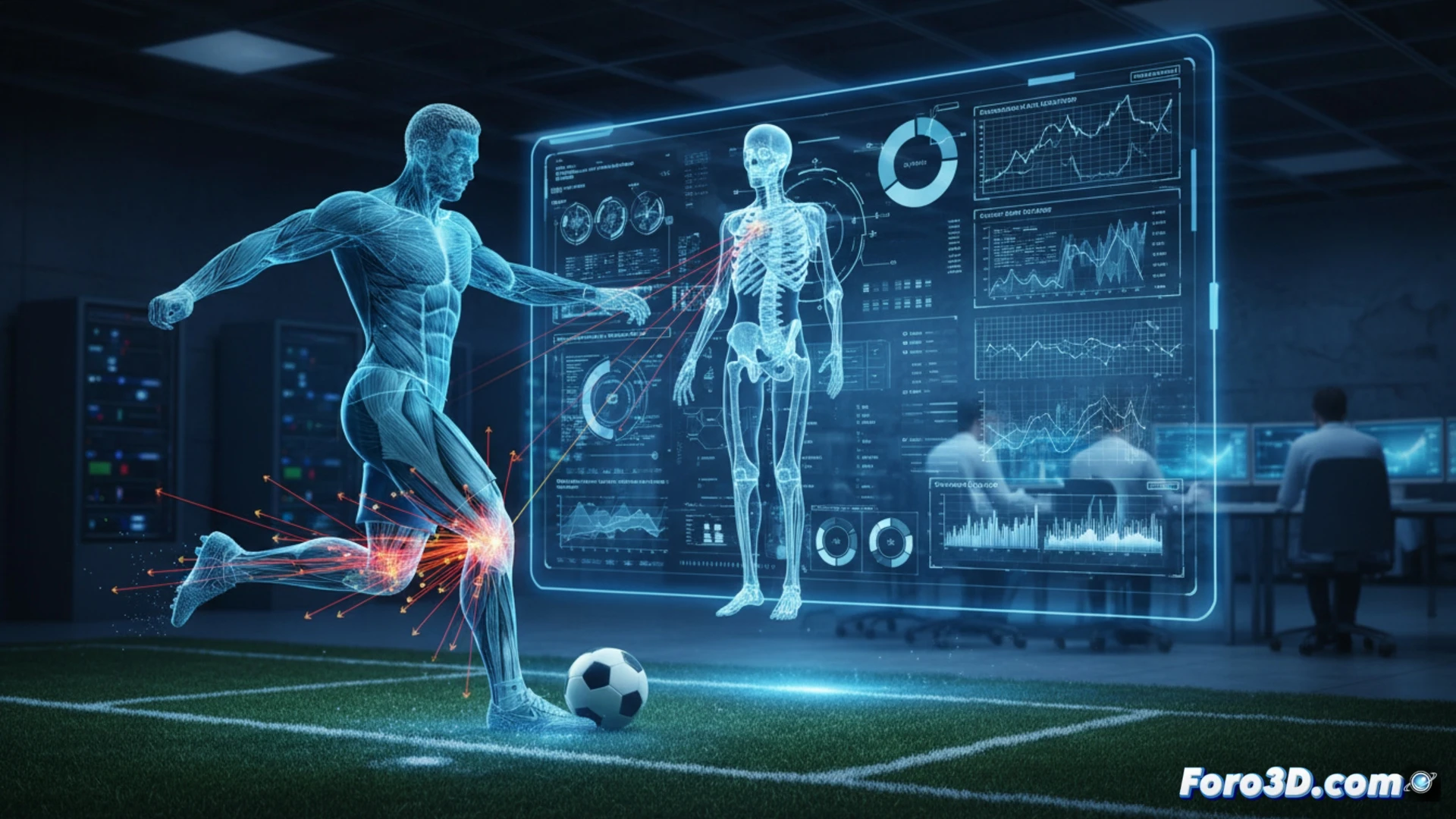
Biomechanical simulation and motion capture for prevention ⚽
Using motion capture systems and 3D modeling, sports engineers can digitally recreate the impact of a header or a fall on artificial turf. These simulations calculate the exact stress on cruciate ligaments or the linear acceleration of the skull, helping to predict concussions. Additionally, volumetric analysis allows monitoring muscle fatigue and detecting overtraining patterns that lead to tendinitis or stress fractures, thus optimizing the player's physical load.
Visualizing risk to protect the athlete 🛡️
Exposure to artificial turf generates specific risks such as abrasion burns and heat buildup in the rubber. With 3D digital twins, we can simulate the interaction of footwear with the surface and adjust hydration and rest protocols. The ultimate goal is not just to treat the injury, but to anticipate it through a virtual representation of the human body under competitive stress, transforming the occupational health of the footballer into a precision science.
How can 3D biomechanical analysis predict and prevent acute musculoskeletal injuries in professional footballers, optimizing their performance and reducing occupational risks on the playing field?
(PS: reconstructing a goal in 3D is easy; the hard part is making it not look like it was scored with a Lego figure's leg)