Last May, a robotic shelf collapsed inside the Svalbard Global Seed Vault, damaging thousands of unique samples. This incident, occurring in a bunker dug into the Arctic permafrost, has opened a technical debate on the embrittlement of galvanized steels in extreme climates. The structural simulation community has focused on analyzing the causes, pointing to two critical factors: low temperature and vibrations induced by HVAC systems.
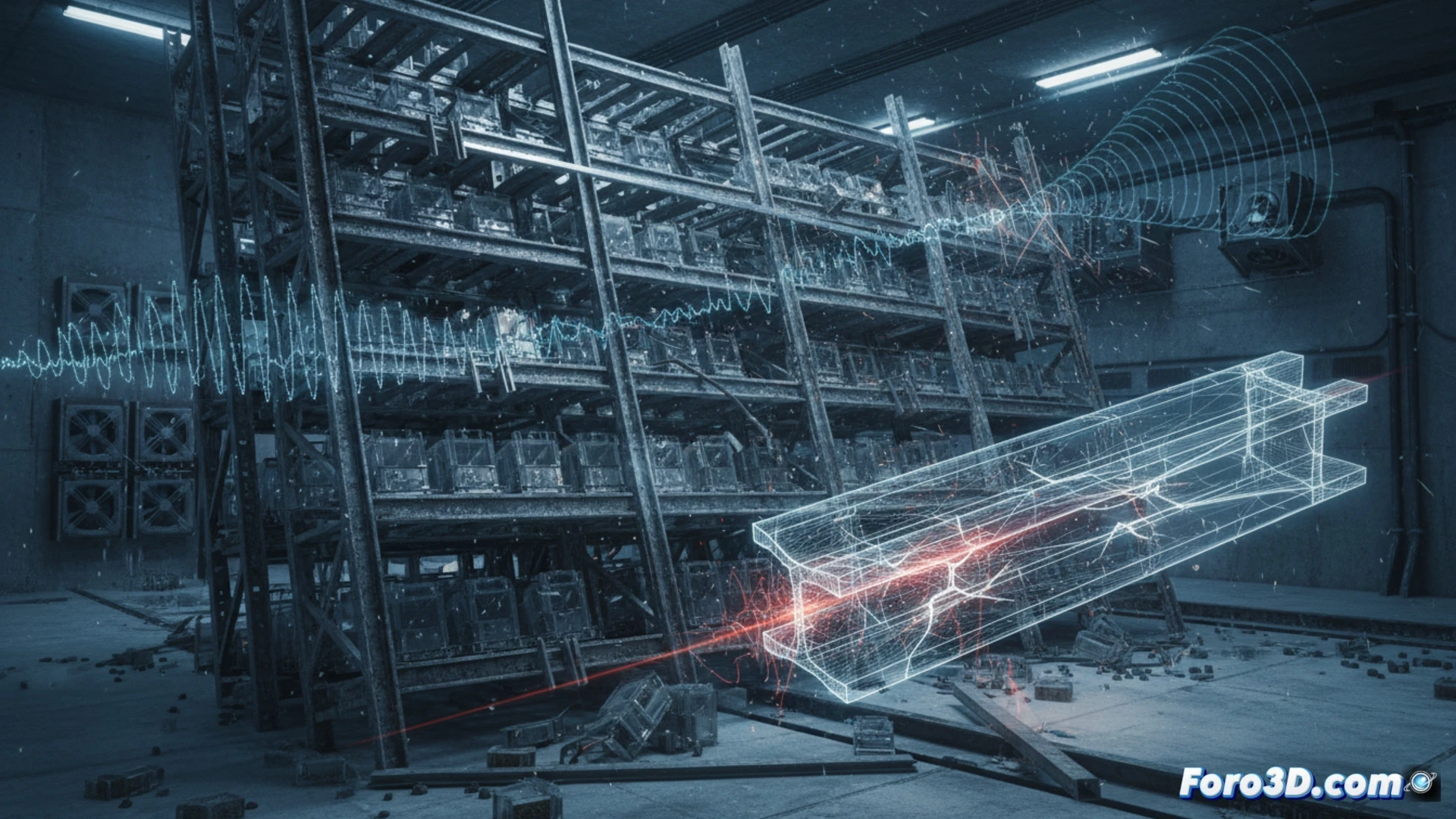
Resonance and Embrittlement Simulation with SAP2000 🛠️
Forensic engineering teams have used SAP2000 to model the structure of the robotic shelving. Initial results from the material fatigue simulation show that galvanized steel, subjected to temperatures of -18 degrees Celsius, would have lost 15% of its toughness, entering a cold embrittlement regime. Modal analysis, performed with 3D scanning data captured using Artec Studio, revealed that the vibration frequency of the fans (approximately 4.2 Hz) matched the natural frequency of the loaded shelf. This resonance, barely perceptible under normal conditions, would have generated cumulative microcracks at the anchor points over years, eventually causing the collapse. Project documentation was managed using Bentley ProjectWise, allowing experts to compare Von Mises stresses in healthy steel versus degraded steel.
Lessons for Critical Infrastructure Design 📐
This case reminds us that 3D fatigue modeling should not be limited to static loads. The interaction between thermal embrittlement and dynamic vibration is a silent failure scenario often overlooked in design manuals. For engineers working with robotic structures in hostile environments, the lesson is clear: it is necessary to incorporate harmonic fatigue analysis and low-temperature embrittlement curves into the digital twin of any critical facility.
What are the key lessons offered by the 3D analysis of steel fatigue applied to the collapse of the robotic shelf in the Svalbard Global Seed Vault for improving the design of metal structures in extreme environments?
(PS: Material fatigue is like yours after 10 hours of simulation.)