The latest update to American Truck Simulator introduces substantial improvements to the Prism3D engine that deserve a detailed analysis. From the implementation of realistic solar lighting to the optimization of draw distance, these changes not only enhance player immersion but also pose interesting technical challenges for developers working with real-time rendering and dynamic weather systems.
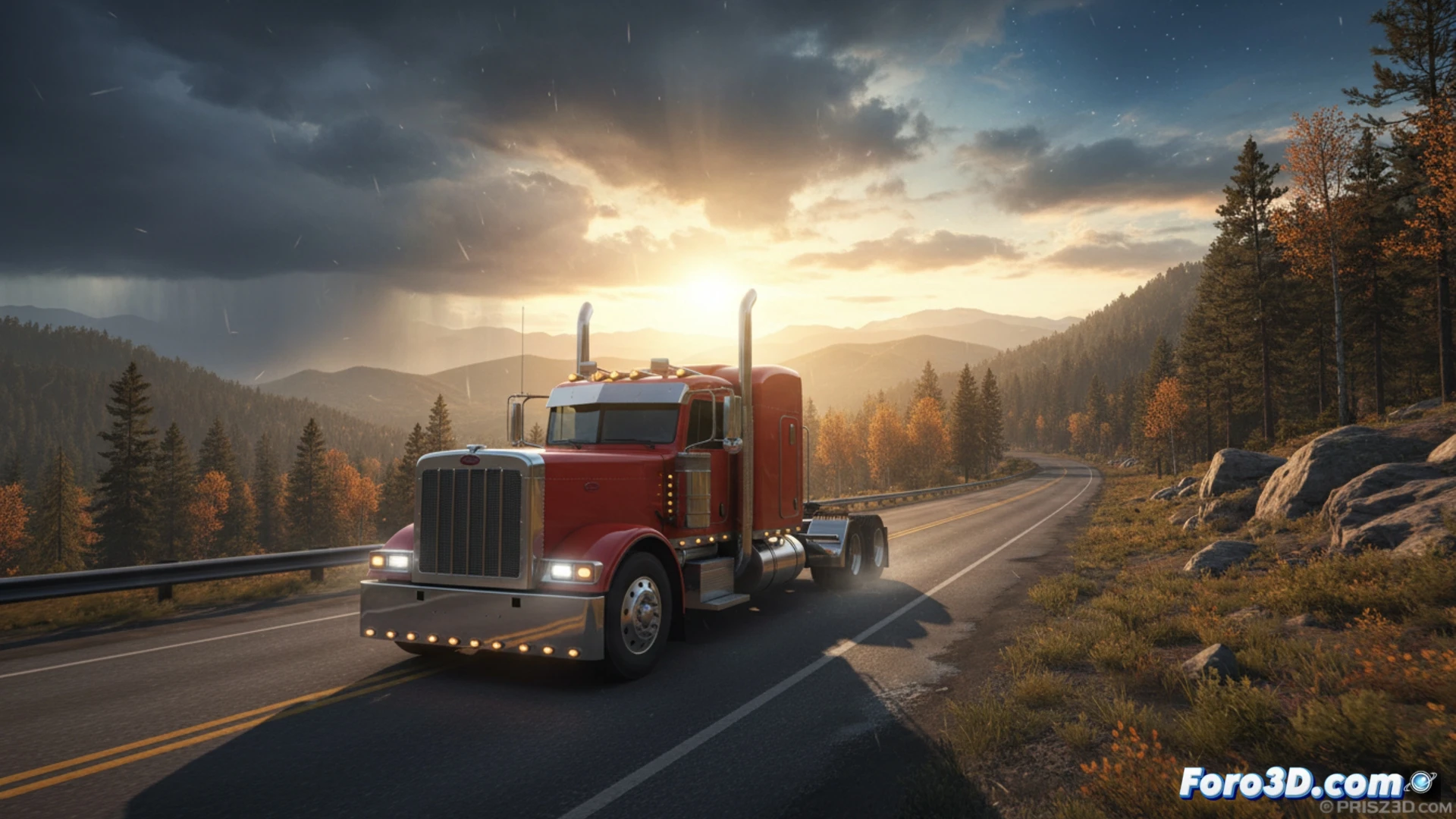
Dynamic solar rendering and LOD optimization in Prism3D 🌞
The core of this update lies in the solar lighting system. Prism3D has modified its pipeline to calculate the sun's position based on real geographic coordinates, using GIS data to determine the latitude and longitude of each map area. This means that indirect light and shadows are recalculated in real time, affecting the reflectance of materials modeled in Maya. To maintain stable performance, the engine implements a more aggressive LOD (Level of Detail) system: objects beyond 500 meters reduce their shadow and texture resolution, while atmospheric haze is painted with depth shaders to avoid visual popping. Independent developers can replicate this technique using dynamic cubemaps instead of fixed schedules, saving computational costs.
Procedural weather and the workflow dilemma 🌧️
The weather improvement introduces rain and snow particles that interact with vehicle physics, but the real challenge lies in visual consistency. By using GIS data for procedural road generation, artists must ensure that weather assets (such as puddles or snow accumulation) align with real topography. This forces a tighter workflow between Maya and the engine: exported height maps must include moisture masks so that Prism3D decides where to apply reflectivity on the asphalt. For small studios, the recommendation is to use a weather system based on texture layers (blend maps) instead of full physical simulation, achieving 70% of the visual effect with half the GPU resources.
As a developer, what specific changes in the Prism3D engine's rendering allow for simulating volumetric lighting and dynamic weather transitions without a significant performance impact on mid-range hardware
(PS: 90% of development time is polishing, the other 90% is fixing bugs)