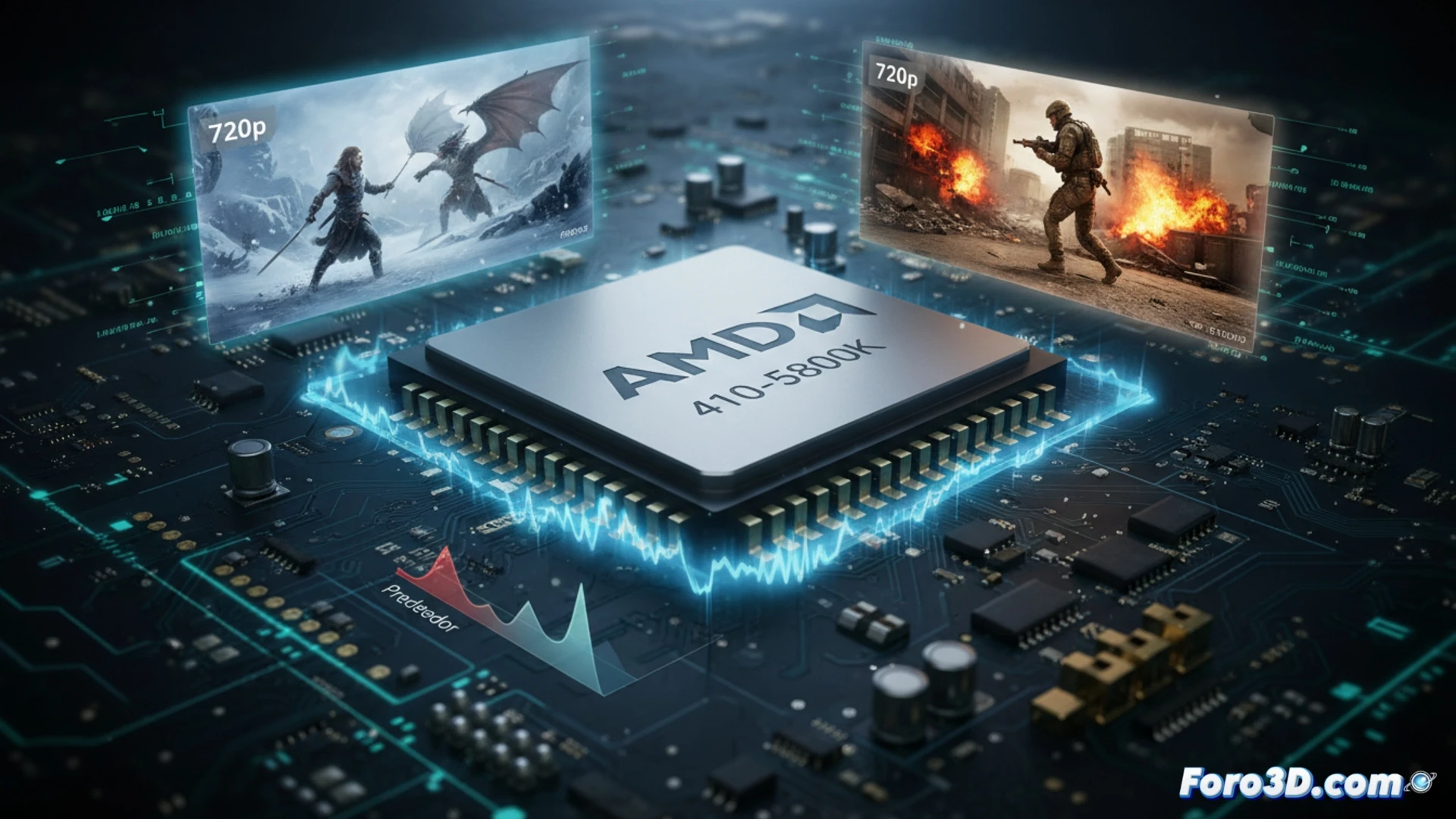
In 2012, AMD launched the A10-5800K, an APU that challenged the stigma of integrated graphics. With four cores at 3.8 GHz and the Radeon HD 7660D GPU, this chip proved it was possible to play titles like Skyrim or Battlefield 3 at 720p without a dedicated graphics card. Its graphical performance doubled that of its predecessor, marking a milestone that redefined what we expect from an all-in-one processor.
Historical performance vs. modern 3D standards 🚀
Today, the A10-5800K lags far behind modern APUs like the Ryzen 7 8700G with Radeon 780M, which offers up to 8 times more shader performance. For professional 3D workflows, such as modeling in Blender or rendering with Cycles, a dedicated GPU like the RTX 4060 remains essential. However, for basic polygon mesh modeling or light texture work in software like SketchUp, a modern APU is already sufficient, something the A10-5800K only hinted at a decade ago.
Legacy and relevance for the occasional creator 💡
The legacy of the A10-5800K is not its current power, but its philosophy: it proved that integration is not synonymous with sacrifice. Today, Ryzen APUs allow students or 3D enthusiasts to get started without investing in a dedicated GPU. Although professional rendering work or complex simulations require separate hardware, this 2012 chip reminded us that the barrier to entry for 3D modeling can be much lower than we imagine.
What was the true impact of the AMD A10-5800K on the development of integrated graphics for low-budget 3D modeling workstations?
(PS: remember that a powerful GPU won't make you a better modeler, but at least you'll render your mistakes faster)