The ads promise a foolproof system for making automatic money with Amazon FBA, but the advertiser's real business is selling you the course, not teaching you how to sell. The market is saturated with resellers, profit margins are minimal, and competition is fierce. Meanwhile, a quiet and profitable sector is growing in e-commerce: product visualization with interactive 3D models and augmented reality.
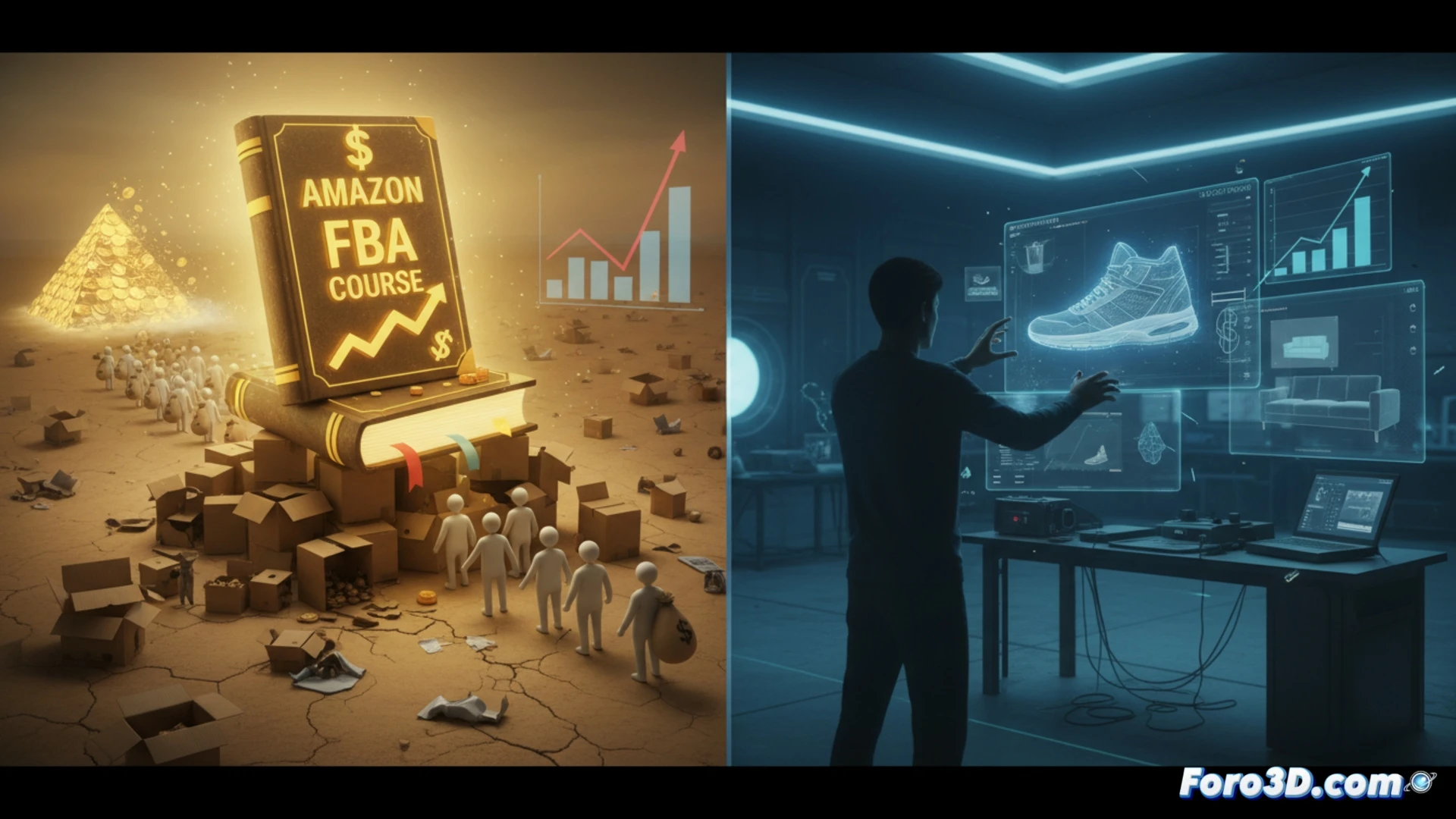
The trap of the foolproof system vs. real conversion 🚫
FBA courses are based on a replicable model that, in theory, anyone can execute. However, the reality is that Amazon's algorithm penalizes products without visual differentiation. An online sales study shows that products with interactive 3D visualization increase conversion rates by up to 40%, reducing returns. While the course sells you smoke, brands invest in photorealistic rendering and 3D configurators to stand out. Learning to model and texture products is a demanded technical skill, not a financial shortcut.
3D visualization: the real business without saturation 💡
The promise of financial freedom with automatic sales is a mirage. The real money is in creating digital assets: interactive catalogs, product animations, and immersive scenes for online stores. While gurus sell courses, visualization studios bill per project. If you're looking for a solid business, invest in learning tools like Blender or Unreal Engine. The market doesn't need more resellers; it needs professionals who can make a product sell itself with an image.
If Amazon FBA courses promise an automated passive income system, but their real business is selling you the course, how can you differentiate between a legitimate e-commerce opportunity and a marketing strategy disguised as training?
(PS: 3D models in e-commerce are like shop windows: pretty, but you can't touch them.)