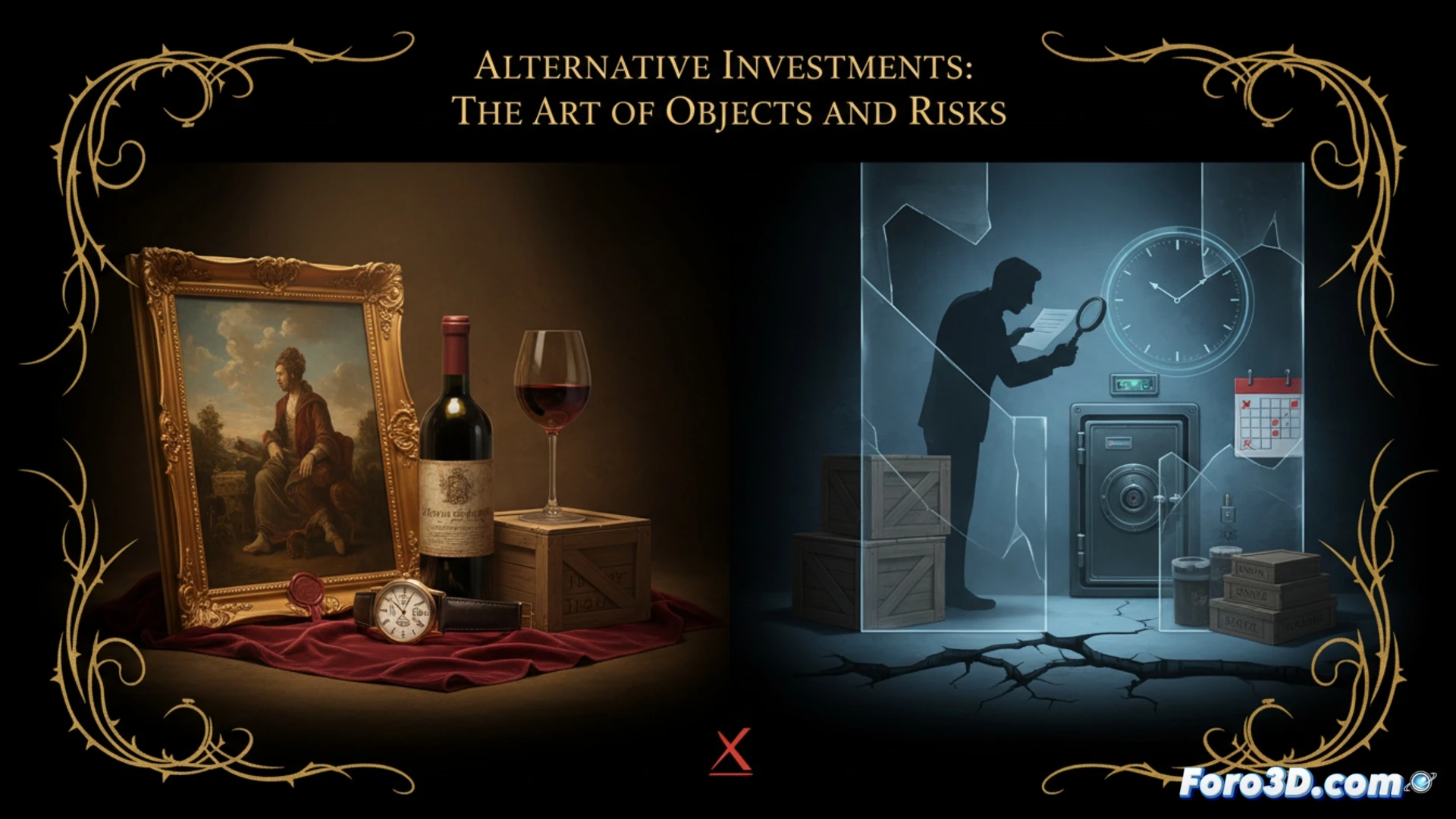
Investing in alternative assets like art, wine, or watches attracts due to their glamour, but it hides real risks. Liquidity is low: selling can take months. An expert eye is required to authenticate pieces, and storage and insurance costs eat into profitability. It's not for everyone. 💎
Blockchain and authenticity: the digital seal against counterfeits 🔗
Blockchain technology offers traceability for these assets. Each piece can be associated with a non-fungible token (NFT) that certifies its provenance and authenticity, reducing the risk of fraud. Some platforms tokenize fractional ownership of artworks, facilitating entry with reduced capital. However, the volatility of the crypto market adds another layer of uncertainty. It's not a magic solution.
The wine you drank: the investment you'll never see again 🍷
The good thing about investing in wine is that, if the market crashes, you can always open a bottle to drown your sorrows. The bad thing is that, if your home cellar doesn't maintain the exact temperature, that 500-euro Bordeaux tastes like cleaning vinegar. In the end, your great alternative asset becomes an alcoholic souvenir and a lesson in financial humility.