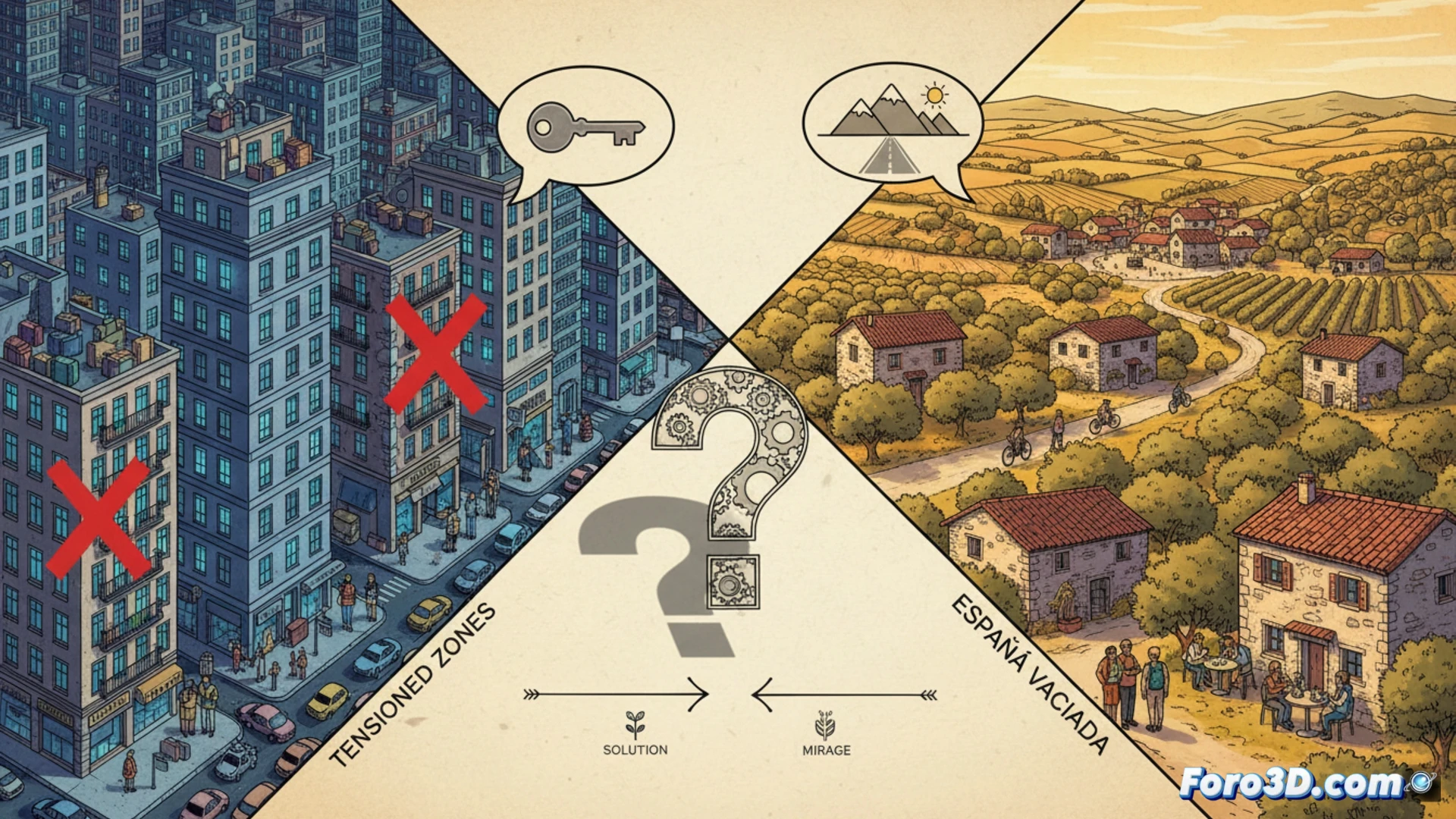
The proposal to ban short-term vacation rentals in stressed areas aims to relieve pressure on the housing market in large cities. The idea is to redirect investment and tourism towards depopulated Spain, generating a double benefit: more available housing in dense areas and economic reactivation in sparsely populated regions. A plan that sounds logical on paper.
Management technology: platforms and data control to redistribute tourism 🏘️
The technical key lies in artificial intelligence and big data systems to monitor occupancy and prices in real time. Platforms like Airbnb or Booking should integrate APIs that block listings in stressed areas, while geolocation algorithms would incentivize properties in rural areas. The development of a digital census of tourist accommodations, with public and updated access, would allow administrations to make decisions based on data, not hunches.
The beach bar of depopulated Spain is already getting the towels ready 🏖️
Of course, all this sounds very nice until the owner of an apartment in downtown Madrid discovers that their new destiny is to rent it out in a village in Teruel with two inhabitants and a cat. Tourists, for their part, will line up to pay 200 euros a night for a house with wood heating and wifi that works when the wind blows favorably. But hey, at least depopulated Spain will have queues to get into the bar, even if it's the only one.