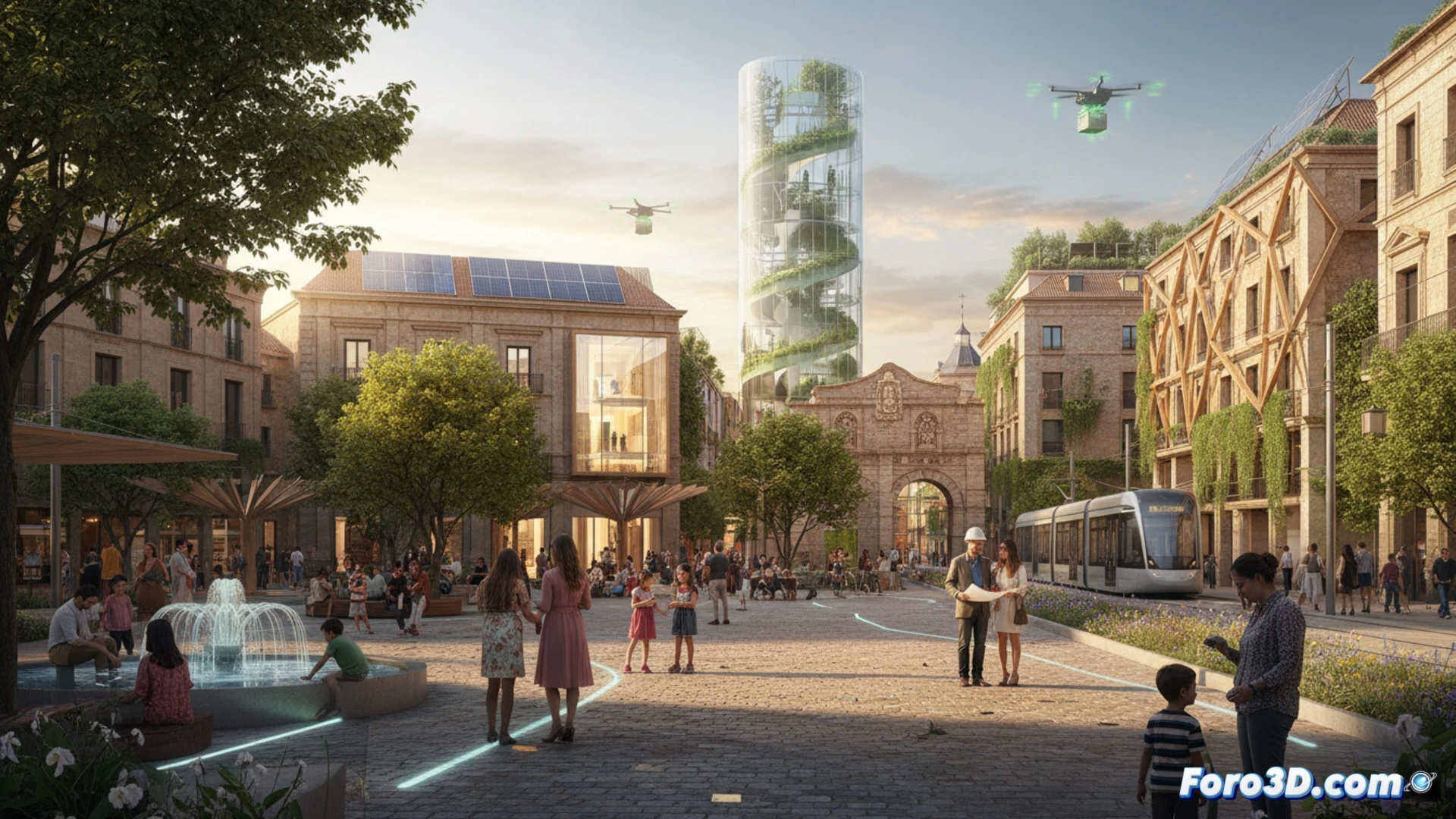
An architect has turned the Almagro neighborhood into an urban laboratory where century-old facades and modern solutions coexist. He rehabilitated emblematic squares and buildings, integrated green areas, and applied energy efficiency criteria. Residents have reclaimed public spaces, and street life flows with renewed vitality. It is a clear example of sustainable urban development that prioritizes social cohesion without erasing the traces of the past.
Energy efficiency and technology at the service of the historic center 🏛️
The intervention includes geothermal climate control systems in rehabilitated buildings, solar panels integrated into Arabic tile roofs, and LED lighting sensors that adapt to pedestrian flow. The original load-bearing walls were reinforced with sprayed cork insulation, and double-glazed windows respect the original wooden frames. Everything is connected to a monitoring network that adjusts energy consumption in real time. Technology does not compete with aesthetics; it complements it.
Happy residents, confused tourists, and an architect with infinite patience 😅
Now residents can sunbathe in squares that were once parking lots, although some tourists still search for the old vacant lot with selfie stick in hand. The architect has had to explain more than a thousand times that the concrete bench with a temperature sensor is not an extraterrestrial artifact. And while retirees argue whether the LED streetlights provide better light for their domino game, the neighborhood breathes. Even the pigeons seem more organized.