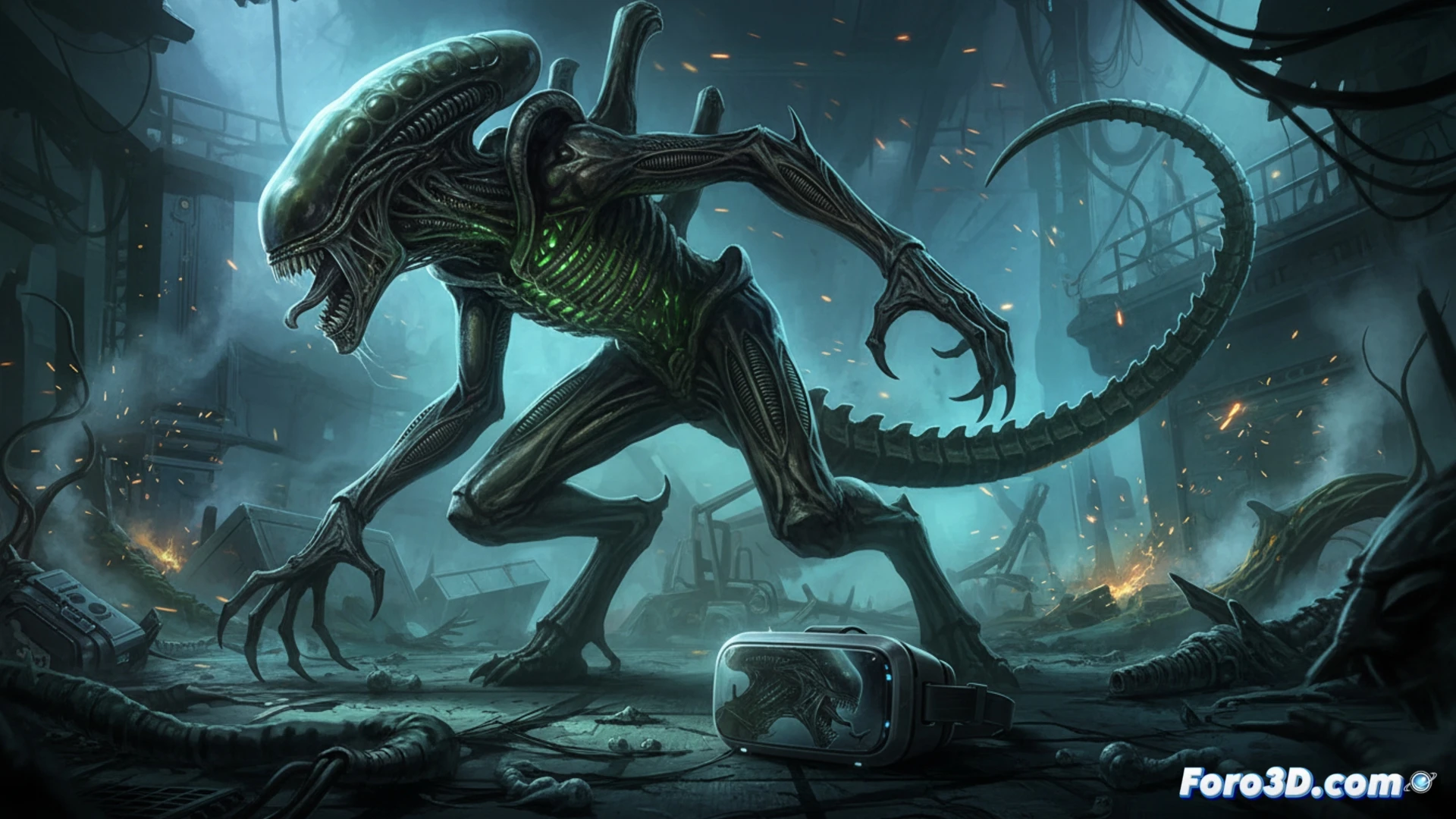
Alien: Rogue Invasion represents a generational leap in virtual reality by bringing Ridley Scott's iconic creature to a level of detail never seen before. The experience relies on Unreal Engine 5 to manage dynamic lighting and claustrophobic environments, while ZBrush and Substance define the organic anatomy of the Xenomorph and the metallic wear of the facilities. This trio of tools enables sensory immersion that redefines the horror genre in VR. 🎮
Technical Pipeline: ZBrush, Substance, and UE5 in Symbiosis 🔧
High-polygon modeling in ZBrush captures every biomechanical detail of the Xenomorph, from the viscous textures of its exoskeleton to the joints of its tail. Substance Designer complements this work by generating realistic metallic materials for the ship's walls, using roughness and occlusion maps that react to light in real time. Unreal Engine 5 integrates these assets through Lumen and Nanite, ensuring geometry renders without sacrificing performance on VR headsets. The result is an experience where every drop of acid and every reflection of metal feels physically present in 3D space.
The Impact of Graphical Fidelity on Alien Narrative 👾
The new generation of VR seeks not only visual realism but also to enhance narrative tension. In Rogue Invasion, the high definition of metallic materials and volumetric lighting turn every dark corridor into a psychological trap. The detail of the Xenomorph, from its moist texture to the movement of its muscles, creates an overwhelming presence that exploits the player's vulnerability. This approach demonstrates that horror in VR depends as much on the story as on the technical precision of the 3D assets.
What specific technical innovations in the game engine of Alien Rogue Invasion manage to generate such an immersive sense of vulnerability and tension that surpasses other VR horror titles?
(PS: and if you get motion sickness with VR goggles, you can always blame the coffee)