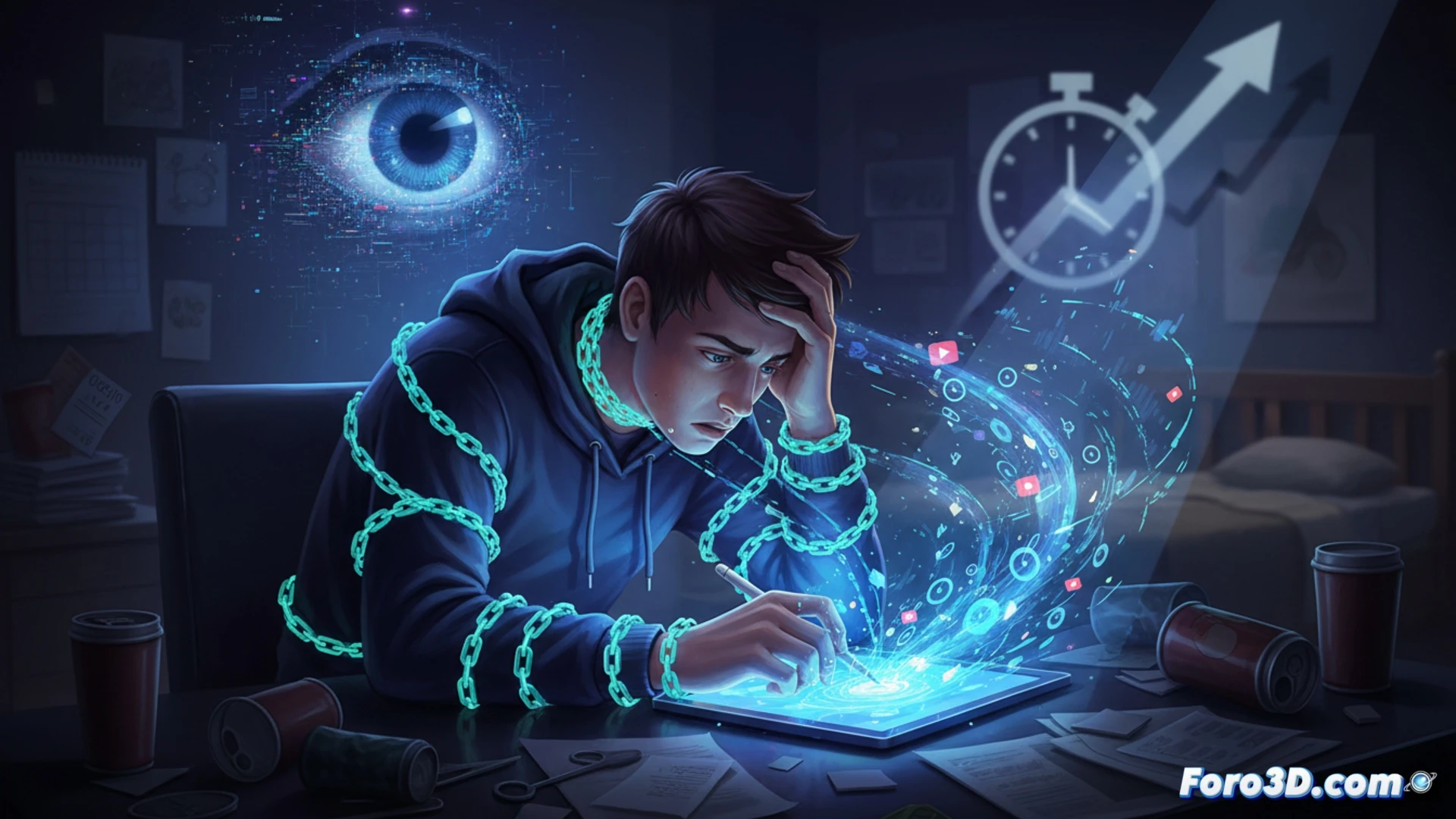
The figure of the content creator has established itself as an emerging profession in the digital economy, but its occupational risk analysis reveals a worrying reality. Beyond the camera and keyboard, these professionals face forced postures during hours of editing, chronic eye strain, and extreme sedentary behavior. However, the true danger lies in the invisible pressure of algorithms, which dictate unrealistic deadlines and success metrics, triggering stress, anxiety, and musculoskeletal disorders derived from irregular work hours.
The role of AI in amplifying psychosocial risks 🤖
Artificial intelligence and platform recommendation systems act as a relentless digital foreman. The need to constantly publish content to beat the algorithm generates mental overexertion and constant decision fatigue. The creator must deal with automated moderation, which is often erratic, and exposure to criticism or harassment on social networks, a serious psychosocial risk. AI, designed to maximize retention, fosters reactive work cycles where anxiety over metrics replaces creativity, leading to burnout and impostor syndrome.
Digital health strategies for a more human ecosystem 🌿
To mitigate these risks, it is imperative to adopt time management tools that automate repetitive tasks, freeing up cognitive load. Platforms must implement ethical limits in their algorithms, avoiding pushing the creator into compulsive production. At an individual level, digital health involves setting fixed schedules, using blue light filters, and practicing scheduled disconnection. The future of the profession depends on balancing productivity with well-being, remembering that no content is worth the anxiety it generates.
How is the algorithmic pressure for constant digital content production redefining musculoskeletal and psychological disorders as the new occupational disease of the content creator?
(PS: moderating an internet community is like herding cats... with keyboards and no sleep)