A team of scientists in the United States has developed a 3D-printed material that emits its own light thanks to bioluminescent algae integrated into its structure. This compound glows without the need for batteries or electrical connection, opening up possibilities in sustainable lighting, signage, and medical devices. The technique represents a firm step towards living and functional materials.
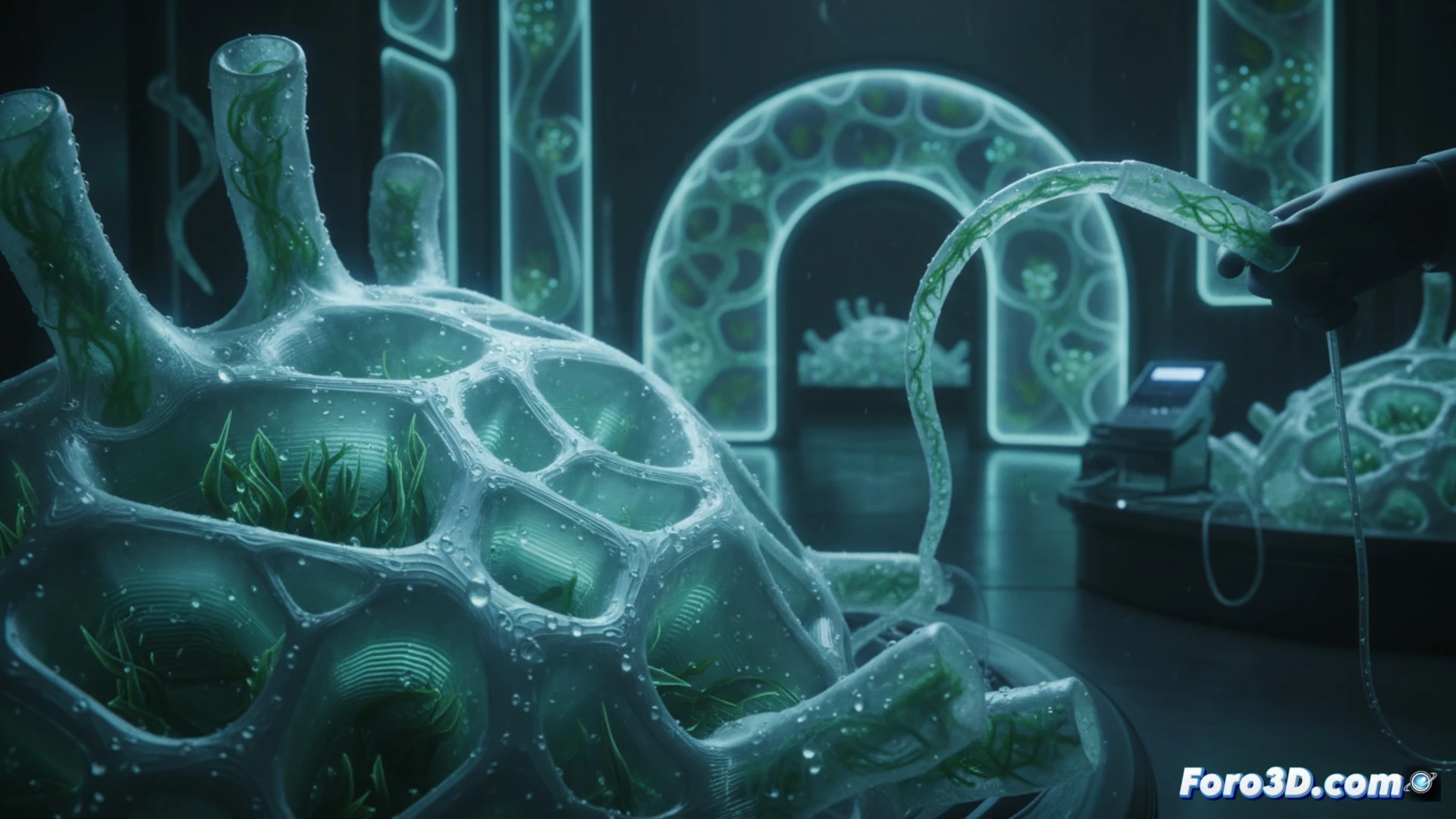
How they make algae glow inside solid resin 🌿
The key to the process lies in combining living luminous algae with a special resin that solidifies layer by layer during 3D printing. The researchers managed to maintain the algae's ability to produce light continuously after the material cured. This allows for creating objects with complex shapes that emit a constant and autonomous glow, without relying on external energy sources. It is a direct integration of biology and additive manufacturing.
Goodbye to lamps, welcome to desk fish with their own light 🐟
With this breakthrough, forget about changing bulbs or paying the electricity bill. Now you can have a lamp that, instead of burning out, starves to death if you don't feed it. Of course, the glow is dim, so if you're looking to read at night, better buy a desk lamp and leave the algae for decorating the fish tank. At least, when it goes out, you won't have to call an electrician, but a biologist.