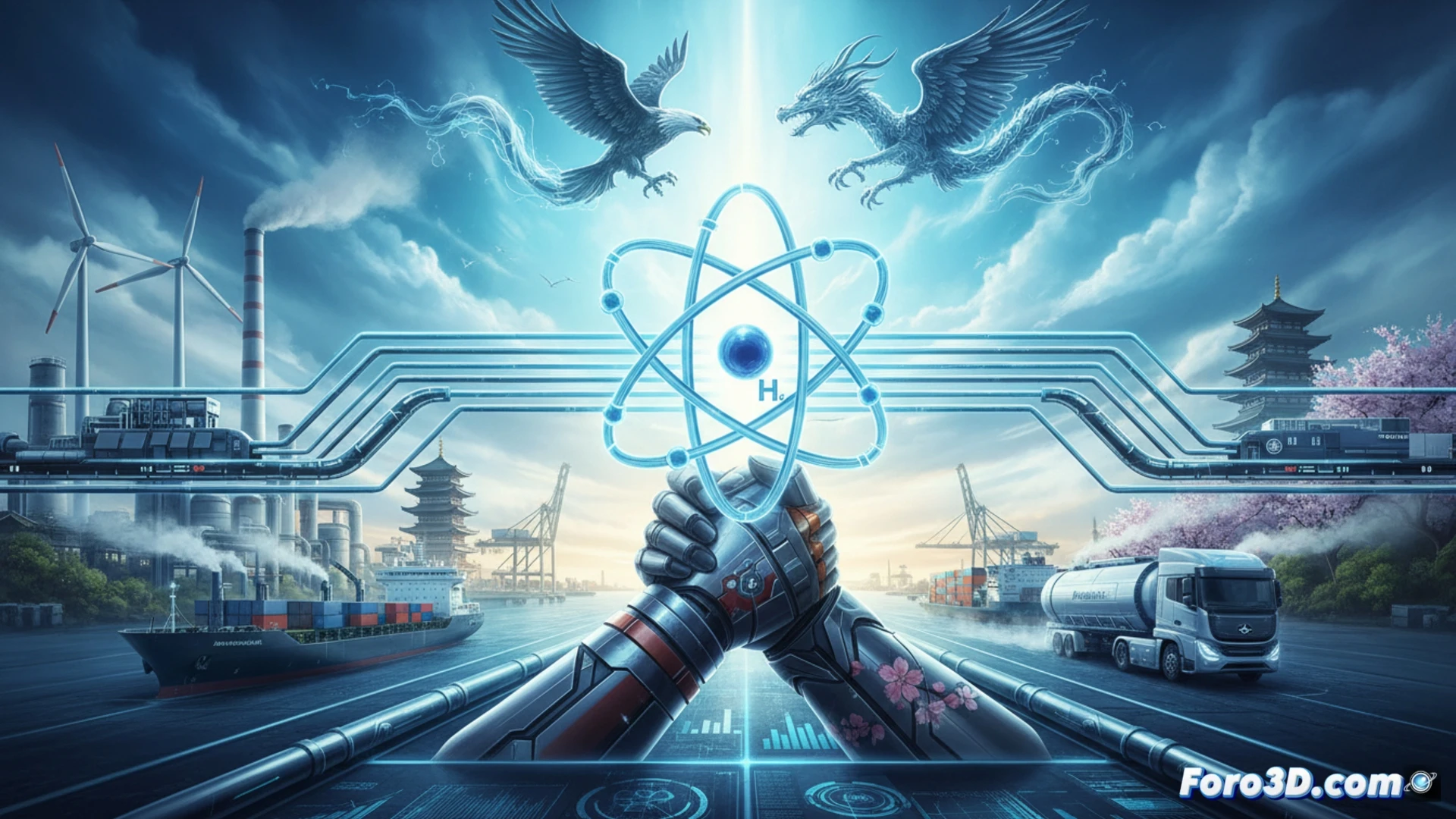
Since 2019, Germany and Japan have strengthened their collaboration around hydrogen as an energy vector. Recent agreements between firms such as Kawasaki Heavy Industries and Daimler Truck aim to develop supply chains and fuel cell technologies. An alliance that promises to move the market, although the path is still full of technical and economic bumps.
Fuel cells and logistics for a global supply 🔋
Cooperation focuses on two fronts: the production and transport of liquefied hydrogen, and the integration of fuel cells in heavy vehicles. Kawasaki has already launched a hydrogen tanker, while Daimler is testing trucks with fuel cells. The goal is to create a logistics corridor connecting Japanese production with German industrial demand, using ammonia as a carrier to reduce storage costs.
Hydrogen, that expensive friend everyone wants to have 💸
Sure, the theory sounds nice: two industrial powers shaking hands to save the planet. But then you look at the price of green hydrogen and wonder if it wouldn't be cheaper to fill the tank with banknotes. While engineers celebrate their agreements, accountants are already calculating how many subsidies will be needed so that this is not just a nice laboratory experiment with a futuristic smell.