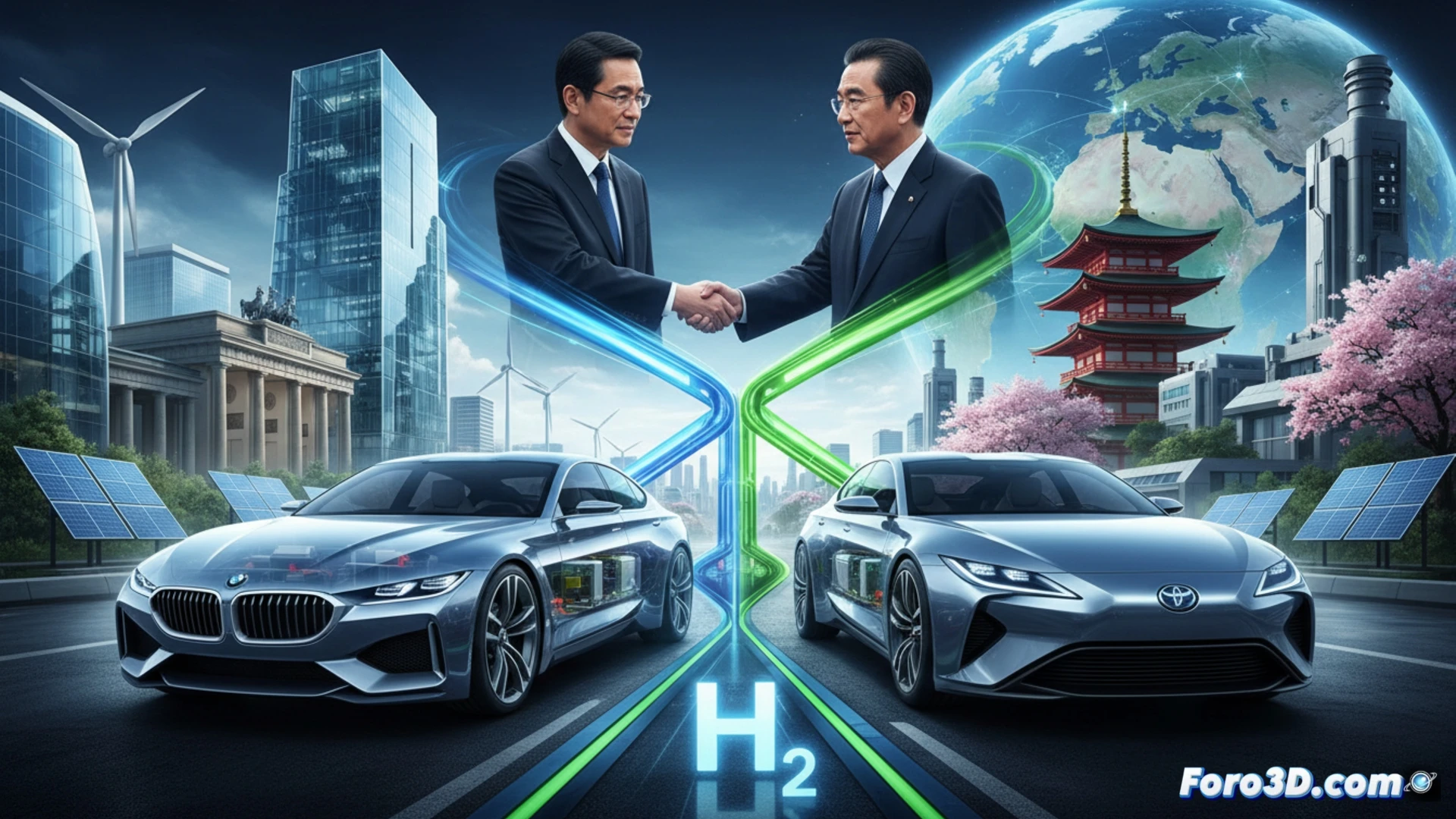
German Transport Minister Patrick Schnieder has placed green hydrogen at the center of the debate during his visit to Japan. His goal is clear: to reduce dependence on batteries and fossil fuels. To this end, he has highlighted the alliance between BMW and Toyota, two giants joining forces to develop more compact and efficient fuel cells, with an eye on series production by 2028.
Fuel cells: from Austria to Japan in search of efficiency 🚗
The technology will be manufactured on two fronts: BMW in Austria and Toyota in Japan. The goal is to reduce the size of hydrogen cells without losing power, a key step to integrate them into production models. Schnieder insists that hydrogen must be prepared for mass production, which involves solving logistical and cost challenges. The alliance aims to compete directly with battery electric vehicles, offering an alternative with fast refueling and greater range.
Hydrogen: the bet that promises (and that some still see as a dream) 💭
While politicians dream of a world without batteries or gasoline, the reality is that hydrogen remains an expensive and scarce guest at gas stations. But no matter: if BMW and Toyota say we will have production hydrogen cars by 2028, who are we to doubt? That said, they shouldn't forget to install the pumps, because a hydrogen-powered car is useless if it can't find a place to fill up. The irony of progress.