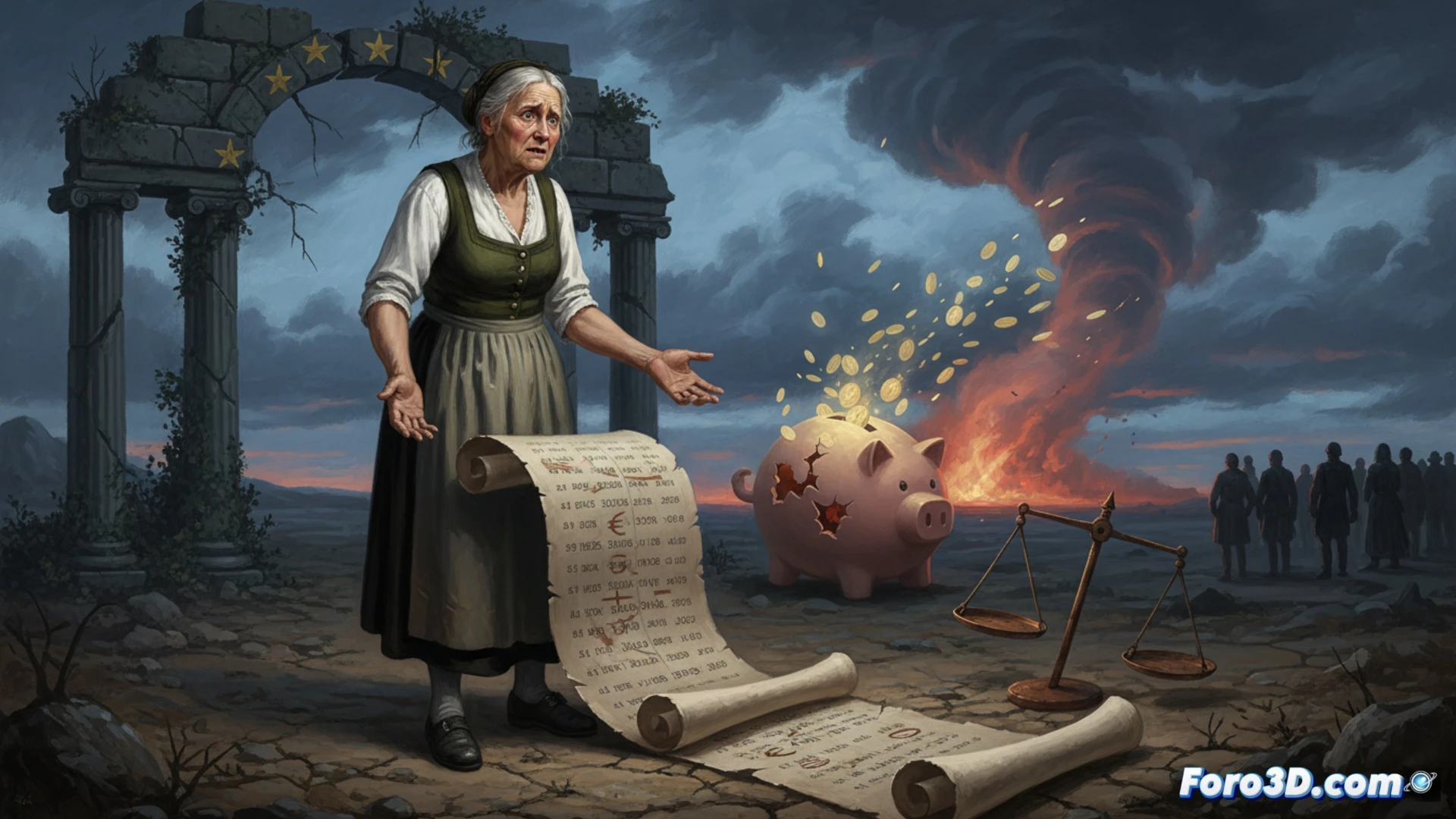
Discontent in Germany is growing in step with inflation and the loss of purchasing power. A part of the population feels that the historic financial support for the European Union does not correspond to the aid received now. This perception of imbalance fuels a critical distancing from the European project in a tense economic context.
The German industrial engine and the burden of energy dependence ⚙️
German industry, the pillar of its economy, faces a complex transition. Dependence on Russian gas, broken after the conflict in Ukraine, sent production costs soaring. Sectors such as automotive and chemicals grapple with a competitive disadvantage compared to other European economies with less exposure. Infrastructure modernization is progressing slowly, while bureaucracy hinders investment in renewable energies.
The neighbor who paid for the round and now asks for a euro for coffee ☕
It turns out that being Europe's net payer has its drawbacks. When the German economy sneezes, Brussels offers it a rough paper tissue. Meanwhile, southern countries enjoy their recovery funds. Now Germans look at their wallets, see inflation eating away at their bonus, and wonder if it wouldn't be better to invest in their own beer rather than everyone else's.