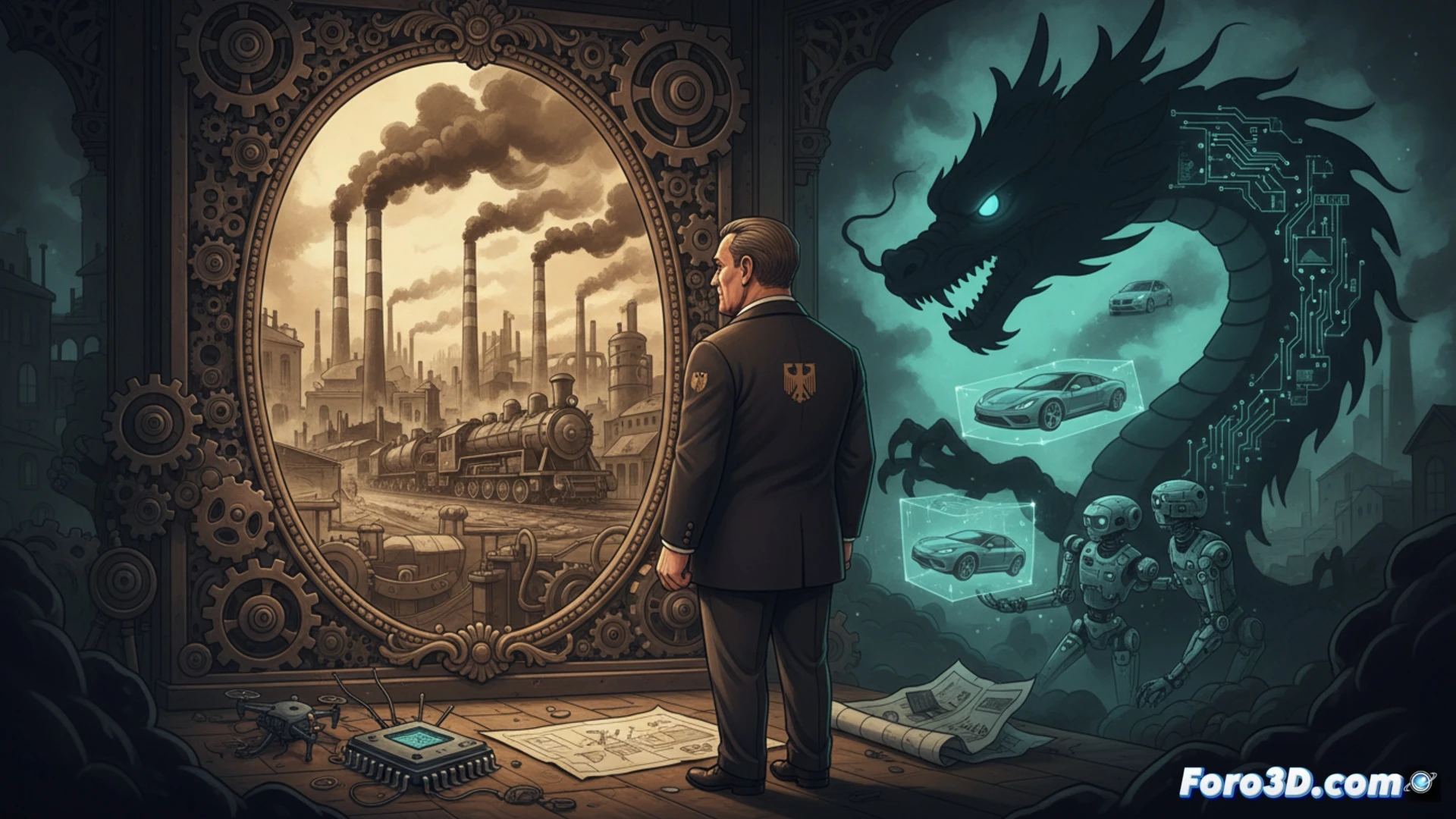
Economist Philippa Sigl-Glöckner has hit the nail on the head by pointing out that the German industrial model, in place since 1945, has been resting on its laurels. According to her, this traditional approach does not prioritize cutting-edge technologies, leaving the country more exposed than ever to Chinese competition. The lack of disruptive innovation in key sectors limits its capacity for global adaptation.
Half-baked technology: the burden of conservative engineering 🛠️
The problem is not technical quality, but direction. While China bets on artificial intelligence, solid-state batteries, and cutting-edge semiconductors, Germany clings to its precision machinery and combustion engines. The obsession with optimizing the existing without taking risks on the new has created an efficiency bubble that generates no disruption. Without a conversion towards sectors like quantum computing or biotechnology, the country is losing ground in the global race.
The German engine: perfect for 1985, obsolete for tomorrow 🚗
Germany has been manufacturing cars for decades that are a work of engineering. The problem is that the world no longer wants works of engineering; it wants gadgets with giant screens that drive themselves. While China launches a new electric car every week, here we are still debating whether the next model will have a larger cup holder. The phrase Made in Germany sounds like a guarantee of quality, but increasingly like a guarantee that you are arriving late to the party.