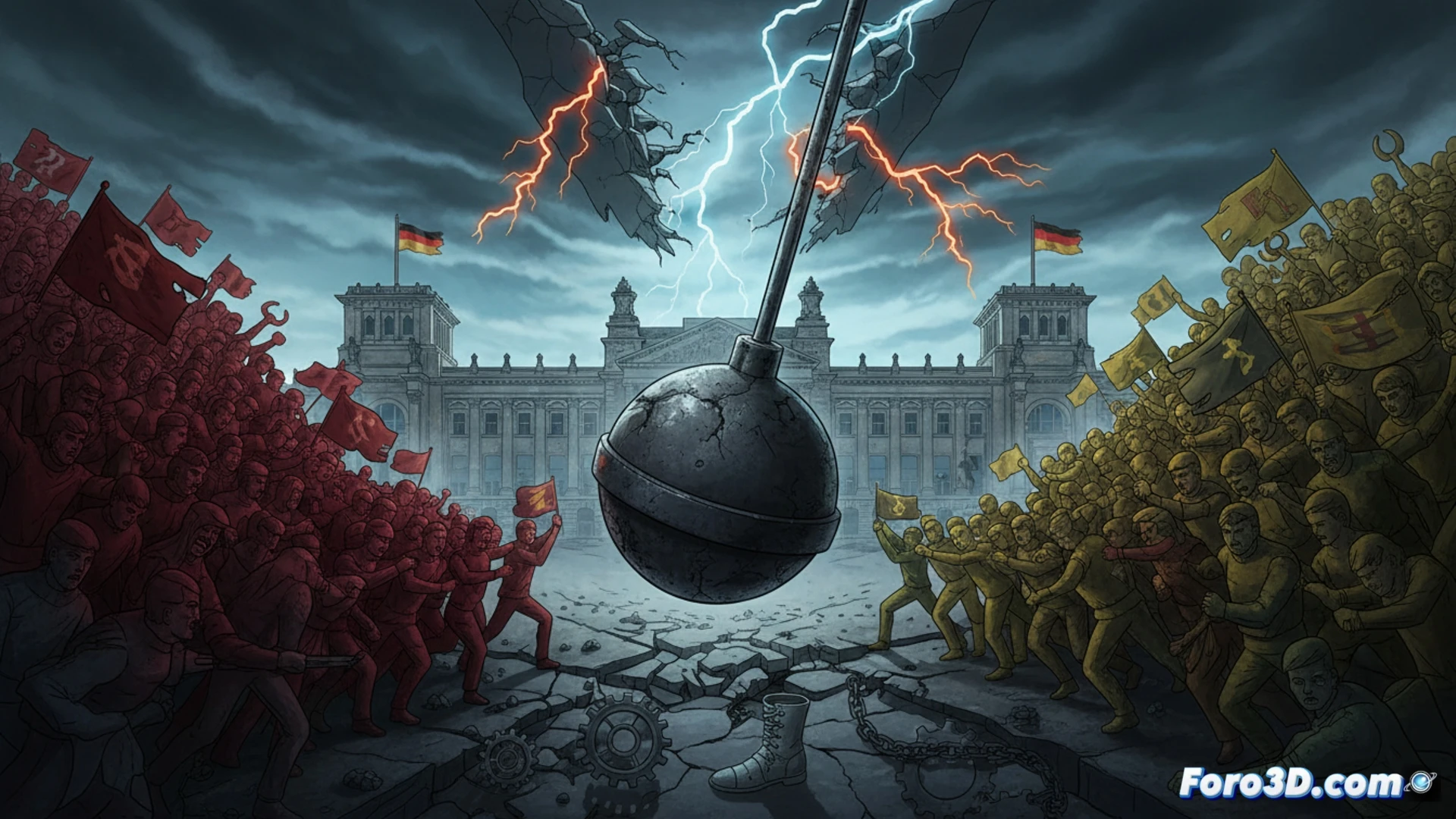
Social discontent in Germany is driving a notable growth of parties at the extremes of the political spectrum. Polarization and institutional tensions mark a public debate on the limits of liberal democracy. Various sectors warn about the importance of avoiding historical dynamics that in Europe led to conflicts such as World War II.
Algorithms and bubbles: technology accelerates social fracture 🤖
Digital platforms amplify polarization through recommendation systems that prioritize radical content. These algorithms create echo chambers where users only receive information that reinforces their biases. The fragmentation of public debate on social media makes consensus difficult and facilitates misinformation. Meanwhile, extremist parties optimize their messages for these channels, using micro-targeting techniques to attract voters disillusioned with the traditional system.
The neighbor who voted Green now wants a wall in his garden 🧱
Things are so tense that even Mr. Müller, who until recently was asking for more recycling, now argues about whether the organic waste bin should have barbed wire. Debates in German residential communities have become more aggressive than a Bundesliga final. No one greets each other on the landing anymore, but everyone shares political memes at three in the morning. Ironies of a democracy that wears down while charging its phone.