The German locomotive, once the undisputed engine of the European economy, now shows signs of fatigue. Persistent inflation, wage stagnation, and loss of industrial competitiveness fuel an uncomfortable debate. Berlin, which for years imposed fiscal discipline on its neighbors, now faces the possibility of needing the same support it demanded from others, testing the mechanisms of community solidarity.
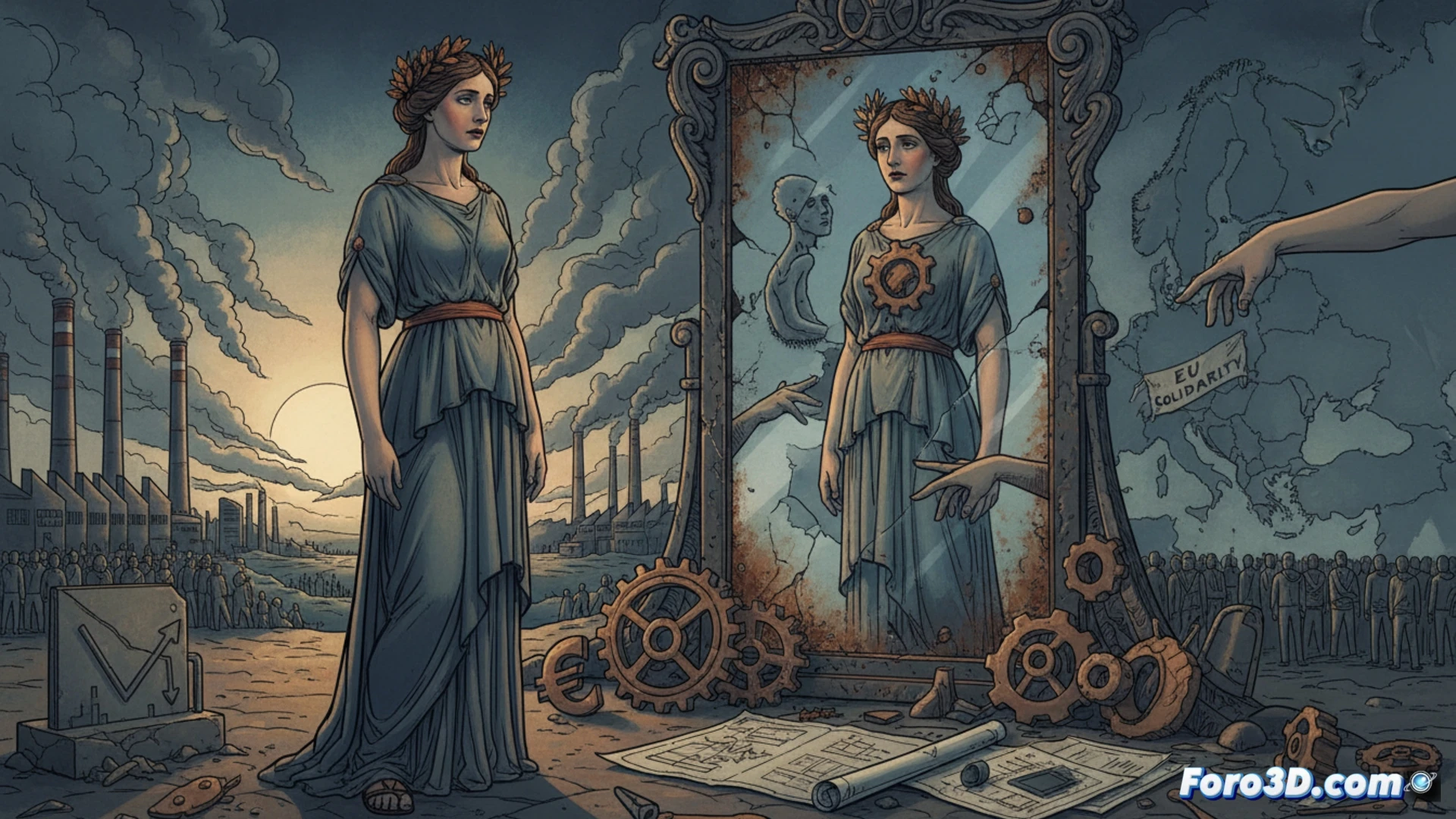
Industry 4.0: the burden of bureaucracy and the energy transition 🚂
The German development model, based on high-precision manufacturing and exports, clashes with growing bureaucracy and the high energy costs derived from its ecological transition. While Southern Europe advances in service digitalization and renewable energy, German heavy industry is losing steam. The lack of investment in digital infrastructure and labor rigidity hinder adaptation to a more volatile global market.
The reverse bailout: when the payer asks for the bill 💶
Seeing Germany complain about inflation and interest rates is like watching a prodigal son who, after years of being the one lending money, discovers that the credit card has a limit. Now, the very same people who imposed austerity measures on Greece or Portugal speculate about the possibility of a European fund for reindustrialization. The irony is subtle: they themselves designed the system that now demands they tighten their belts.