Afterimage has become a fascinating case study for indie developers looking to emulate anime aesthetics in a 3D engine. The title, developed by the Chinese studio Shanghai Xishanju, demonstrates that it is possible to achieve smooth 2D animations and hand-drawn backgrounds without sacrificing the technical advantages of Unreal Engine 4. The key lies in a hybrid pipeline that combines the power of Spine for skeletal rigging with the versatility of Photoshop for asset creation, all orchestrated within an engine traditionally designed for three-dimensional graphics.
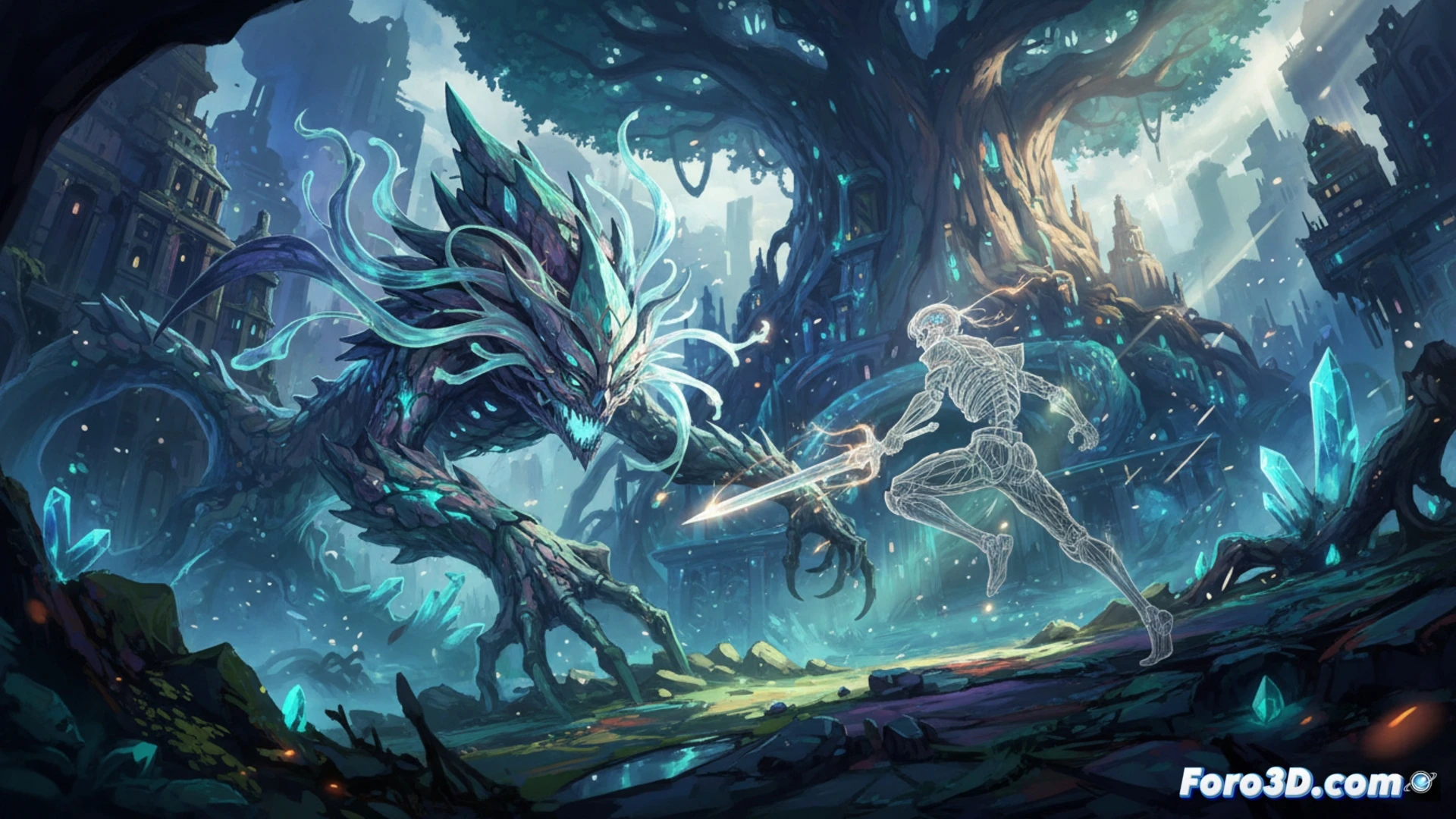
Technical Pipeline: From Photoshop to the Screen via Spine and UE4 🎨
Afterimage's workflow relies on three fundamental pillars. First, Photoshop acts as the artistic foundation, where each sprite, background, and 2D element is hand-drawn and painted, capturing the essence of traditional anime with crisp lines and vibrant color palettes. Second, Spine comes into play for skeletal rigging: sprites are broken down into bones and joints, enabling organic and smooth animations without the need for excessive keyframes. Finally, Unreal Engine 4 imports this data through Paper2D and custom plugins, rendering the sprites in a 3D space that allows for lighting effects, depth of field, and particles without sacrificing the 2D aesthetic. This process avoids costly frame-by-frame rendering and facilitates rapid iteration during development.
Lessons for Indies: Optimizing 2D Assets in 3D Engines 🎮
For developers looking to replicate this approach, the main lesson is modularity. By separating art from movement using Spine, the project's weight is drastically reduced and production is accelerated. A critical tip: properly configure the texture atlas in UE4 to avoid visual popping and maintain scale consistency between backgrounds and characters. Additionally, leveraging Unreal's material system to apply cel-shading post-processing over 2D sprites can reinforce the anime aesthetic without modifying the original assets. Afterimage demonstrates that combining classic 2D tools with a 3D engine is not only viable but can be the foundation of a unique and competitive visual style in the indie market.
What specific technical challenges arose when integrating Afterimage's skeletal 2D animation into Unreal Engine 4, and how were they resolved to maintain the fluid visual characteristic of a metroidvania?
(PS: a game developer is someone who spends 1000 hours making a game that people complete in 2)