The craft of piano tuning combines extreme auditory demands with highly injurious physical postures. Although it is a little-known artisan profession, those who practice it face a unique combination of visual fatigue from working with minute details, lower back strain from moving instruments weighing over 200 kilos, and constant exposure to impact noises that can reach 95 decibels. The lack of specific epidemiological studies has kept these risks in the background, until now.
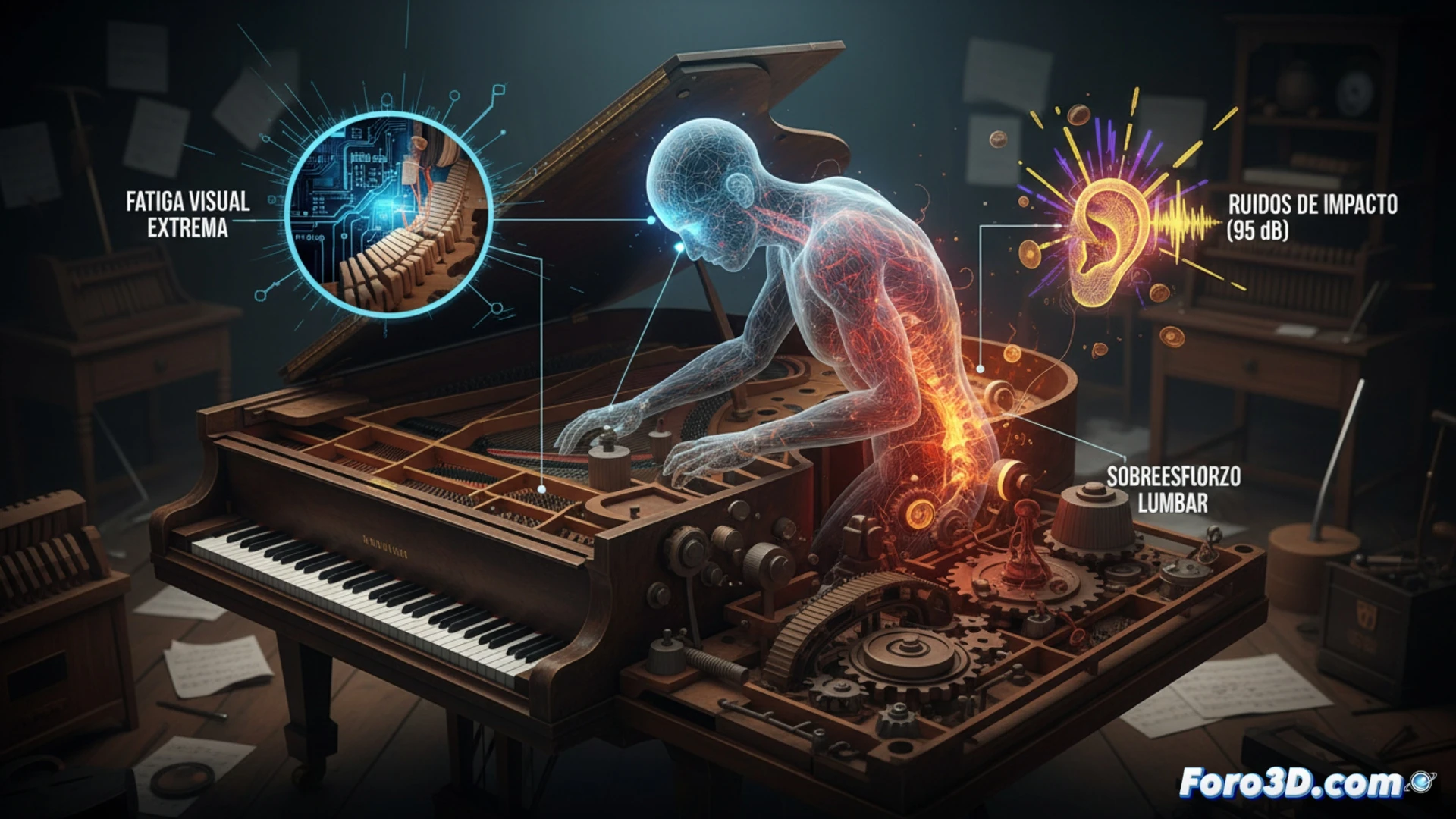
Anatomical modeling and occupational prevalence data 🎹
The interactive 3D infographic proposed for Foro3D.com represents an anatomical model of the tuner in which the body areas with the highest incidence of occupational pathology are illuminated. Epidemiological data indicate that 78% of these professionals present musculoskeletal disorders in the neck and hands, with a 62% prevalence of chronic low back pain associated with the stooped posture inside the piano. Sensorineural hearing loss affects 34% after more than 15 years in the trade, while visual fatigue from prolonged focus on hammers and strings causes asthenopia in 45% of cases. Three-dimensional bar graphs compare these risks with those of luthiers and orchestra conductors, showing that tuners have double the incidence of cervical injuries.
Visualizing to prevent: the body as a data map 🧠
The graphic representation of these risks not only serves an informative function but also allows workers themselves to identify harmful patterns before they become chronic. Simulations of forced postures using animated anatomical models show in real time how the 45-degree tilt over the soundboard compresses the lumbar discs and strains the extensor tendons of the hand. Turning invisible pain into an interactive visualization is the first step for public health to recognize this group and for specific ergonomic protocols to be designed.
As prolonged exposure to specific acoustic frequencies and forced postures could generate a three-dimensional map of the most critical biomechanical and auditory risks for public health in piano tuners.
(PS: public health graphs always show curves... just like ours after Christmas)