The Afeela from Sony Honda Mobility is not just an electric car; it's a rolling laboratory of system integration. With 45 sensors and massive computing power, this prototype redefines the vehicle's electrical architecture. For 3D modelers, the challenge lies not in the bodywork, but in visualizing the data flow between LiDAR sensors, high-resolution cameras, and control units that manage both autonomy and entertainment.
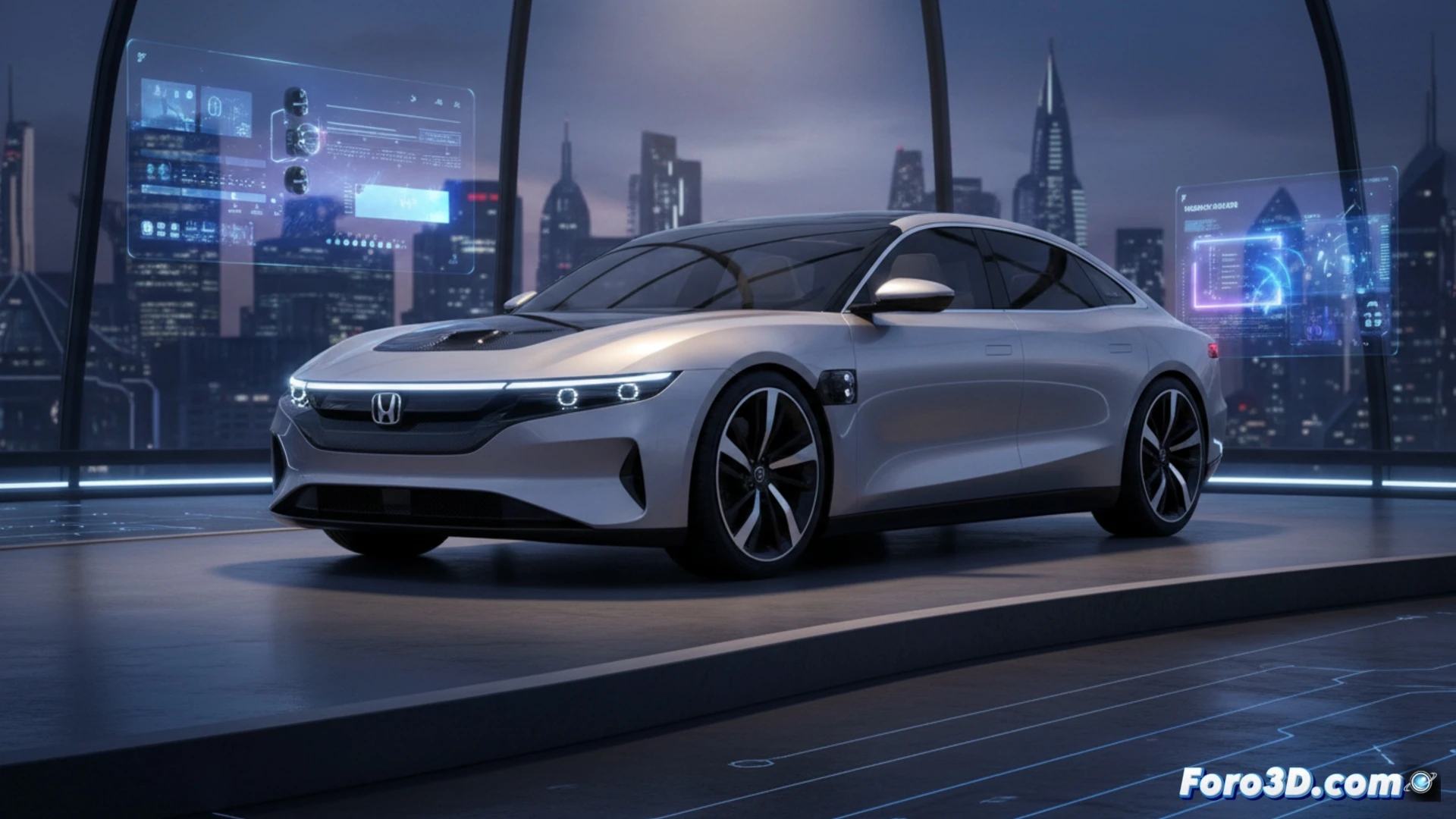
Visualizing data flow in an embedded architecture 🚗
From the perspective of 3D system modeling, the Afeela presents a complex network topology where each sensor is a node sending terabytes of information per second. The central processing units act as a hub that must prioritize critical data for autonomous driving (such as obstacles or signs) over data intended for infotainment (such as augmented reality in the cabin). Simulating this interaction in a 3D environment allows validating network latency, communication bus redundancy, and thermal dissipation of computing modules, essential elements to prevent failures in ADAS systems.
The dilemma of convergence between leisure and safety ⚠️
The promise from Sony Honda is a vehicle that entertains while driving itself. However, the 3D architecture reveals a latent conflict: the same data bus carrying an 8K movie could collide with an emergency braking signal. Modeling these architectures must prioritize virtual network segmentation (VLAN) and real-time bandwidth allocation. At Foro3D, we know that designing a digital twin of these systems is the only way to ensure that the immersive experience does not compromise the vehicle's active safety.
How does the Afeela's 3D architecture manage the real-time fusion of data from its 45 sensors to guarantee coherence between autonomous navigation and the representation of the environment in the cabin?
(PS: ADAS systems are like in-laws: always watching what you do)