Aeterna Noctis is a title that proves traditional 2D art can still shine in modern engines like Unity. Its dark fantasy aesthetic, combined with hand-drawn animations and dense level design, offers a practical lesson for indie developers. Here we analyze the technical pipeline behind its visual style and how it achieves that fluidity without sacrificing the oppressive atmosphere. 🎮
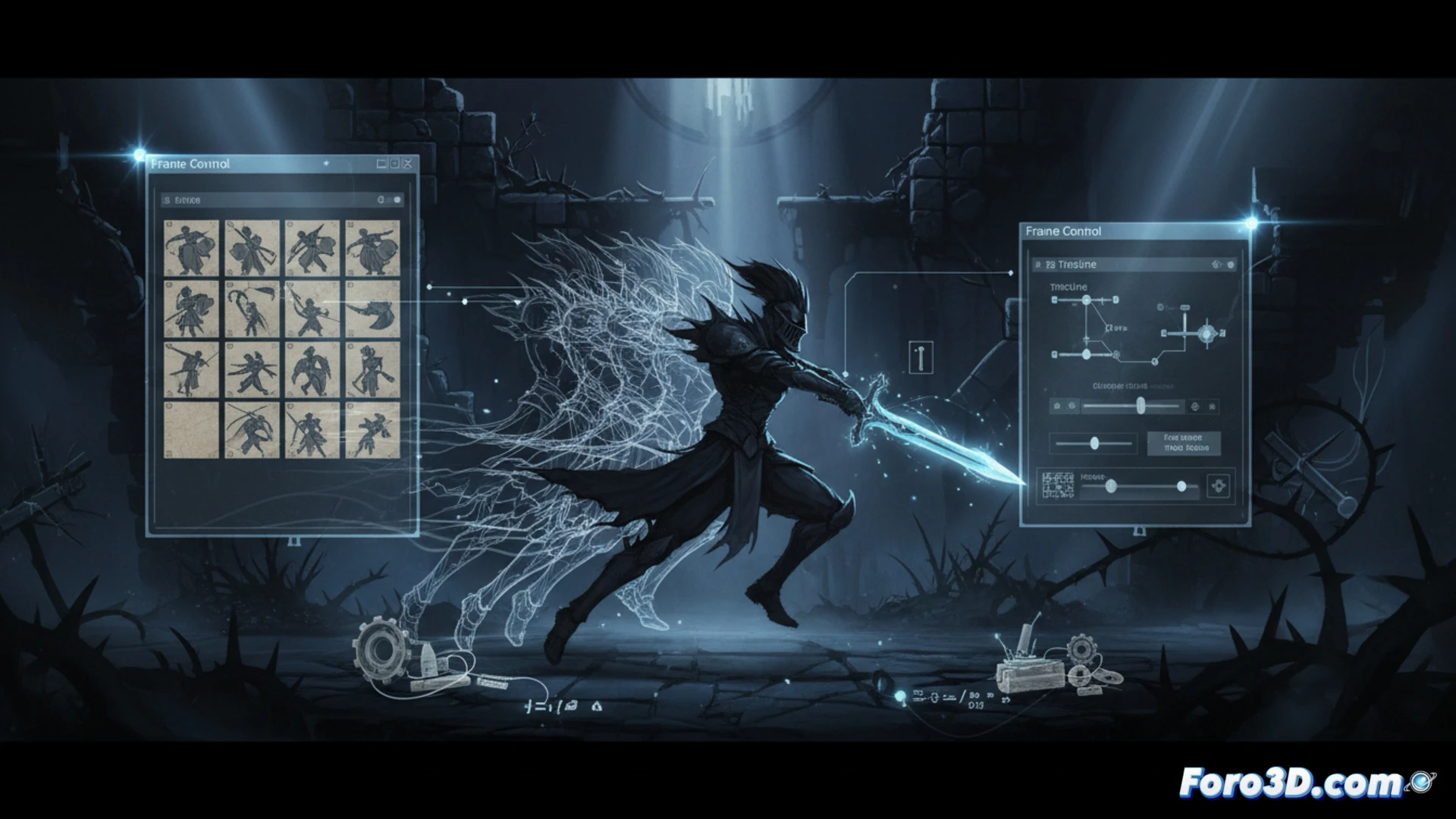
2D Art Pipeline and Traditional Animation in Unity 🎨
The process begins in Adobe Photoshop, where each sprite is hand-drawn and painted with a limited palette of cool tones and deep shadows. The key lies in traditional animation: characters and enemies are animated frame by frame, exporting sprite sequences into texture sheets (spritesheets). In Unity, the Animation Controller system is used to manage transitions between states (run, attack, die) without automatic interpolations. To maintain fluidity, developers adjust the playback speed of each animation clip and synchronize frame events with the engine's physics system. The result is organic movement that responds to player input without losing the cartoon aesthetic.
Dense Level Design and Its Technical Impact on the Experience 🏰
Level design in Aeterna Noctis is deliberately cluttered: platforms, traps, and enemies occupy every corner of the screen. This demands efficient use of sorting layers and clipping masks in Unity to avoid visual overlaps. Developers recommend using Tilemaps for the background and modular prefabs for obstacles, allowing for quick iteration without losing artistic coherence. For indies aiming for this style, the advice is to prioritize gameplay readability over visual density: each element should have a clear outline distinguishing it from the dark background, using 2D lights (like Unity's lighting systems) to guide the player without breaking immersion.
In Aeterna Noctis, how is the 2D animation pipeline optimized in Unity to achieve smooth transitions between movements and attacks, while maintaining the dark and detailed aesthetic of traditional art?
(PS: game jams are like weddings: everyone is happy, no one sleeps, and you end up crying)