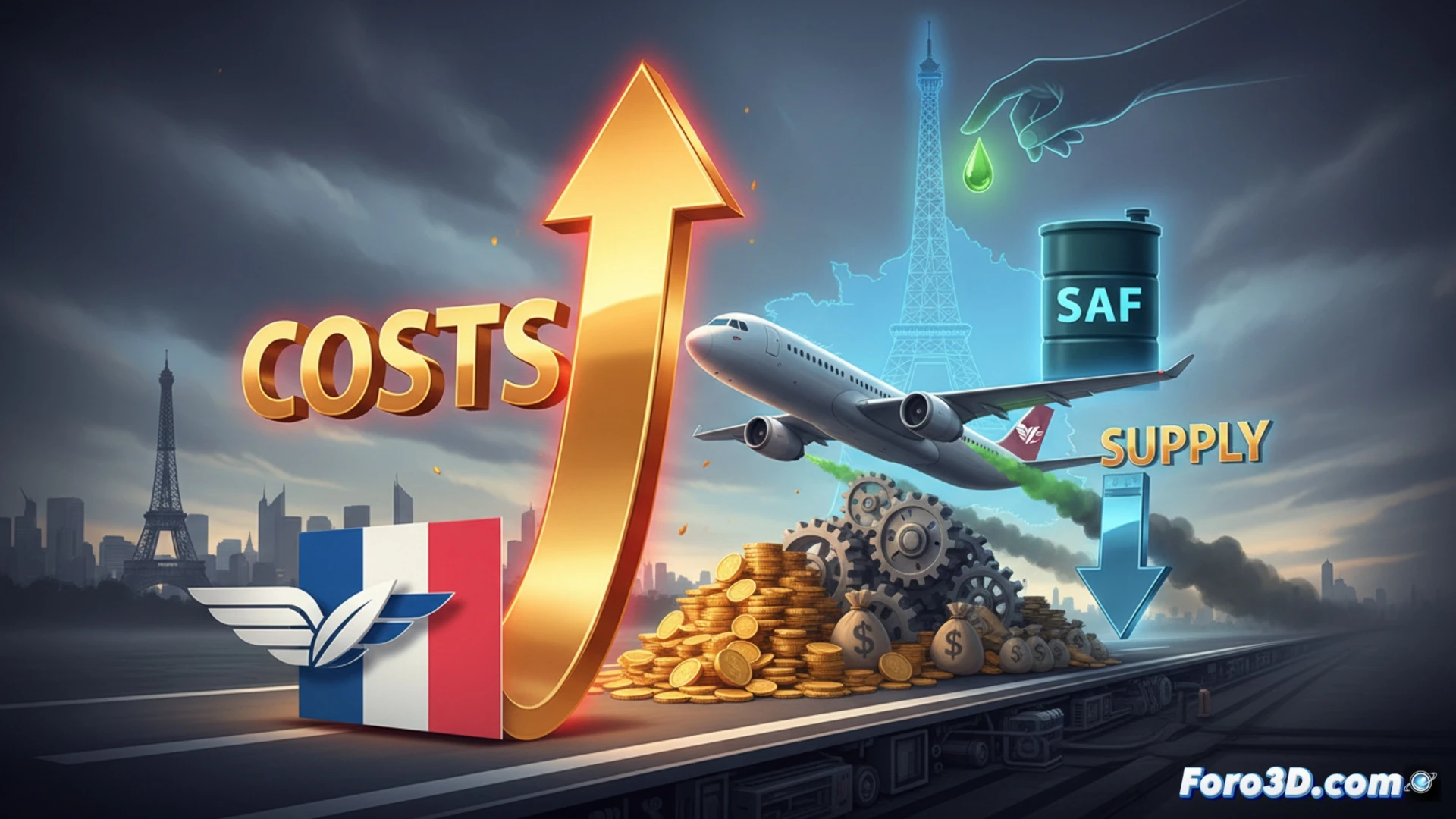
Airlines in France have begun incorporating sustainable aviation fuels (SAF) into their operations, seeking to reduce dependence on fossil fuels. However, the transition faces two serious problems: the cost of SAF is up to five times higher than traditional kerosene, and global production barely covers a fraction of demand. Although political will exists, the path to cleaner aviation remains slow and fraught with practical obstacles.
SAF Technology: Processes, Raw Materials, and Current Limits ✈️
SAFs are produced through processes such as HEFA (hydroprocessed esters and fatty acids) or Fischer-Tropsch from biomass. Raw materials include used cooking oils, agricultural residues, or green hydrogen combined with captured CO2. In France, regulations require 2% SAF by 2025 and 5% by 2030. But local production is insufficient: existing plants barely cover that small percentage. Additionally, certification and distribution logistics are costly and complex processes that hinder mass adoption.
Flying into the Future with an Empty Wallet 💸
The idea is noble: planes soaring through the skies on fuel made from frying oil. But the passenger paying for their ticket notices the trick when the flight price rises by 30% to cover the SAF. Airlines promise a green future, but for now, the only fuel burning is shareholders' money. Meanwhile, the popcorn at the airport cinema wonders if its used oil will reach Paris before the plane does.