The compulsive use of the internet among Spanish teenagers has reached alarming levels. According to recent studies, nearly 20% of young people present a high risk of digital addiction. Although traditional habits such as reading or playing sports have slightly improved, screens continue to dominate their free time in an absorbing manner.
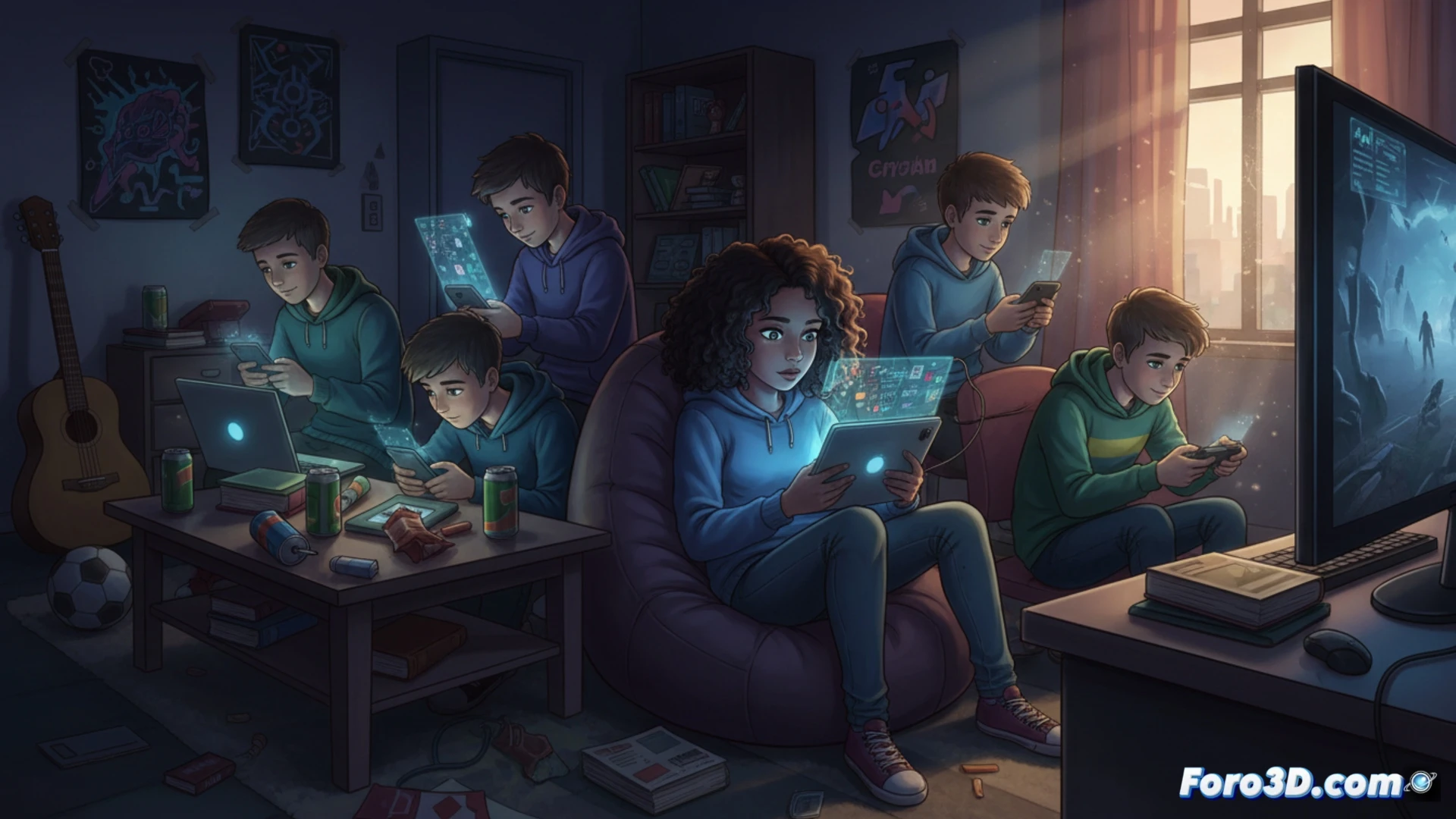
Dopamine on demand: how app design hijacks youth attention 🧠
Digital platforms employ addictive design patterns, such as intermittent notifications and infinite feeds, which stimulate the constant release of dopamine. This mechanism, similar to that of slot machines, makes voluntary disconnection difficult. The development of hyper-personalized recommendation algorithms worsens the problem, trapping the user in content loops that override their capacity for self-regulation and reduce their tolerance threshold for boredom.
The good: they read more. The bad: it's the Twitter thread about the exam 📱
The good news is that teenagers read more and do more sports. The bad news is that they read Twitter threads about how to pass without studying and do sports… virtually on the Nintendo Switch. The 20% at risk of digital addiction probably celebrate having improved their traditional habits while looking at their phone. Ironies of progress: we have never been so connected nor so disconnected from reality.