We analyze how Digimon Survive achieves a unique fusion between visual novel and tactical RPG using Unity. Its artistic style mimics watercolor and traditional Japanese animation, supported by 2D lighting that brings warmth to the backgrounds. This approach not only defines the visual identity but also imposes technical challenges of optimization and real-time coherence that are worth breaking down.
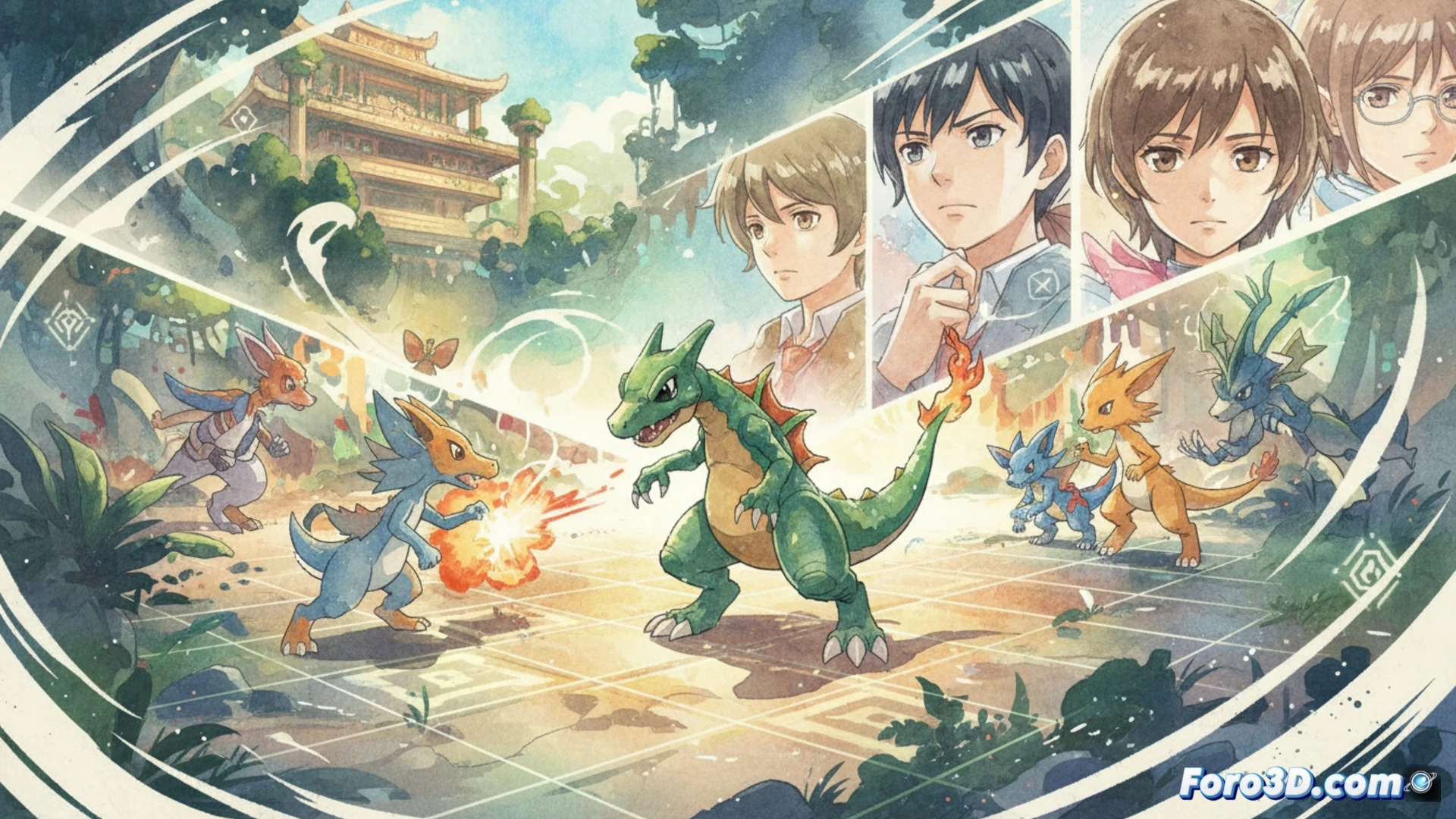
2D lighting and watercolor shaders in real time 🎨
To emulate the texture of watercolor, the team likely used custom shaders in Unity that apply semi-transparent color layers and soft edges, simulating pigment absorption on paper. 2D lighting is implemented using directional and point lights with warm gradients, avoiding harsh shadows that would break the aesthetic. The backgrounds, painted as high-resolution static sprites, are dynamically lit without the need for complex rebakes, maintaining performance. The genre blend forces character sprites to maintain a limited palette and defined outlines, contrasting with the more diffuse backgrounds, to ensure readability during turn-based tactical battles.
Visual coherence between narrative and tactical combat ⚔️
The greatest technical achievement is the smooth transition between visual novel sequences and the tactical grid. Instead of drastically changing the rendering engine, Digimon Survive unifies both modes under the same 2.5D camera and the same lighting system. Battle scenarios are extensions of the exploration backgrounds, reusing assets and adjusting the isometric perspective without losing visual warmth. This decision reduces the asset load and avoids aesthetic clash, demonstrating that a strong artistic style can support complex mechanics if planned from the technical foundation.
What rendering techniques in Unity were used in Digimon Survive to achieve the watercolor aesthetic without sacrificing the readability of the tactical grid?
(PS: shaders are like mayonnaise: if they break, you have to start all over again)