Abyss World is an Action-RPG that fully leverages Unreal Engine 5 to build an oppressive atmosphere. The game relies on Lumen to generate stark contrasts between spiritual lights and dense shadows, creating a visual style reminiscent of the darkest soulslike games. The team has combined ZBrush for sculpting detailed armor and motion capture to animate combat and magical effects, all optimized for real-time performance.
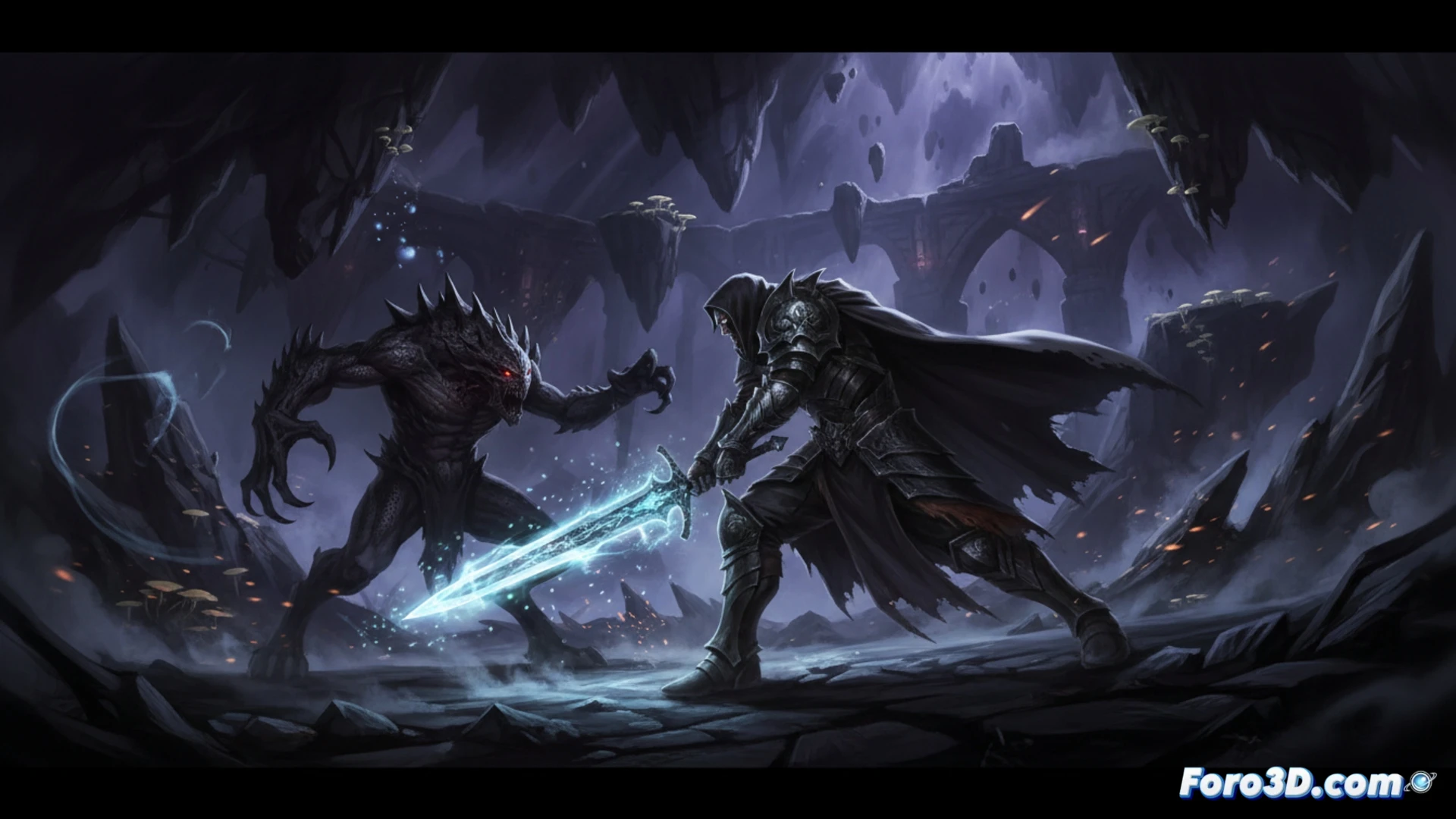
Technical Workflow: ZBrush, MoCap, and Magic Rendering 🎮
The asset pipeline begins in ZBrush, where highly detailed armor is sculpted, designed to reflect Lumen's light on metallic and weathered surfaces. Then, motion capture records combat animations and magical gestures, which are integrated into UE5's animation system. For magic effects, materials with Lumen-controlled emission are used, making spells shine brightly against nearly black backgrounds. The key lies in balance: high-polygon assets are reduced via Nanite, while volumetric lights are adjusted to avoid saturating performance.
Luminous Contrast as Visual Narrative 💡
The extreme use of Lumen in Abyss World is not merely aesthetic but functional. Areas of dense shadow hide enemies and traps, while spiritual lights guide the player or signal dangers. This design forces optimization of dynamic lighting to prevent flickering or frame drops. The result is a world where every magical flash or armor reflection tells a story of constant tension, demonstrating that UE5 allows small developers to visually compete with major studios.
How does Abyss World balance the technical performance of Lumen and motion capture in Unreal Engine 5 to maintain an oppressive atmosphere without sacrificing fluidity in action-RPG combat?
(PS: a game developer is someone who spends 1000 hours making a game that people complete in 2)