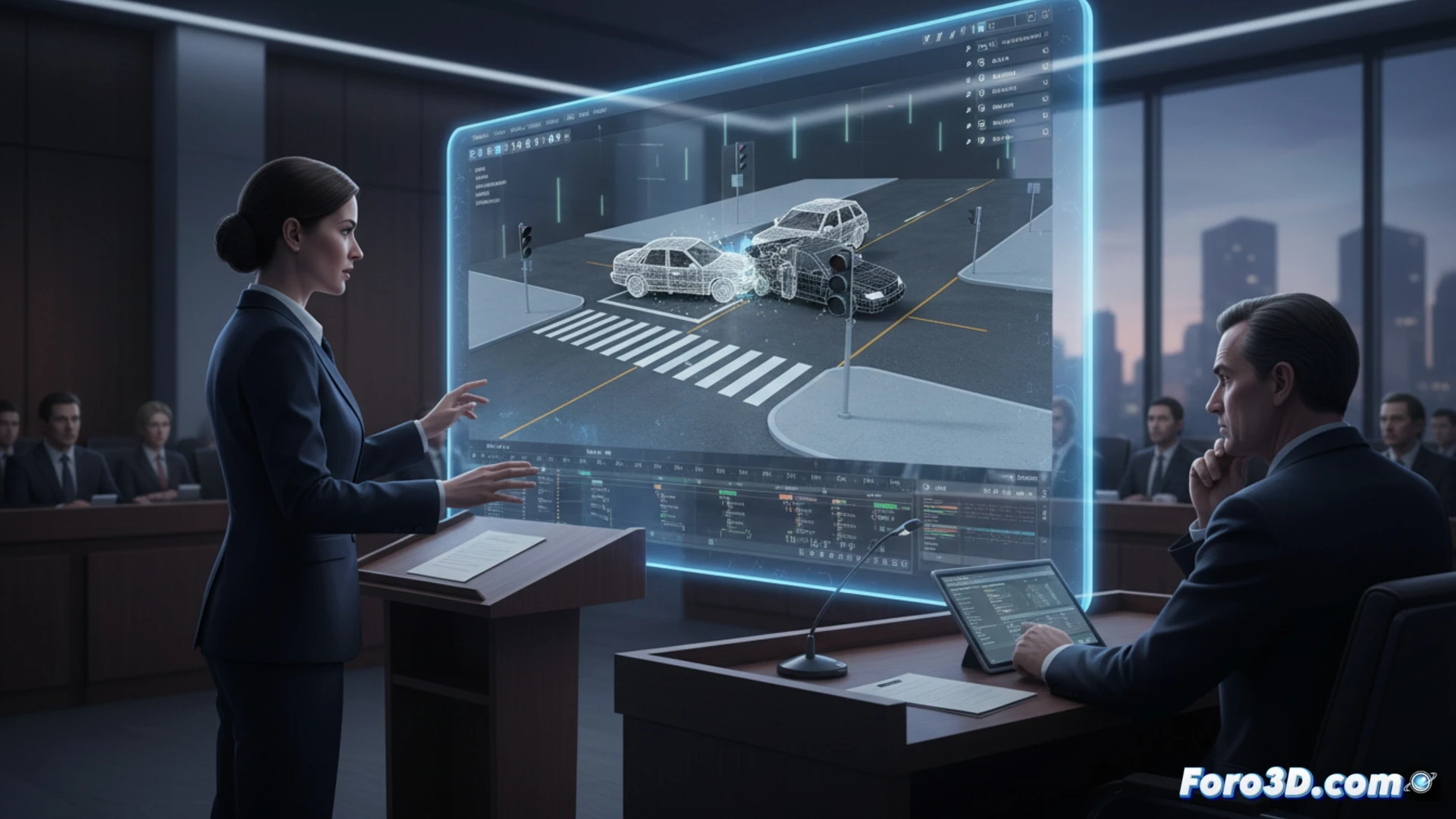
3D technology is transforming legal practice, allowing lawyers to reconstruct accident or crime scenes with millimeter precision. A clear example is the virtual recreation of a traffic accident to determine liability, presenting the judge with a visual simulation instead of confusing blueprints. This requires programs like Blender (free) or Autodesk Maya, along with photogrammetry tools such as RealityCapture.
How to Build a 3D Evidence from Scratch 🛠️
The process begins with data capture: laser scanners or drones generate point clouds. Then, software like 3ds Max or SketchUp converts that data into textured models. To animate trajectories of vehicles or people, Cinema 4D or Unreal Engine is used. The result is exported in formats like OBJ or FBX, and integrated into court presentations using free viewers like Sketchfab. The key is that the model is reproducible and verifiable by independent experts.
When Your Client Says No, But Their 3D Model Says Yes 😅
Because yes, now you can catch your client in a lie with a simple render. While he swears he braked at 50 km/h, your simulation shows he was going 120 and ran the stop sign. The best part is that the judge, who used to fall asleep with written reports, now wakes up watching an animation. Of course, make sure the model has no errors, or you'll end up explaining why your recreation looks more like a cartoon episode than a real scene.