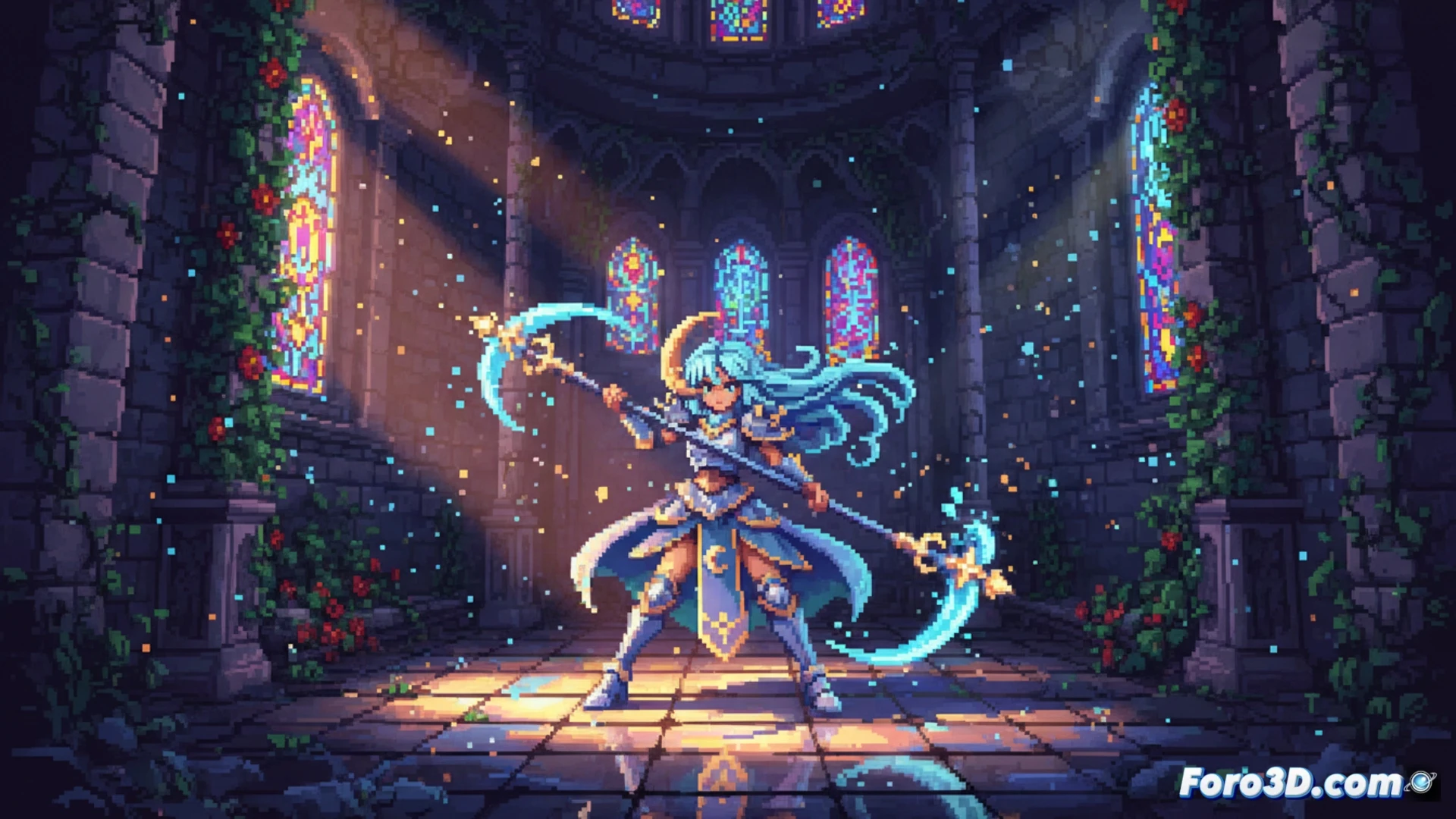
Indie development shows that artistic coherence can be a technical pillar. 9 Years of Shadows, created with Unity, bets on pixel art that evokes stained glass and the magical girl aesthetic of the 90s. But its true innovation lies in the world's chromatic progression: as you advance, color returns to the scene, an effect requiring careful management of palettes and shaders in the engine. 🎮
Workflow: Aseprite, Photoshop, and Shaders in Unity 🎨
The graphic pipeline combines Aseprite for sprite animation and Photoshop for lighting and background touch-ups. Aseprite allows pixel-by-pixel control, ideal for the protagonist's fluid movements. Photoshop handles color grading and post-processing effects that simulate stained glass. In Unity, the key lies in custom shaders that manage the transition from a grayscale palette to vibrant colors. The engine doesn't just render; it interprets a global state of chromaticity, altering the saturation of each sprite in real-time without losing the retro aesthetic.
Lessons for Indie Development 💡
9 Years of Shadows demonstrates that technical limitation is not a hindrance, but a language. The decision to use pixel art with a stained glass and magical girl theme is not just aesthetic; it's a performance solution. Unity allows these sprites, with detailed animations and light effects, to run on modest hardware. For a small studio, prioritizing a coherent color palette and a seamless flow between Aseprite and Photoshop is more effective than chasing impossible realism. The game is a reminder that visual identity is born from the tool, not the other way around.
As an indie developer, what technical aspects of Unity did you consider key to achieving the artistic coherence of 90s pixel art in 9 Years of Shadows without sacrificing performance?
(PS: 90% of development time is polishing, the other 90% is fixing bugs)