3D technology helps tilers avoid costly mistakes before mixing the adhesive. With a laser scan or photogrammetry, you can obtain the exact model of the room, detect unevenness in the floor, and calculate the precise number of tiles needed. Programs like SketchUp, Revit, or Blender allow you to design the layout and see how the pieces fit together without having to cut a single tile.
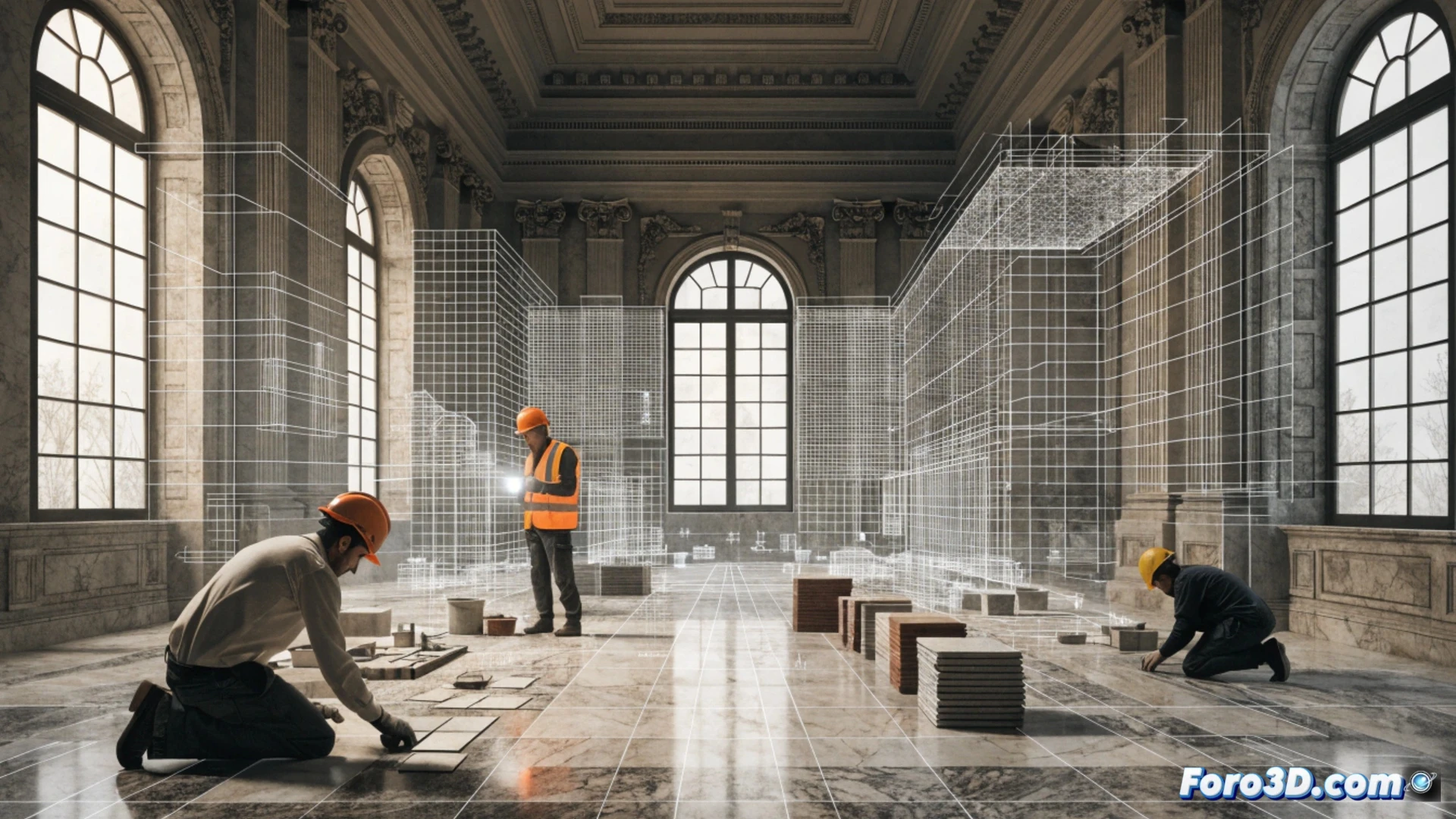
Digital workflow for adjusting every joint 🛠️
The process begins by scanning the room with an iPhone equipped with LiDAR or a DSLR camera for photogrammetry, processing the point cloud in software like RealityCapture or Meshroom. Then, you import that model into a CAD program such as Fusion 360 or SketchUp Pro. There, you place the virtual tiles, adjust expansion joints, and generate an optimized cutting plan. Programs like OptiCutter or CutList Optimizer reduce material waste by up to 15%. The result: fewer trips to the warehouse and fewer broken pieces.
The tiler who doesn't need a spirit level (but uses it anyway) 🧙
Sure, all this sounds very futuristic to someone who still uses a wet finger to check the level. But hey, when you show up on site with your iPad and tell the client the floor has a 3mm slope in the northeast corner, they'll look at you as if you were a wizard. Then, as you wield the trowel, remember that technology doesn't prevent you from getting your knees dirty with tile adhesive. That, my friend, remains 100% analog.